
For You: Progressive Muscle Relaxation Exercises
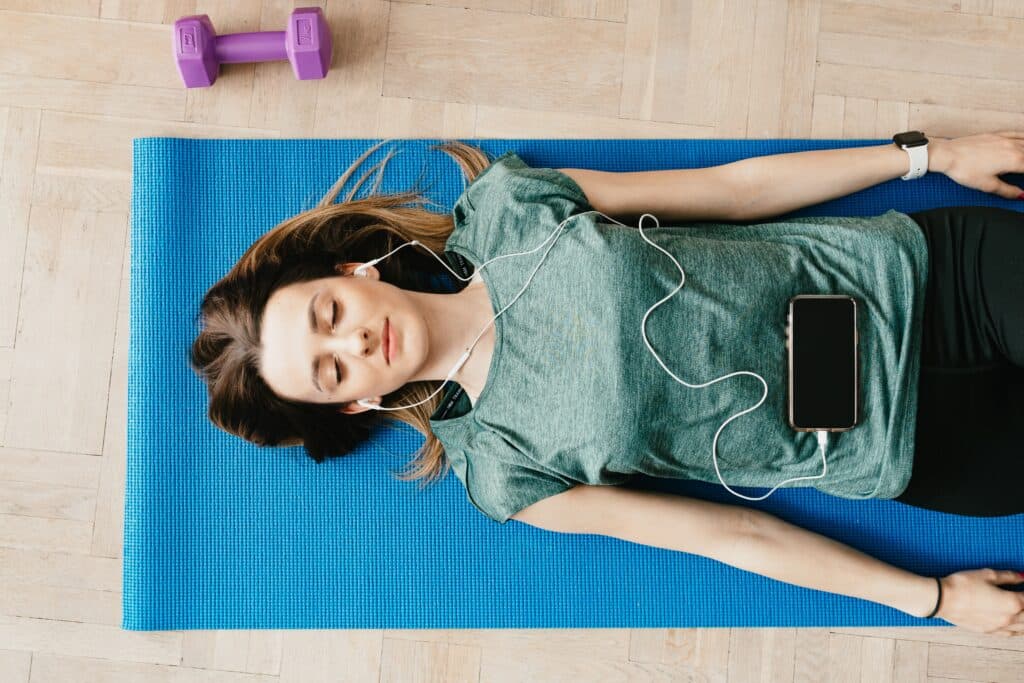
One appointment after another and no time to unwind? Stress is part of everyday life for many people. Yet its consequences are often underestimated. We’ve put together some Progressive Muscle Relaxation exercises for you, which can help you learn to counteract stress and relax your entire body.
Goals of Progressive Muscle Relaxation
The effects of stress can affect the whole body, ranging from cardiovascular disease to burnout. Atopic dermatitis flare-ups can also be triggered by stress.
When we feel anxious or stressed, our muscles automatically tense up. The American physician Edmund Jacobson recognised this as far back as the last century and developed Progressive Muscle Relaxation (PMR) as a method of relaxation. It counteracts stress-related muscle tension by directing focus towards a conscious relaxation of the muscles.
The goals of PMR are:
- to direct focus towards your own body and improve body awareness
- to reduce muscle tension
- to reduce physical symptoms of nervousness (e.g. trembling, racing heart)
- to improve sleep
- to relax body and mind
- to relieve pain through relaxed muscles
How does Progressive Muscle Relaxation work?
In PMR, 16 muscle groups are consciously tensed one after another and then relaxed, in order to specifically release tension. The exercises can be performed either sitting or lying down. It’s important that you find a quiet spot where you won’t be disturbed. Give yourself a little extra time for yourself after the relaxation exercise. And please make sure you are fully awake and alert before getting back behind the wheel or doing anything else that requires your full attention.
We’ve recorded a long (approx. 15 min) and a short (approx. 6 min) PMR exercise for you. If you start with the long exercise and repeat it regularly, you’ll soon notice that you’re able to reach a state of relaxation more and more quickly.
When you’re short on time, you can achieve the same positive effect with the short PMR exercise as with the long one.
For the short exercise:
Listen to the audio (in German)
If you have a bit more time, why not give the long exercise a try: