
Eczema diary – keeping track of your skin
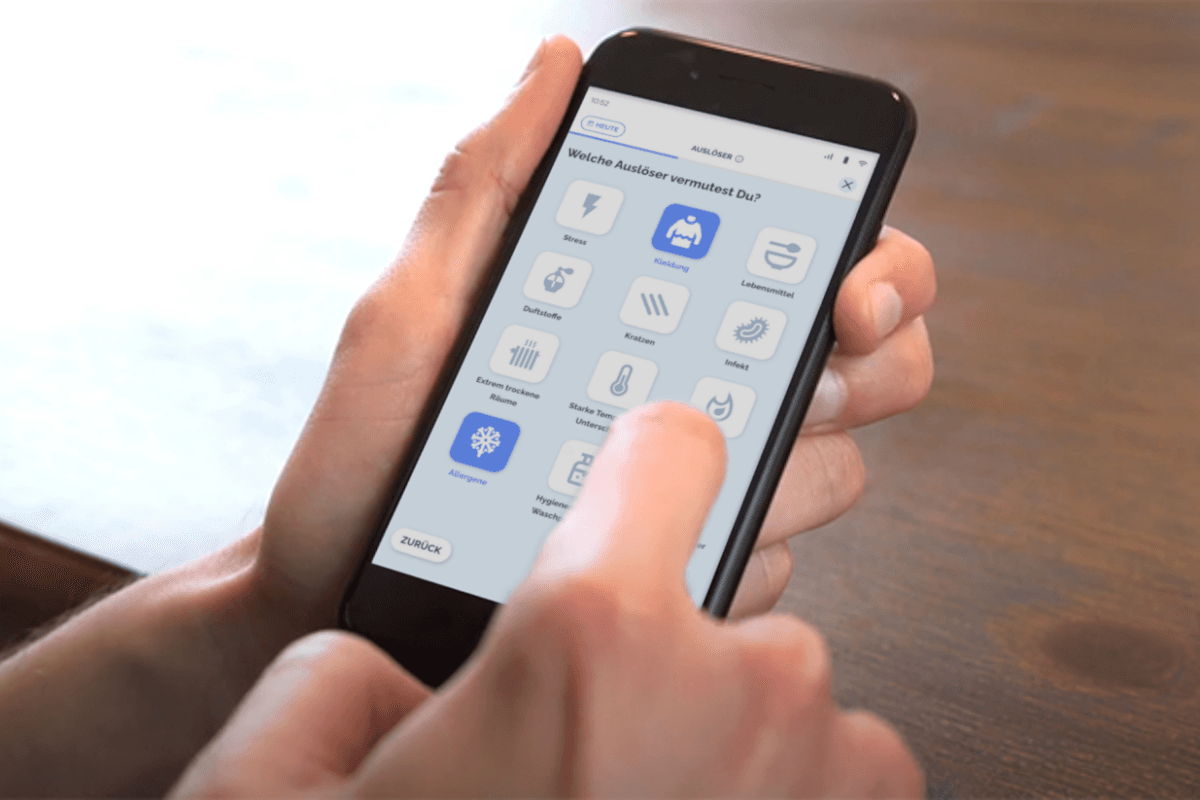
There are many aspects of our everyday lives that can make eczema worse. An eczema diary can help you keep better control of the triggers that affect your personal situation. An eczema diary also helps you remember helpful habits.
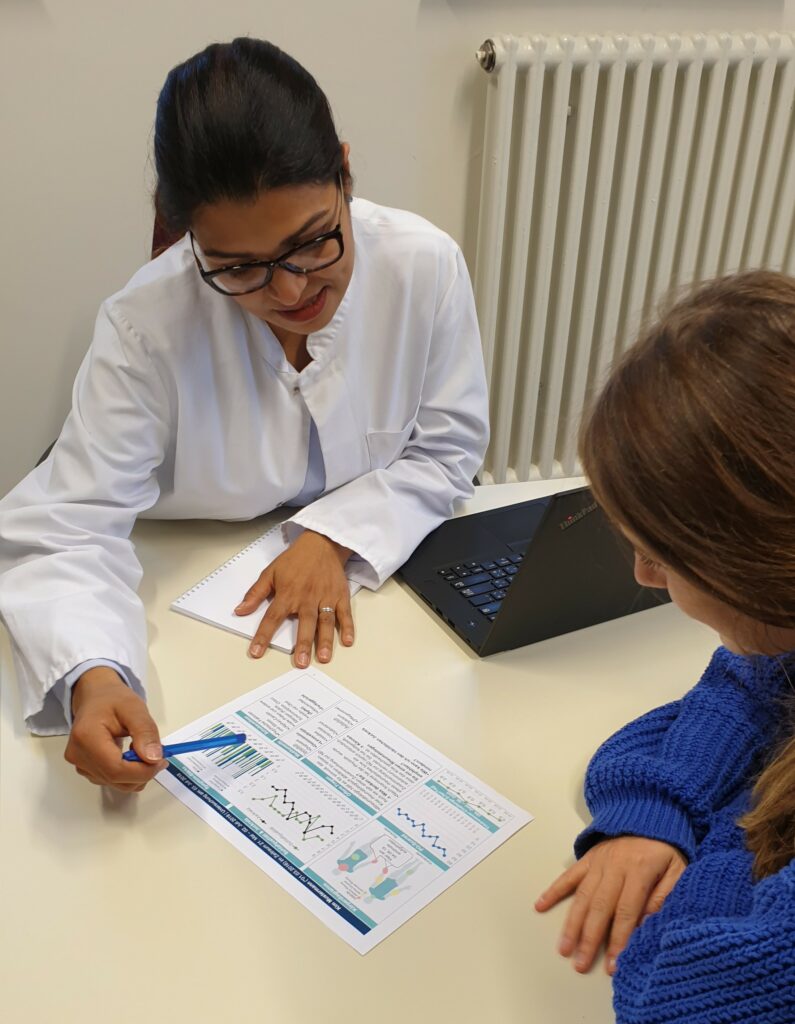
Doctors often face the challenge of correctly interpreting the assessment of people with eczema or the parents of children with eczema. Paediatrician PD Dr. med. Doris Staab of Charité Universitätsmedizin Berlin describes it like this:

“Parents are used to their child’s skin condition. An assessment of good, medium or bad means something quite different for every family.”
But if people with eczema, or the parents of children with eczema, record the skin condition over a longer period of time, this can be made very objective with the help of a diary, according to Dr. Staab. In this way, the patient gives the doctor valuable insights that support their assessment and the treatment recommendations to be made.
An eczema diary cannot replace a doctor
Please remember that your eczema diary is not a substitute for a medical diagnosis. Always be sure to talk to your doctor. Especially if you are increasingly worried about your skin or your child’s skin, or if your daily life is severely affected, you should always see a medical professional. If you want to make major changes to your daily habits (e.g. cutting foods out of your diet), you should also always discuss these plans with your doctor first.
The eczema app Nia offers you a modern, digital diary feature. Thanks to Nia, you always have your eczema diary on hand on your smartphone whenever you need it. You can get the Nia app free of charge for iOS and Android.
Your digital eczema diary
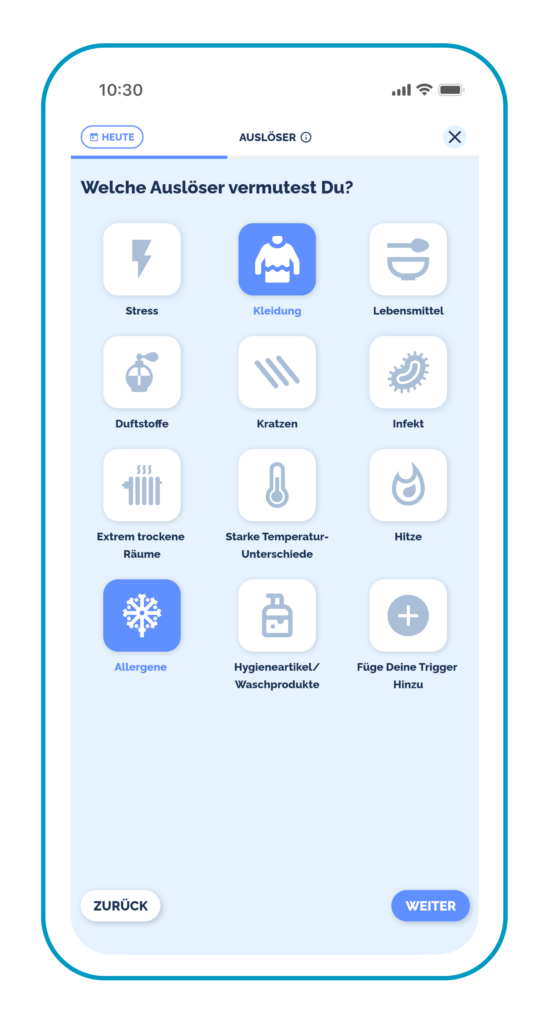
As with any diary, you have to record, like a detective, every piece of information that could have an effect on your skin. This can mean writing entries in your diary at fixed times, e.g. every day before going to bed. But as a digital smartphone app, Nia is always with you during the day too, so you can update it at any time more easily than a paper diary. Your entries are documented clearly straight away and can be accessed at any time.
However you decide to keep your eczema diary, whether digitally or on paper, whether every day at a fixed time or whenever necessary, you should definitely keep an eye on the condition of your skin. You know your skin, or your child’s skin, best. So everything that happened during the day that you think might affect the skin is important. This is the only way to identify important insights and patterns over a longer period. Go through the records with your doctor and think together about what next steps can be taken from them.
Different factors can affect the skin
Below you will find some particular factors that you should note in your diary if they apply to your situation. But perhaps in your case completely different factors are worth mentioning.
It is possible that your washing routine, meaning how you care for your skin or your child’s skin, can contribute to various kinds of skin irritation. It is good to know whether changes you have made to your skin care habits have had an effect on the skin. In this case, keeping records in a diary can help you. On the one hand, it helps you understand better how the skin reacts to changes over time. On the other hand, it makes it easier for you to keep up good habits.
The wrong care can be a trigger
Some things you should pay attention to in this context:
- How often do you or your child touch or scratch irritated skin on the body or face? Does it make a difference if you try not to?
- Does how often you wash, shower and bathe affect the condition of your skin, or does the frequency determine skin irritation?
- Are there different soaps or softeners in your everyday life that help or harm the skin?
- What are your showering and bathing habits?
- Do you use warm rather than hot water, as recommended?
- Do you gently pat your skin dry afterwards?
Finally, it is worth stressing once again that keeping an eczema diary is not a substitute for a diagnosis by a medical professional. However, it can help you better understand your personal situation and your highly individual atopic dermatitis. Keeping a diary is a good start towards living with the condition more independently and self-reliantly, step by step.