
Psychological aspects of dealing with scratching
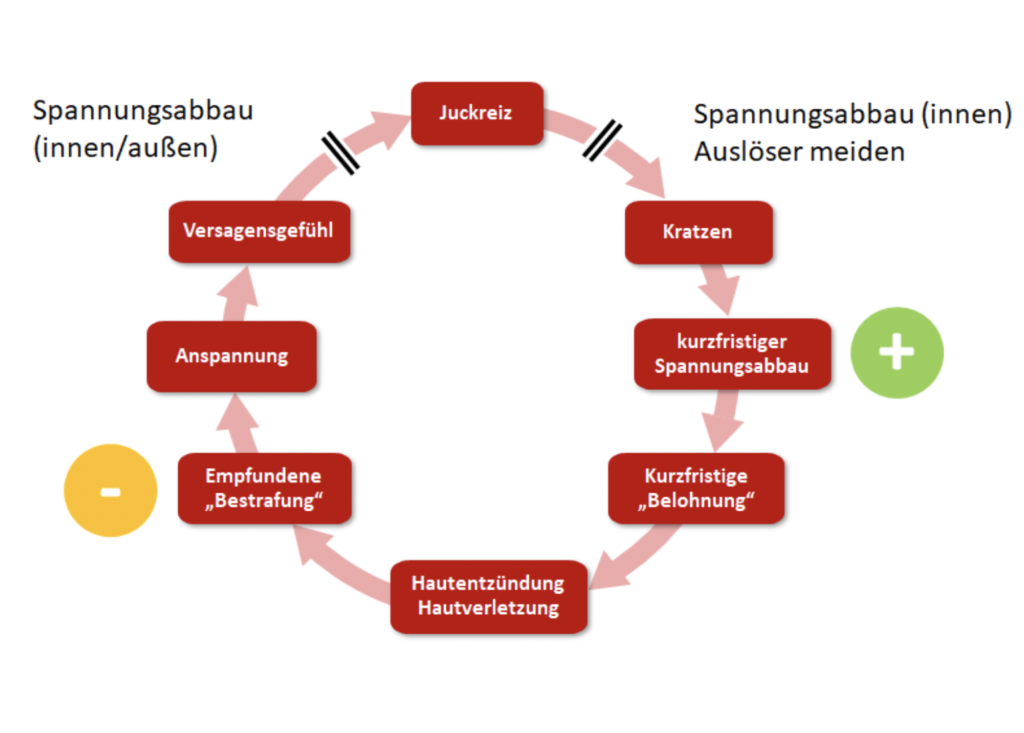
The itch-scratch cycle and learning psychology
When dealing with scratching, it helps to distinguish between different forms of scratching.
Scratching with chronic itch
Scratching is a natural, reflex-like response to itching. Basic therapy and anti-inflammatory therapy should be used to a sufficient extent to improve the condition of the skin and thus relieve the itch. When the skin is inflamed and itchy, children cannot be expected not to scratch, because an itch memory has formed. Certain itch-conducting neurons and the mediators they express have become hypersensitive and produce an “automated” motor response of the scratching hand.
Habitual scratching
Children can get into the habit of scratching in various situations, e.g. on the changing table, when their clothes are taken off, while watching TV or when they are bored. It helps to identify these situations and keep the hands busy with something else, e.g. holding or squeezing an object, folding the hands, sitting on the hands. With older children, also train self-observation.
Scratching as a displacement activity
When children are embarrassed, excited or tired, they release tension by scratching. It helps to recognise and respond to the child's feelings and needs. With older children, parents should also talk to their child specifically about fears, worries and stress, and look for solutions, e.g. for social stress. Parents can practise assertive behaviour with their children.
Instrumental scratching
Children can learn to use scratching to achieve goals, e.g. to get attention. Following the principles of learning psychology, parents can respond as follows:
- Not reinforcing demonstrative scratching, by staying calm
- If the skin is injured, treating and caring for it matter-of-factly, without giving the child any special emotional attention
- Giving deliberate attention during scratch-free periods
- Developing an understanding of the child's intentions and learning history: not letting yourself be provoked, not feeling punished, calmly steering clear of emotional escalations
Alternatives to scratching
The scratching alternatives of cooling, applying cream, keeping the hands busy, alternative skin stimulation (pressing, pinching) and relaxing can be used to interrupt scratching.
Alternatives to scratching help you not to feel helplessly at the mercy of the itch. But they should not become a source of stress between parents and child. Scratching should not be forbidden.
With severe and chronic itching, scratching alternatives are not enough; here the necessary medical treatment and skin care come first!