
7 popular types of meditation
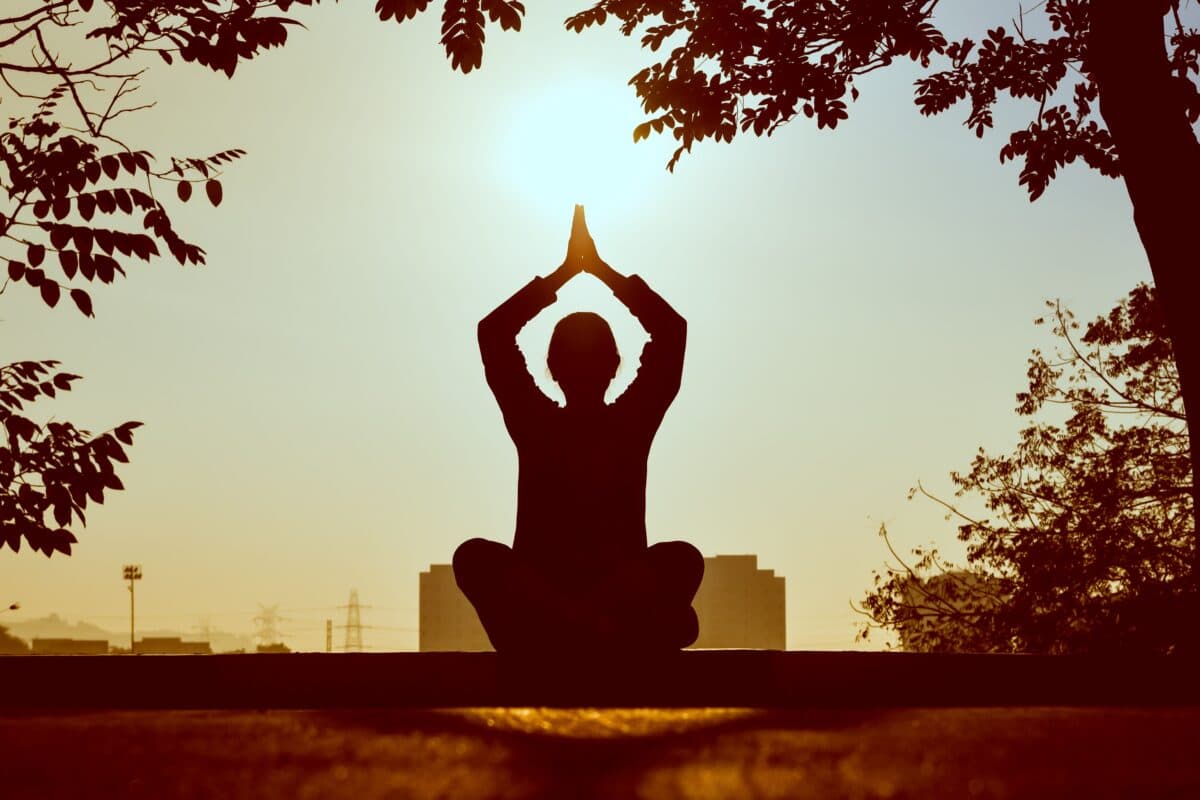
Meditation offers a simple, quick way to bring calm and relaxation into everyday life. There are many types of meditation, some of them very different from one another. The options range from simple breathing exercises or guided imagery to longer meditations, such as relaxing all the muscles of the body step by step.
Studies have shown that regular meditation can measurably lower the concentration of stress hormones such as cortisol in the blood. It also improves quality of life in many chronic conditions. If you'd like to give meditation a try, it's best to test different forms to find out which one you prefer. In this article, we introduce some types of meditation and relaxation.
Stress and your mental state have a considerable effect on the condition of your skin. There's a reason people say the skin is a mirror of the soul. Would you like to learn more about the link between eczema and stress? Here you can find out more about how the mind influences the skin.
1. Autogenic training
Autogenic training is a widespread form of meditation and is used successfully to support treatment in a range of conditions. Autogenic training works through autosuggestion (influencing yourself). By silently repeating certain phrases such as “My right leg is very heavy and warm”, you gradually reach a state of relaxation.
It can take a little practice at first, but over time the body “learns” to switch into relaxation within a few minutes. Practising autogenic training regularly can help you understand your body better and process everyday problems and tension.
2. Yoga
Yoga is an active form of meditation built on several pillars. That's why it can be used in so many ways. Physical exercises are combined with breathing and concentration exercises and inner reflection. The aim is to bring body, mind and soul into balance and strengthen them through a holistic approach.
Yoga isn't only for relaxation; it can also help with physical complaints such as back pain. In Germany there is a wide range of yoga classes where beginners can learn the technique under guidance. Health insurers often contribute to the cost of classes.
3. Progressive muscle relaxation (PMR)
In PMR, relaxation is achieved by actively tensing and then releasing the muscles. This sharpens your awareness of physical sensations and makes use of the muscles' natural relaxation response. Under stress, the muscles tense up involuntarily. By noticing this reaction early, you can learn to counteract the tension and, by loosening your muscles, relax your mind at the same time.
PMR is one of the most thoroughly researched relaxation methods, and it's easy to learn. That makes it especially well suited as an introduction to meditation. Many health insurers also subsidise PMR courses.
4. Mindfulness
Mindfulness exercises train the basic ability to be aware of the present moment. The idea is to direct your attention to the here and now and to reach a state of relaxation by focusing on one part of the body or one sensation. Feelings and thoughts are simply noticed, not judged.
There are passive forms of mindfulness, such as sitting meditation, as well as active meditations, such as walking meditation. Mindfulness is very easy to build into everyday life. Just a few minutes a day can be enough to ease stress-related symptoms and complaints and to cope better with fears and worries.
5. Breathing meditation
In breathing meditation, your own breath is the object of meditation. The idea is to become aware of your breathing and notice the sensations that come with it. When we're tense or nervous, we breathe faster and more shallowly. Consciously slowing down and returning to slow, deep breathing brings inner calm and more composure.
Breathing meditation is ideal for people with little time, as it can be done quickly and anywhere. It is also well suited to beginners. Focusing on your own breath makes it easier to keep your concentration.
6. Guided imagery
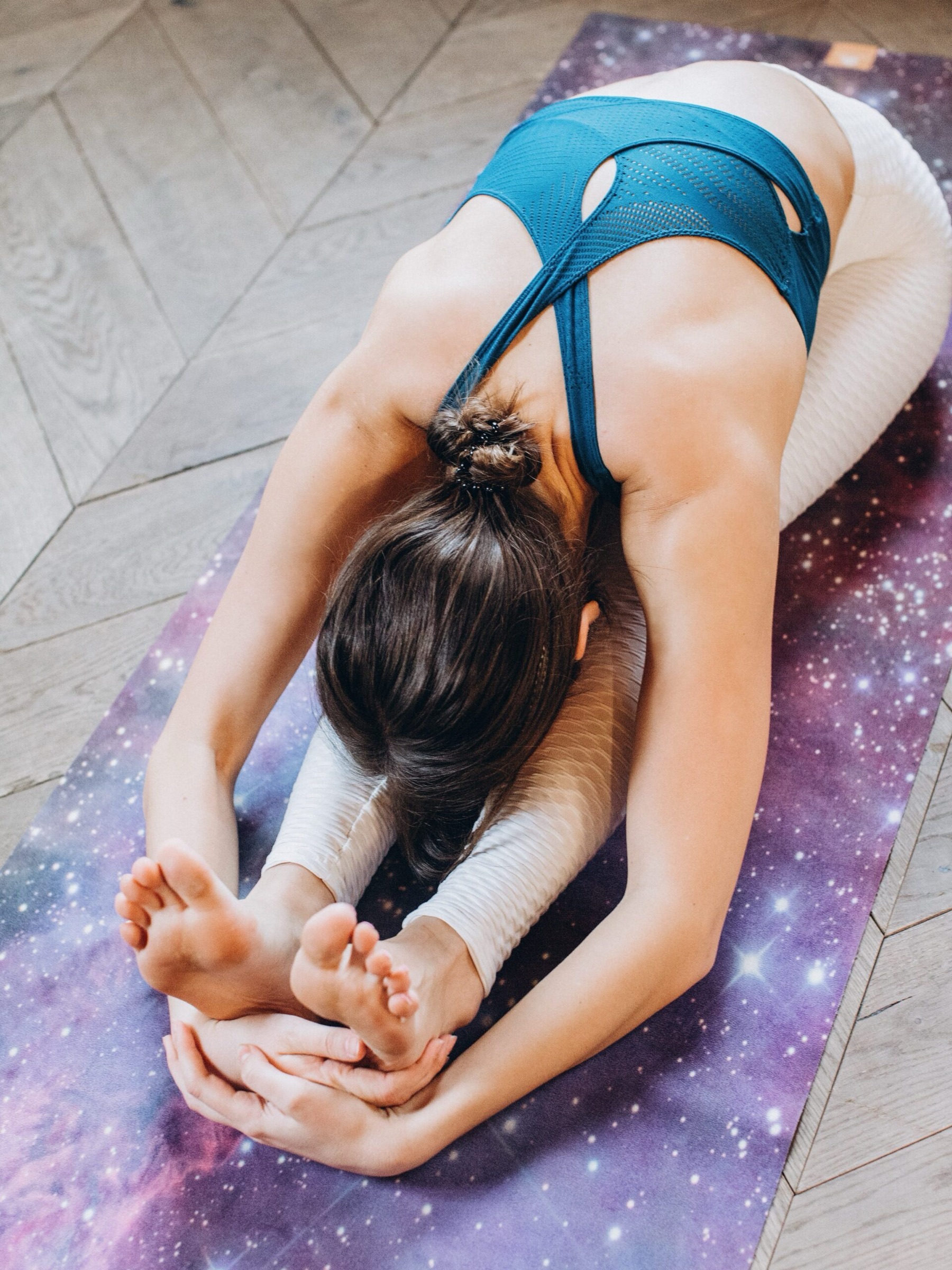
With guided imagery, or a fantasy journey, you can easily dream yourself back to your last holiday destination or to another calm, relaxing place. During the journey, your attention and senses focus on the details of that place. You imagine what you see, hear, smell and feel. Because they involve all the senses and let you immerse yourself in another place, fantasy journeys can be a good way to distract yourself or redirect your thoughts when you're in pain or itching.
Guided imagery is one of the imagination exercises, in which you use the power of your imagination to reach a state of relaxation. With regular practice, you learn to link these images and feelings with relaxation. A fantasy journey can be done using only your own imagination, or it can be guided by a speaker.
7. Body scan
The body scan (called “Körperreise”, a journey through the body, in German) comes from the field of mindfulness practice. It is a kind of mental journey through the body in which you direct your attention to each part of your body in turn. All the sensations and feelings that come up are noticed without judgement and calmly accepted.
A body scan helps you perceive your body and its signals better and encourages you to accept your sensations. Depending on your needs, the exercise can be done as a short 10-minute version, for example, or at length in 30–40 minutes. A spoken guide can be helpful at the beginning.
Sources:
- https://pubmed.ncbi.nlm.nih.gov/30935542/ Wang C, Li K, Gaylord S. Prevalence, patterns, and predictors of meditation use among U.S. children: Results from the National Health Interview Survey. Complement Ther Med. 2019 Apr;43:271-276. doi: 10.1016/j.ctim.2019.02.004. Epub 2019 Feb 8. PMID: 30935542; PMCID: PMC6502253.
- https://journals.sagepub.com/doi/abs/10.1177/0898010115570363 Chan RR, Larson JL. Meditation Interventions for Chronic Disease Populations: A Systematic Review. Journal of Holistic Nursing. 2015;33(4):351-365. doi:10.1177/0898010115570363
- https://www.liebertpub.com/doi/abs/10.1089/acm.2019.0206 Macinko J, Upchurch DM. Factors Associated with the Use of Meditation, U.S. Adults 2017. J Altern Complement Med. 2019 Sep;25(9):920-927. doi: 10.1089/acm.2019.0206. Epub 2019 Aug 5. PMID: 31381366. (abstract)
- https://journals.lww.com/jcnjournal/Fulltext/2018/03000/Meditation__A_Strategy_With_Promise_in_Chronic.8.aspx Macinko J, Upchurch DM. Factors Associated with the Use of Meditation, U.S. Adults 2017. J Altern Complement Med. 2019 Sep;25(9):920-927. doi: 10.1089/acm.2019.0206. Epub 2019 Aug 5. PMID: 31381366.
- https://pubmed.ncbi.nlm.nih.gov/34631261/ Graubard R, Perez-Sanchez A, Katta R. Stress and Skin: An Overview of Mind Body Therapies as a Treatment Strategy in Dermatology. Dermatol Pract Concept. 2021 Sep 1;11(4):e2021091. doi: 10.5826/dpc.1104a91. PMID: 34631261; PMCID: PMC8480446.