
Treatment Principles: Acute Therapy versus Proactive Therapy
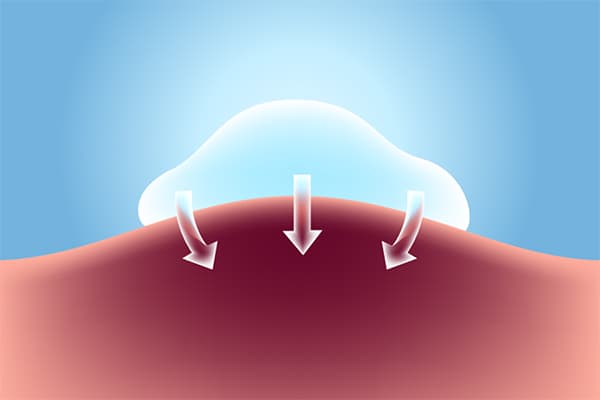
If eczema frequently and quickly returns to previously treated areas shortly after stopping anti-inflammatory therapy, there is an alternative treatment strategy alongside acute therapy. Its principle is explained here:
Acute Flare-Up Treatment
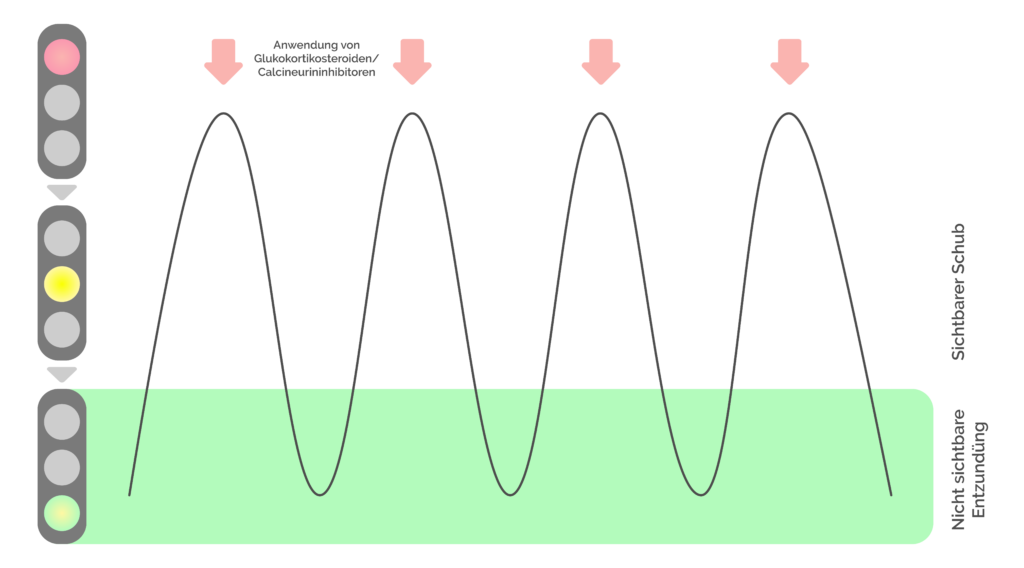
What is acute therapy? Acute therapy refers to treatment measures that are taken acutely — that is, immediately or quickly — in order to treat the condition.
Proactive Therapy
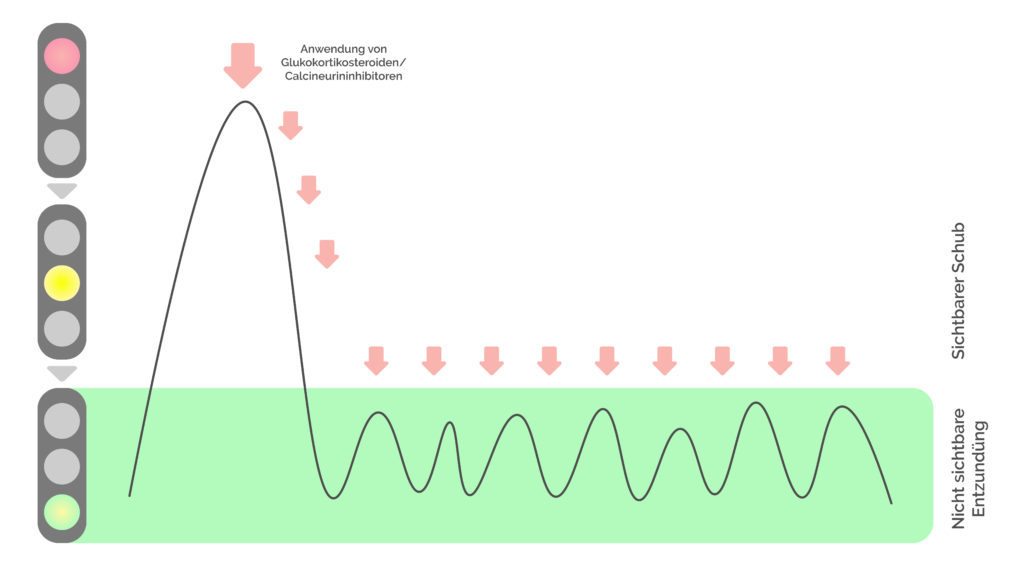
What is proactive therapy? Proactive therapy describes the approach of not completely stopping topical treatment once the eczema has cleared, rather than waiting for a new flare-up to appear. Instead, treatment is actively continued as part of proactive therapy.
Proactive Therapy (Intermittent Maintenance Treatment)
- Proactive therapy principle applicable for
- the use of topical glucocorticosteroids
- the use of topical calcineurin inhibitors
- Generally the recommended approach following acute therapy (as described above) and frequent recurrence of acute flare-ups
- Once healing has occurred, continued application to previously affected areas for approximately 3 months:
- With topical glucocorticosteroids (cortisone) 1–2 times per week
- With topical calcineurin antagonists 2 times per week (e.g. Tuesdays and Saturdays) once per day
Should skin inflammation not be controllable using the external treatment strategies described above, systemically acting anti-inflammatory medications may be used. For children, Cyclosporin taken orally as well as Dupilumab as a subcutaneous (= under the skin) injection are currently available for this purpose. Treatment with these medications should be reserved for experienced physicians.