
Diet and eczema – what children need
Your own child suffers from severe eczema. For many parents, this is an extremely challenging situation. In everyday life, the question of the ideal diet for eczema in particular can quickly cause uncertainty.
Which diet helps my child with eczema most? What are the ideal foods? Which products are an absolute no-go for my child?
This article aims to answer these questions and offer inspiration and food for thought about your own diet or your child's diet in connection with eczema. For children, it is often a huge motivation when their parents, their big role models, lead by example when it comes to food…
Diet in eczema and the link to food allergies
There are only a few other allergic conditions for which a clear link to food is suspected as often as in the chronic disease atopic dermatitis. The UGB (Verein für unabhängige Gesundheitsberatung, an association for independent health advice) even assumes that intolerance reactions to foods or food components play a role in 20 per cent of people with atopic dermatitis.
It should also be noted that it is currently considered very likely that children whose eczema appears quite early (at around three months of age) have a high risk of a food allergy. According to the Deutscher Allergie- und Asthmabund (German Allergy and Asthma Association), the same applies to children who develop moderate to severe atopic dermatitis in their first year of life.
In this context, it can be advisable to have an allergy test for cow's milk, hen's egg, wheat, peanut and/or hazelnut carried out in infancy and early childhood. In addition, the doctor can identify the problem foods with the help of a so-called low-allergen elimination diet (the baby is put on a basic diet consisting of an extensively hydrolysed protein formula) and various test methods (e.g. the skin prick test).
THE eczema diet plan — there is no such thing
Which foods cause problems for an individual person with eczema varies greatly from person to person. Once parents (together with a doctor/nutrition counsellor) have identified the foods or ingredients their child cannot tolerate, it can make good sense to have an individual diet professionally drawn up by an expert. Unfortunately, there is no single diet plan, or perfect eczema diet, that helps everyone with eczema equally.
The following foods, among others, trigger allergic reactions more often in children with eczema:
- Milk, chicken and soy protein
- Wheat products
- Meat, especially pork
- Highly processed industrial foods (= ready-made products)
*TIP: Additives such as preservatives and colourings, which are often found in ready-made products, are suspected of making the skin of people with eczema worse. So it is always a good idea to read the product information very carefully.
In summary, a balanced and healthy diet with three portions of vegetables and two portions of fruit (organic if possible) can be a good first guide. It is also advisable to cook fresh food yourself as much as possible.
*TIP: When cooking, it is better to use plant fats with polyunsaturated fatty acids, such as sunflower oil and olive oil, instead of butter or lard. It can also be an important factor to consciously enjoy meals together with your child — especially because this is unfortunately all too often lost in stressful everyday life…
There are also foods that, generally speaking, tend to be well tolerated by children with eczema. Examples include (you can find a detailed list at NDR):
- Bread and (gluten-free) grain products made from millet, oats, spelt, buckwheat
- Dried fruit without added sugar, rice cakes
- Sweet apple varieties, blueberries, mango, watermelon
- Leafy salads, various types of cabbage, broccoli, potatoes, pumpkin, sweetcorn, chard, mushrooms, beetroot, cucumber, asparagus, courgette
In general, the whole family’s diet should be wholesome, meaning the daily diet should contain all the essential nutrients, minerals and vitamins the body needs to maintain health and performance. The food pyramid can be helpful in selecting the right foods.
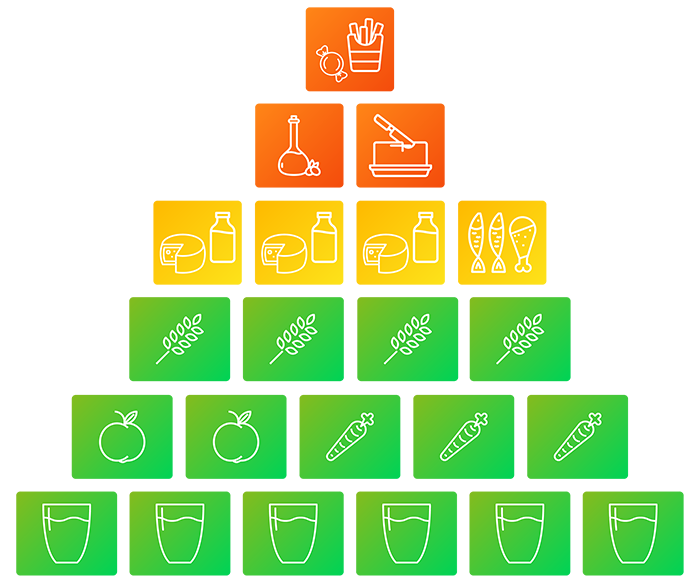
© BLE
All food groups should be included in the amounts this pyramid shows.
So the diet for eczema does not fundamentally differ from the diet of a child without eczema!
Only if a child cannot tolerate certain foods do those foods need to be avoided, once an allergy has been confirmed. If it’s a single food item, such as kiwi, omitting that fruit doesn’t affect the overall nutritional balance. However, if a child is intolerant to an entire food group, like milk and dairy products, a significant portion of the pyramid is excluded. To ensure the child still maintains a healthy and balanced diet, the avoided foods need to be replaced.
Professional guidance is essential
In this case, it is strongly recommended to seek guidance from a nutrition professional with expertise in allergies. You can find suitable contacts through the network “Allergologically specialised nutrition professionals” of the German Allergy and Asthma Association (DAAB, www.daab.de), the Working Group Dietetics in Allergology (www.ak-dida.de) and, for people in Switzerland, aha! Allergiezentrum Schweiz (www.aha.ch).
Looking beyond your plate
Finally, it should be mentioned that diet must not be considered in isolation when treating atopic dermatitis. Just as focusing only on ointments or creams is often not enough for lasting treatment success. Holistic treatment concepts that include all the factors that trigger the disease (including diet) are recommended.
*TIP: An eczema diary can help you find out which foods have encouraged flare-ups, so that you can then avoid them completely. The eczema app Nia can support you with this documentation.