
When eczema affects babies: 4 important treatment options
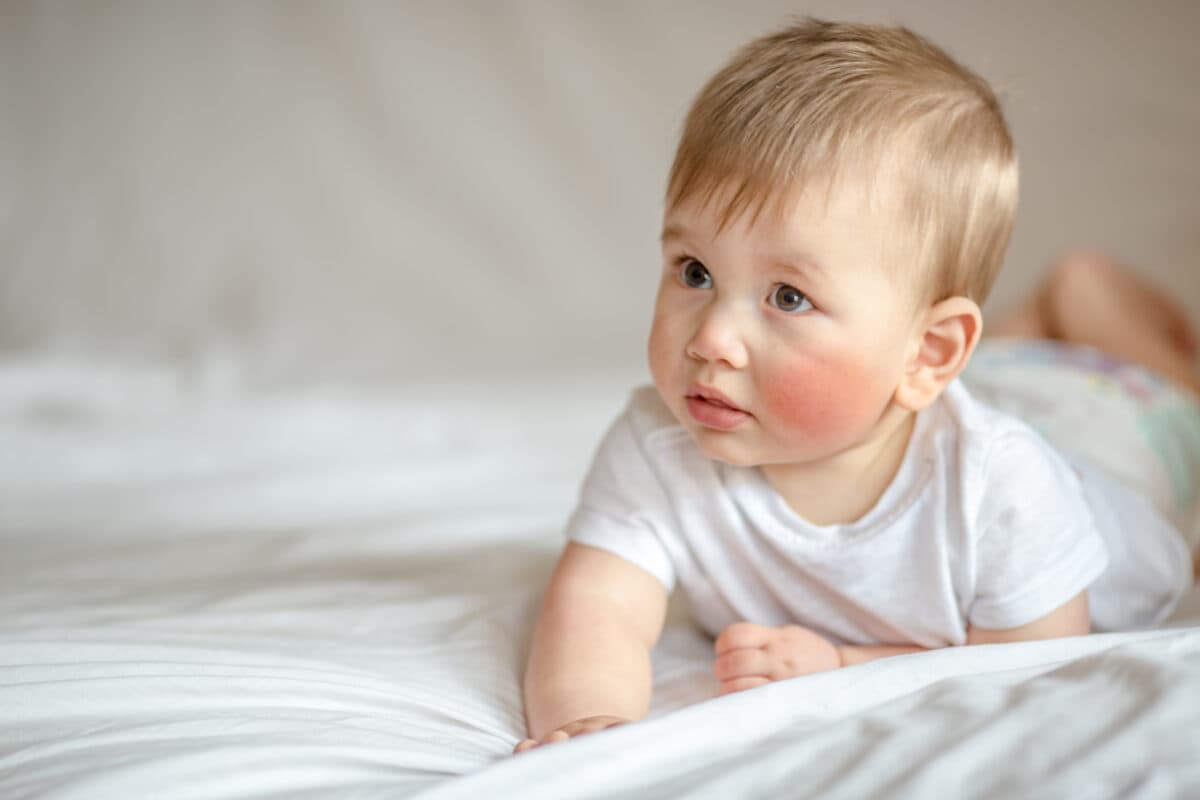
When eczema affects babies, it can be a challenge that parents have to deal with. It is important to be well informed and to take the right steps to help your baby cope with the symptoms of this skin condition. Eczema is one of the most common skin conditions in babies and children. One in six to one in twelve children under the age of six has eczema. Here you will find the most important things you need to know about eczema in babies.
Baby eczema: definition and causes
Eczema, also called atopic dermatitis, is a chronic skin condition characterised by itchy, inflamed skin. It often occurs in babies but can affect people of any age. The exact cause of eczema is not fully understood, but it is thought that a combination of genetic, environmental and immunological factors plays a role:
- Genetic predisposition: Babies whose parents or siblings have eczema are at increased risk of developing the condition themselves. A genetic predisposition is therefore considered one of the main factors behind eczema in babies.
- Malfunction of the immune system: In eczema, the immune system overreacts to certain stimuli, which leads to an inflammatory reaction in the skin. This malfunction of the immune system can also lead to eczema in babies.
- Environmental influences: Various environmental factors such as dry air, cold, certain clothing materials or even stress can encourage eczema in babies or make it worse.
Did you know that taking antibiotics during pregnancy increases the risk of eczema in the baby?
Antibiotics are medicines used to treat bacterial infections. However, antibiotics can not only fight harmful bacteria but also damage the useful bacteria that live in our body.
In fact, our gut is populated by tiny living organisms that we call “good bacteria”. These bacteria play an important role in supporting our immune system and maintaining a healthy balance in our body. Together with other microorganisms, they make up the gut flora.
Some research studies have shown that a change in the mother's gut flora during pregnancy could increase the risk of the baby developing eczema. It is thought that this change in the bacterial composition may influence the baby's immune system and encourage the development of eczema. You can read more fascinating information about eczema and gut flora here.
Recognising the symptoms: how eczema affects babies
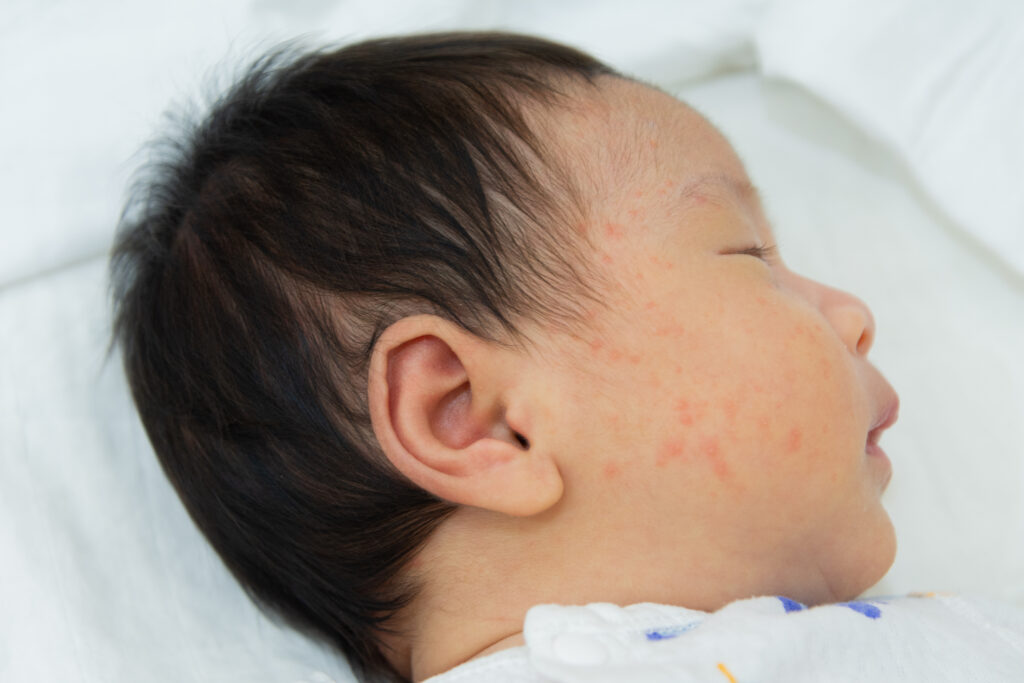
Baby eczema symptoms typically appear on the head
When eczema affects babies, it often shows itself through various symptoms. Typical signs are:
- Red, scaly rashes that often itch
- Dry, cracked skin, especially on the cheeks, the head and in the creases of the joints
- Scratch marks, which can result from scratching the affected areas
So-called milk crust is one of the first signs of eczema in babies. It causes greasy, yellowish scaling on the scalp that resembles a crust of milk.
How does eczema affect a baby's health?
The health of a baby with eczema is usually not seriously at risk, but the symptoms and course of the condition can affect the well-being of the baby and their family. Eczema is first and foremost a chronic skin condition that is not contagious. Although the symptoms can be unpleasant, eczema does not usually lead to life-threatening complications.
Nevertheless, eczema can have a considerable impact on the daily life of the baby and their family. The constant itching can make the baby restless and sleep poorly, which in turn can affect the well-being and mood of the whole family. Scratch marks can lead to infections that then need medical treatment.
If your baby has eczema, the risk of other conditions may be increased. Here are some possible links:
- Asthma: Studies have shown that children with eczema may have an increased risk of developing asthma. These two conditions belong to the so-called atopic diseases and can have shared genetic and immunological causes.
- Hay fever (allergic rhinitis): Children with eczema also have an increased risk of developing hay fever. As with asthma, an atopic predisposition is a risk factor for developing hay fever.
- Food allergies: Some studies suggest that children with eczema may have a higher risk of food allergies. It is important to note, however, that not all children with eczema also develop food allergies.
Where should you go with eczema in babies?
If you suspect eczema symptoms, it is important that you see a paediatrician with your baby, because the diagnosis is made by a doctor. Skin specialists are called dermatologists. Sometimes, however, an allergy test is also needed. This is then usually done by ear, nose and throat (ENT) doctors. Based on the diagnoses, targeted treatment of your baby's eczema can be started. The earlier eczema in a baby is recognised and treated, the more likely it is that severe courses of the skin condition can be prevented.
Eczema: treating your baby properly
The treatment of eczema in babies focuses on relieving the symptoms and calming the skin. Here are some treatment options:
1. Skin care
Regular, gentle skin care is crucial when eczema affects babies. Use mild, fragrance-free cleansers and moisturisers to keep your baby's skin hydrated. Emollient moisturisers are especially suitable in winter. Take care not to wash the skin too much, as excessive washing can dry it out.
2. Clothing and bedding
Choose loose, breathable clothing made of soft materials such as cotton to minimise irritation. Wash your baby's clothes and bedding with a mild detergent suitable for sensitive skin, and rinse them thoroughly to remove residues.
3. Avoiding triggers
Certain factors can trigger eczema in babies or make symptoms worse. These include irritants such as chemicals in cleaning products or cosmetics, certain foods, allergenic substances such as animal hair or pollen, and extreme temperatures. Try to identify these triggers and avoid them to protect your baby's skin. The best way to identify the individual triggers of your baby's eczema is with the Nia app.
4. Medication
For eczema, a stepwise therapy is recommended. This means that the intensity of treatment is adjusted to the form and severity of the eczema. In some cases, your doctor may prescribe medication to treat the symptoms of eczema in your baby. This includes topical steroids. These are corticosteroid creams applied to the skin to treat eczema. But there are also medicines that contain an active substance other than corticosteroids, known as calcineurin inhibitors.
Your doctor knows which medicine is best for your baby's eczema. Raise your questions and concerns openly, and seek medical advice if the prescribed medicines do not work as expected.
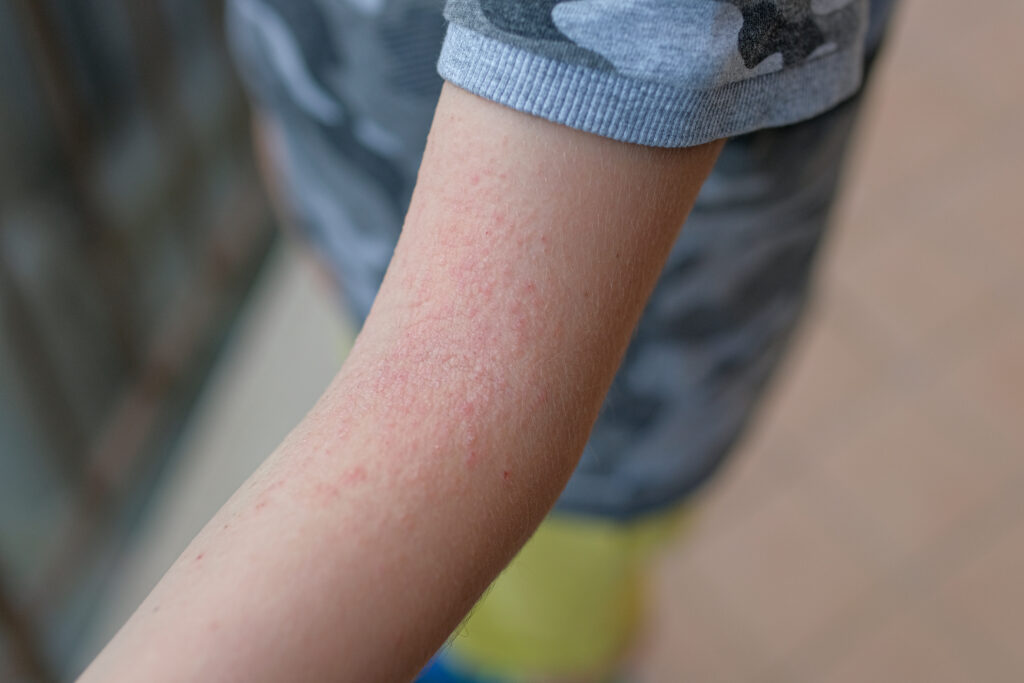
Recognising eczema in babies
What helps babies with mild eczema?
A few basic habits help your baby with mild eczema to relieve the symptoms or even prevent them:
Daily skin care: Make sure you do not bath or shower your baby for too long or in water that is too hot. Immediately afterwards, you should apply an emollient ointment. Caring for your baby's skin every day reduces the drying out of the skin.
Skin-friendly clothing: Certain fabrics such as wool or synthetic fibres can irritate your baby's skin. Clothing that is too tight can also cause sweating and thus make eczema worse. Clothing made of cotton or linen, on the other hand, is suitable.
Trim fingernails: With long, sharp fingernails, your baby's scratching can make the eczema worse. Dirt also collects more easily under the fingernails. Short fingernails therefore also prevent additional skin infections.
What influence does diet have on baby eczema?
An adapted diet can have a significant influence on the treatment of eczema in babies. Here are some nutrition tips you can consider:
- Breastfeeding: Breastfeeding is often recommended, because breast milk is the best food for babies and can help reduce the risk of eczema.
- Avoiding potential allergens: Some babies can be allergic to certain foods, which can lead to eczema. It can help to avoid potential allergens such as dairy products, eggs, nuts and wheat products in the first months of life. Have this checked by a doctor.
- Omega-3 fatty acids: A diet rich in omega-3 fatty acids may have anti-inflammatory properties and help relieve eczema symptoms. Fish such as salmon, mackerel and sardines are good sources of omega-3 fatty acids.
- Probiotics: Probiotics are living microorganisms that have a positive effect on the gut flora. They are found in foods such as yoghurt and fermented vegetables and can support gut health and strengthen the immune system, which in turn can have a positive influence on eczema. Nevertheless, the effect of probiotics on eczema is still disputed and not yet sufficiently proven scientifically. You can read more about probiotics and eczema here.
It is important that you talk to a paediatrician or a nutrition counsellor before you make any changes to your baby's diet. Individual advice can help you find the right nutrition strategy for your baby and avoid possible risks.
How parents can cope with their baby's eczema
Dealing with your baby's eczema can also be very challenging emotionally. Be aware that no one is to blame for the chronic skin condition and that there are now very good treatment options for eczema in Germany. Nevertheless, the following aspects also play an important role:
- Emotional support: Psychologists can help you deal with feelings such as guilt, fear, frustration and being overwhelmed, which often go hand in hand with caring for a baby with eczema.
- Information: Patient leaflets and conversations with doctors explain the skin condition eczema and so contribute to a better understanding of your baby's symptoms.
- Coping with stress: With targeted stress reduction techniques, you can learn to deal with the strain that comes with caring for a baby with eczema.
- Communication: psychological support can help you communicate effectively with each other and with the medical team to ensure the best possible care for your baby.
Psychological support is an important part of comprehensive care for families affected by eczema. With the support of a psychologist, you can learn to recognise your own needs, cope with distressing emotions and ensure the best possible care and support for your baby.
When eczema affects babies, you don't need to despair
Sources:
- https://www.ncbi.nlm.nih.gov/pmc/articles/PMC2137073/
- https://www.webmd.com/parenting/baby/baby-eczema-questions-answers
- https://www.formelskin.de/neurodermitis/schweregrade/leichte-neurodermitis
- https://www.kindergesundheit-info.de/themen/krankes-kind/erkrankungen/allergien/neurodermitis/#:~:text=Erstes%20Anzeichen%20einer%20Neurodermitis%20kann,und%20ist%20mit%20Schuppenkrusten%20bedeckt.