
Which eczema cream is right for you?
There are a few things to bear in mind when choosing the right eczema cream. We are here to help. Here you will find out which different creams and ointments are available for treating and caring for eczema and what to consider when choosing one.
Why is an eczema cream important?
In people with eczema, the skin barrier is impaired. As a result, the skin constantly loses moisture and becomes dry. Germs and allergens can also get into the skin more easily. The result is itchy, inflamed skin. A suitable cream can help relieve the inflammation and itching during a flare-up.
Between flare-ups, a suitable basic therapy makes sense to strengthen the skin barrier and extend the time without flare-ups. Because when the skin barrier is in good shape, germs and allergens find it hard to get in and trigger inflammation.
What creams for eczema are there?
When you have no symptoms, it is important to strengthen your skin with basic therapy. Creams and ointments that supply the skin with moisture and fats help here. Depending on your needs, the ingredients of basic skin care are more or less suitable. For example, eczema skin in winter needs different care than in summer.
Suitable for basic therapy are:
- Rich, high-fat ointments:
For dry eczema skin that is even scaly, an ointment with a high fat content helps. Heated indoor air in winter also leads to dry skin. That is why in winter it is better to use an ointment with a higher fat content than in summer. The rule is: fat on dry
- Moist creams, lotions or hydrogels with urea or glycerine:
For weeping eczema skin, creams, lotions and hydrogels that provide moisture help. Eczema creams like these are used more often in summer. This is because at this time of year the skin is less dry than in winter.
The rule is: moist on moist
Here you can look for the ingredients urea (carbamide) and/or glycerine. Urea and glycerine regulate the moisture of the skin. However, urea can cause a slight burning sensation on the skin, especially during a flare-up or in children. In these cases, a cream with glycerine is the better choice.
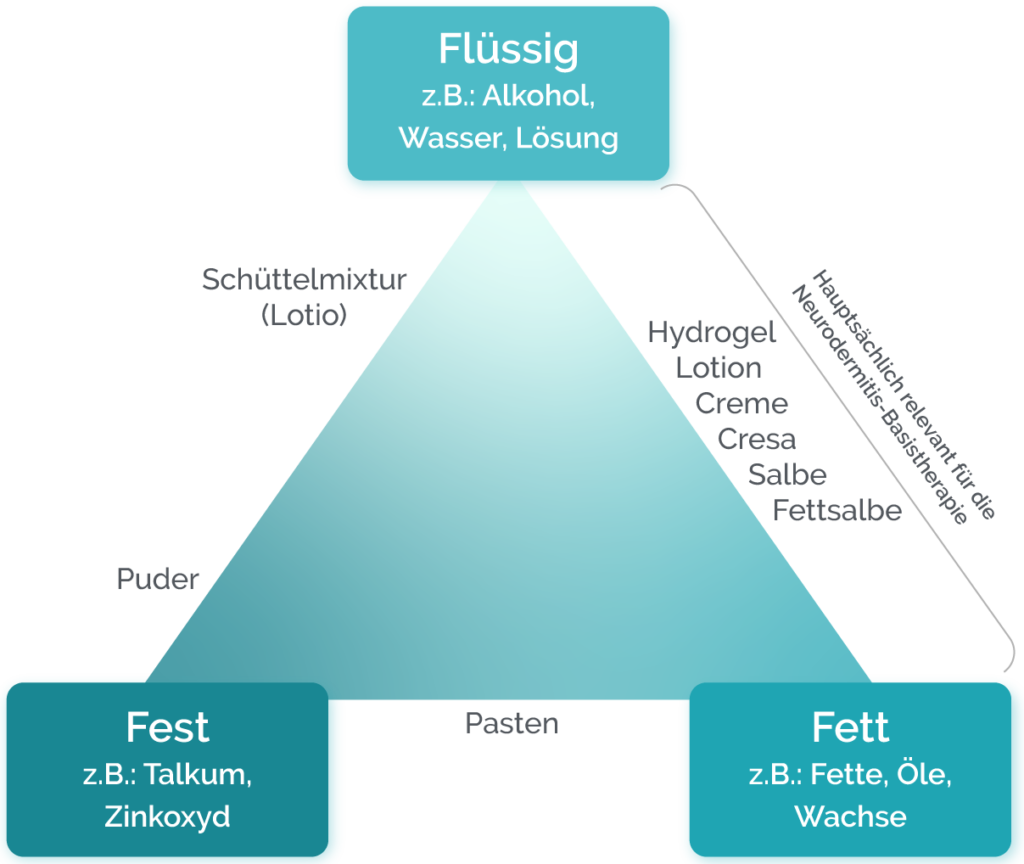
Basic skin care usually provides not just fat or moisture but combines both. Depending on your needs, you can choose a cream or ointment with a higher fat or moisture content. To do this, you can look at the order of the ingredients. It tells you which ingredient is contained in larger amounts and which in smaller amounts. The first ingredient listed is present in the largest amount and the last in the smallest.
Eczema creams with active ingredients during a flare-up
However good your basic therapy is, at some point your eczema will come back with a flare-up. Then it is important to adapt your eczema cream. Now the aim is to reduce the inflammation and relieve the itching.
Creams with the following active ingredients are suitable here:
- Corticosteroids
Creams containing corticosteroids reduce inflammation quickly and effectively. Almost all of them are prescription-only. The exception is low-dose hydrocortisone. If you want to use it on your child, you should still discuss this with the doctor treating them.
- Calcineurin inhibitors
Creams with calcineurin inhibitors relieve the symptoms of inflamed skin. Calcineurin inhibitors include tacrolimus and pimecrolimus. They are an alternative to corticosteroid creams if these are not tolerated. They are also preferred on the face and neck. Creams with calcineurin inhibitors can also be appl
- Polidocanol
Creams with the ingredient polidocanol effectively relieve itching by slightly numbing the skin. They can also be used for itchy skin between flare-ups.
- Tannins
Tannins can relieve inflammation and itching and regulate the moisture of the skin. Children usually tolerate them well, too.
What do you need to bear in mind?
Now you know which ingredients can help eczema skin. It is also important to know which ingredients you can avoid so as not to irritate your skin unnecessarily. These include:
- fragrances such as perfume
- colourings
- preservatives
As a general rule: always test creams on a small patch of skin first. If your skin does not react with inflammation 48 hours after applying it, you tolerate the cream and can apply it to larger areas of skin.
In addition, the Deutscher Allergie- und Asthmabund (DAAB, German Allergy and Asthma Association) awards a label to products that are particularly suitable for people with eczema. So the next time you buy an eczema cream, you can look out for the DAAB logo:
Sources
JDDG: Journal der Deutschen Dermatologischen Gesellschaft – Wiley Online Library
Diagnosis and stepwise therapy of atopic dermatitis (aerzteblatt.de)