
Vitamin E for eczema: great skin without side effects?
Vitamin E is inexpensive and has no side effects when used normally. But can vitamin E relieve eczema? Eczema, also called atopic dermatitis, is a chronic condition marked by dry, itchy and reddened skin. Vitamin E is not a standard treatment option for eczema. However, alongside eczema treatment, it might possibly have a positive effect on the skin. Find out here whether vitamin E is worth it for eczema.
Vitamin E for eczema: more than a free radical scavenger
Vitamin E is a fat-soluble substance and comes in different forms. Vitamin E is known for its antioxidant properties. This matters because some components of food, but also smoking or air pollution, cause our body to produce so-called free radicals. When there are too many free radicals in our body, “oxidative stress” occurs. Among other things, this damages our cells and speeds up ageing processes. Antioxidants such as vitamin E act as “free radical scavengers” and so protect the cells.
But besides protecting against heart disease and stroke, vitamin E is also said to support the immune system. Newer studies suggest that vitamin E can lower the amount of certain antibodies (IgE antibodies) in people with eczema. IgE antibodies play a central role in the disease process of eczema. Vitamin E might also strengthen the skin barrier. Because of these factors, vitamin E might possibly relieve eczema.
Relieving eczema with vitamin E
A scientific study set out to investigate whether vitamin E can reduce eczema symptoms. For this, people with eczema were divided into two groups. One group took vitamin E capsules every day, the other only a placebo. After four weeks, the vitamin E group showed the following effects compared with the placebo group:
less itching
lower SCORAD scores (an index used to assess the severity of eczema clinically)
better skin health
As this is a single study with a small number of patients, further studies are needed before reliable recommendations can be given.
Vitamin E can be taken orally (by mouth) or applied topically (on the skin). Most studies look at taking vitamin E orally. However, most people also tolerate creams enriched with vitamin E. Such creams could help improve skin health by strengthening the skin barrier so that the skin dries out less quickly.
Dietary supplements and their role in eczema treatment
Dietary supplements such as vitamin E for eczema – no guarantee that they work
Dietary supplements are often used as part of a holistic treatment of eczema. Besides vitamin E, there are many nutrients that can play a role in skin health. Omega-3 fatty acids, for example, are known for their anti-inflammatory properties and can help reduce the inflammation in the body that plays a role in eczema. Probiotics are another popular supplement, as they can help restore the balance of the gut flora and strengthen the immune system, which in turn can improve the symptoms of eczema.
What to look out for with dietary supplements
Before you use dietary supplements to treat eczema, it is important to talk to a specialist doctor or nutrition expert. They can help you choose the right supplements and set the right dose for your specific needs. It is also important to choose high-quality supplements from trustworthy manufacturers to make sure you get the best possible results.
Below, we give you tips on how to find out for yourself whether vitamin E has positive effects on your eczema.
How to get vitamin E for eczema

By keeping a food diary, you can find out whether vitamin E improves your eczema symptoms. But how much vitamin E do we actually need? The German Nutrition Society (Deutsche Gesellschaft für Ernährung, DGE) recommends that women take in 11 to 12 mg and men 12 to 15 mg a day through food. The recommendation varies with factors such as age, sex or whether you are pregnant.
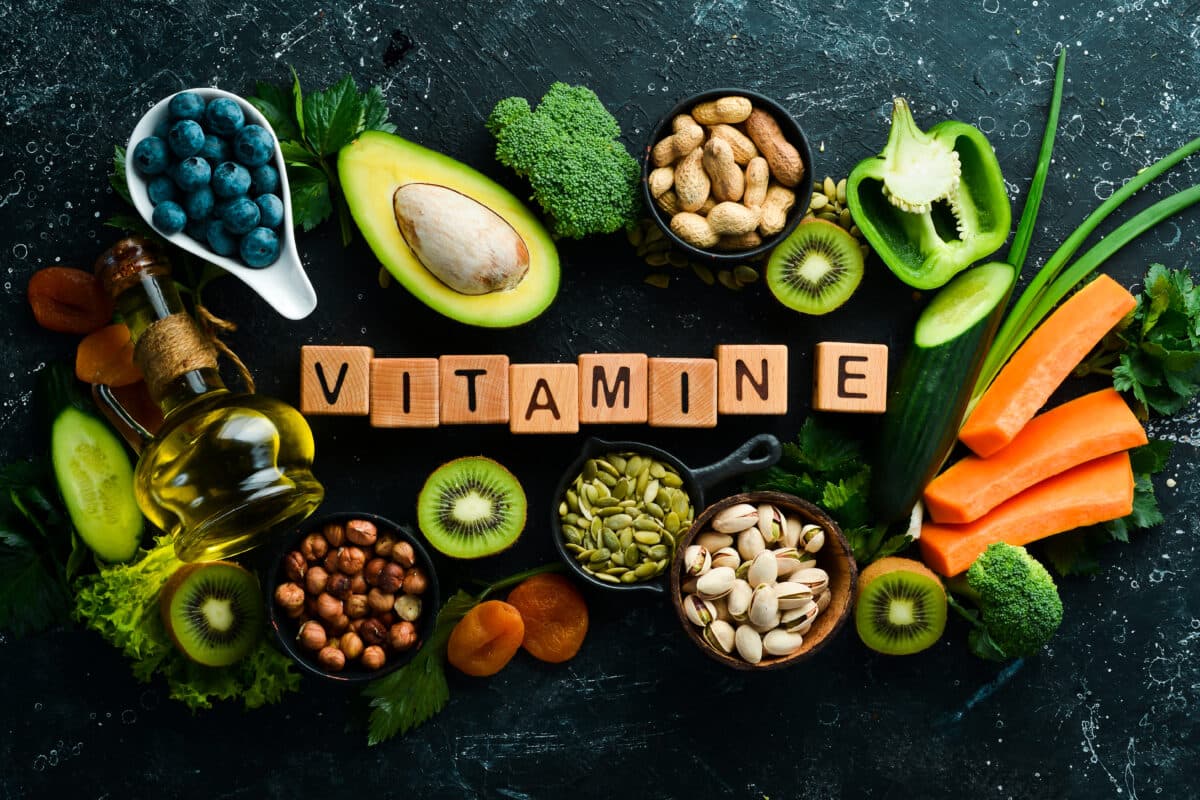
Because vitamin E is fat-soluble, it has to be taken together with some fat. However, natural foods that contain the vitamin usually contain fat anyway. You will find particularly large amounts in:
Vegetable oils such as rapeseed oil, sunflower oil, wheat germ oil
Green vegetables such as spinach and broccoli
Nuts and seeds such as almonds, sunflower seeds, hazelnuts and peanuts
Avoiding side effects from too much vitamin E
If you eat a balanced diet and regularly include the foods listed above in your meals, dietary supplements are not necessary. For example, one teaspoon of wheat germ oil already contains at least 20 mg of vitamin E. That more than covers an adult's daily requirement. Too much of a good thing harms the body instead.
According to the German Federal Institute for Risk Assessment (Bundesinstitut für Risikobewertung, BfR), high-dose dietary supplements (more than 30 mg of vitamin E) can cause harmful side effects. So talk to a doctor before taking such supplements. If you get your vitamin E from a balanced diet, you don't need to worry about any negative effects.
Using vitamin E for eczema with care
Vitamin E could be a promising option for treating eczema, based on various studies that show its anti-inflammatory and skin-caring properties. Although more research is needed to fully understand how well it works, people with eczema may benefit from using vitamin E, whether applied topically or as a supplement. However, it is important to talk to a professional before trying new treatments, to make sure they are safe and effective. Vitamin E cannot replace eczema treatments, though; at most it can accompany them.
Sources:
- Shi, K., & Lio, P. A. (2019). Alternative Treatments for Atopic Dermatitis: An Update. American journal of clinical dermatology, 20(2), 251–266. https://doi.org/10.1007/s40257-018-0412-3
- Jaffary, F., Faghihi, G., Mokhtarian, A., & Hosseini, S. M. (2015). Effects of oral vitamin E on treatment of atopic dermatitis: A randomized controlled trial. Journal of research in medical sciences : the official journal of Isfahan University of Medical Sciences, 20(11), 1053–1057. https://doi.org/10.4103/1735-1995.172815
- Teo, C. W. L., Tay, S. H. Y., Tey, H. L., Ung, Y. W., & Yap, W. N. (2021). Vitamin E in Atopic Dermatitis: From Preclinical to Clinical Studies. Dermatology (Basel, Switzerland), 237(4), 553–564. https://doi.org/10.1159/000510653
- https://www.aok.de/pk/magazin/ernaehrung/vitamine/vitamin-e-tagesbedarf-wirkung-und-vorkommen/ accessed 28.02.2023
- https://www.verbraucherzentrale.de/wissen/lebensmittel/nahrungsergaenzungsmittel/vitamin-e-zum-schutz-vor-herzinfarkt-und-krebs-13834 accessed 28.02.2023