
Cortisone dependence: the Topical Steroid Withdrawal Syndrome
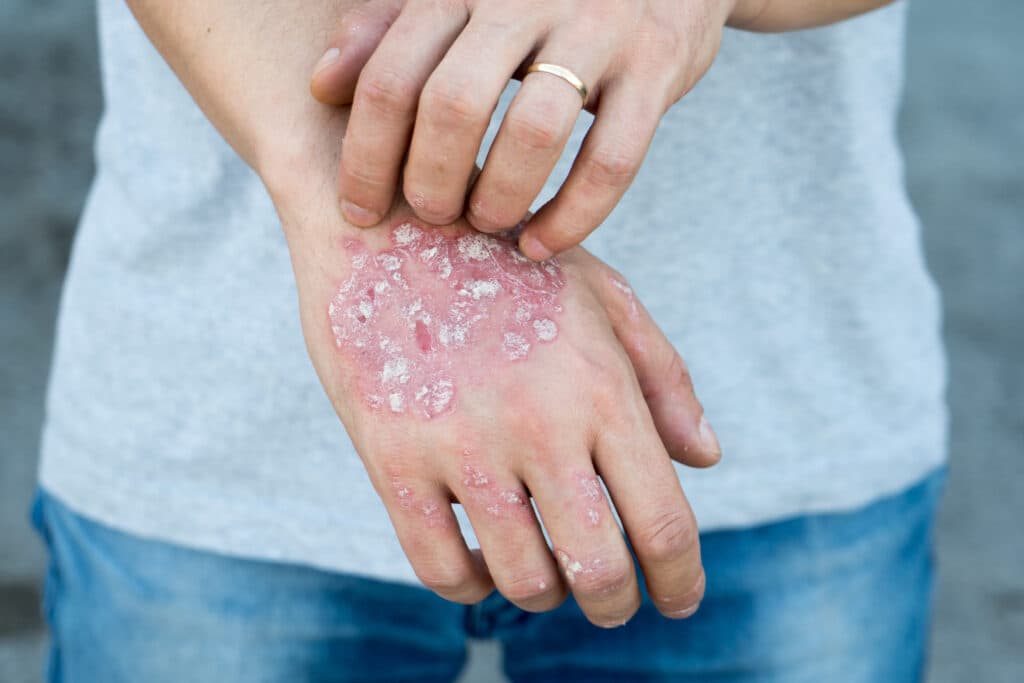
Ointments containing glucocorticoids are used to treat various skin diseases. If these ointments are applied for too long at a too high dosage, the skin disease can even worsen as soon as the therapy is stopped. In this article, we’ll tell you why you don’t need to be afraid of cortisone.
Cortisone is the first choice for atopic dermatitis
Glucocorticoids are produced by the body and fulfil important metabolic functions. Natural glucocorticoids include cortisone and hydrocortisone, among others. Due to their anti-inflammatory, anti-allergic and immune system-suppressing effects, they are also produced artificially and are used to treat many diseases (e.g. asthma, allergies, atopic dermatitis and psoriasis). Cortisone creams or ointments are usually the first choice of treatment for atopic dermatitis symptoms, as cortisone shows very rapid effects, including an effect on itching.
Glucocorticoids can be applied topically, i.e. to the skin, or systemically to the whole body via tablets or injections. Topical therapy is preferred for skin diseases. This is because possible side effects are higher with systemic therapy. On the other hand, the short-term and controlled use of cortisone on the skin is relatively safe.
What are glucocorticoids and what are they used for?
Steroid Phobia

During the middle of the last century, high doses of cortisone were used very frequently in medicine. Incorrect use at that time often led to side effects such as
- Thinner skin
- Pigmentation disorders
- Increased hair growth
- Stretch marks
This is why many people have developed a “steroid phobia”. However, research into cortisone has continued. Today there are glucocorticoids that have fewer side effects with the same benefits. This is why today’s cortisone ointments have almost no side effects. The prerequisite is that you use cortisone correctly.
If you use glucocorticoids as prescribed by your doctor, you don’t need to be afraid.
How to recognise Topical Steroid Withdrawal (TSW) Syndrome
Atopic dermatitis is a chronic disease. It is therefore quite normal for you to have another flare-up days or weeks after a cortisone-treated flare-up. For this reason, an ‘ordinary’ atopic dermatitis flare-up is difficult to distinguish from topical steroid withdrawal syndrome.
Topical Steroid Withdrawal (TSW) syndrome is also known as cortisone withdrawal syndrome. As the name suggests, the syndrome occurs once cortisone therapy has been stopped. There is still no standardised medical definition for the phenomenon. It is therefore sometimes unclear which symptoms belong to TSW syndrome and how often it occurs. The following symptoms are most frequently reported by those affected:
- severe burning and stinging on the skin
- severely reddened areas of skin, also known as erythema. This is caused by increased blood flow to the skin, which is triggered by inflammatory processes. Although this is not dangerous, it is very unpleasant.
- swollen skin on the eyelids
- scaly skin; skin peeling
- possibly itchy skin and psychological problems/depression
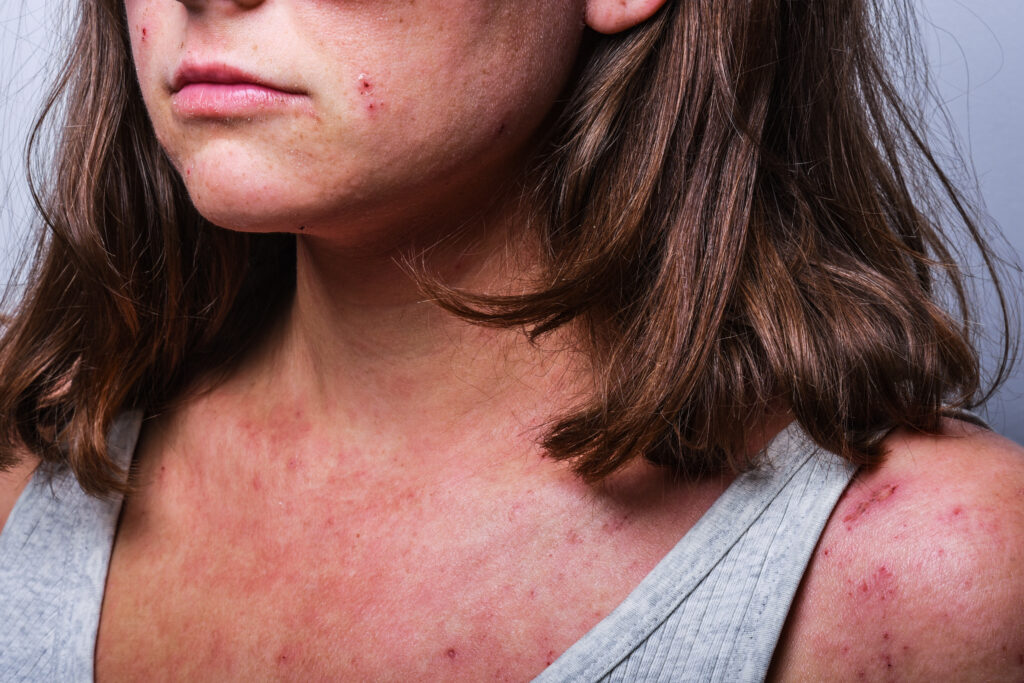
A history of frequent and prolonged cortisone use is important for the diagnosis of TSW syndrome. Almost all TSW cases have used strong glucocorticoids on their faces over a long period of time, often longer than 12 months. The first symptoms can occur days to weeks after the end of therapy. It can take weeks to years for the skin condition to normalise again.
How can TSW syndrome be treated?
There are no established guidelines on how TSW should be treated, but it is recommended to stop applying cortisone to the skin. Several studies have also shown a marked improvement in symptoms with the following medications:
- Tetracyclines (antibiotics)
- Antihistamines
- Calcineurin inhibitors
- Biologics such as dupilumab
As TSW syndrome is often prolonged and restrictive, psychological support can also be helpful for many sufferers.
Preventing TSW syndrome
With the correct use of cortisone, TSW syndrome can be prevented and atopic dermatitis flare-ups delayed.
Using cortisone correctly
Cortisone should only ever be applied briefly and thinly to areas of skin affected by atopic dermatitis. It is best to use other medications (calcineurin inhibitors), especially on sensitive skin areas such as the face. If cortisone has to be applied to the face, only weak glucocorticoids should be used for only a few days.
Tapering
As soon as cortisone is regularly applied to the skin over several days to weeks, it must not be stopped suddenly. So always reduce cortisone slowly (‘tapering off’). For example, the ointment can be applied every two days instead of every day. If the skin then remains stable, the cortisone can be reduced to every three days and so on until it is finally discontinued. By tapering down in this way, less cortisone is needed in the long term and even the next flare-up is significantly delayed.
Our body produces cortisone itself. However, if too much is taken in from the outside, the body’s own production stops. With extreme use, this can result in a lack of the body’s own cortisone after stopping. In such cases (especially with long-term tablet therapy) it may be necessary to consult a hormone specialist.
TSW syndrome is unlikely in Germany
In Germany, the use of glucocorticoids is strictly regulated. Only very weak glucocorticoids are available without a prescription, and even these can only be bought in pharmacies. This is why it is very unlikely to develop TSW syndrome here. Interestingly, it is not even listed as a side effect of topical glucocorticoids.
TSW syndrome occurs more often in countries where the use of glucocorticoids is not as strictly regulated as in Germany. Through social media networks, however, the syndrome has also become well known in Germany.
In Germany, glucocorticoids are subject to strict treatment rules, which is why you don’t need to be afraid of developing TSW syndrome if you use them as prescribed by your doctor.
References:
A systematic review of topical corticosteroid withdrawal (“steroid addiction”) in patients with atopic dermatitis and other dermatoses – PubMed (nih.gov) Accessed on: 12.10.2022
Steroid Withdrawal Effects Following Long-term Topical Corticosteroid Use – PubMed (nih.gov) Accessed on: 12.10.2022
Topical corticosteroid addiction and withdrawal – An overview for GPs – PubMed (nih.gov) Accessed on: 12.10.2022
Steroid Phobia: Is There a Basis? A Review of Topical Steroid Safety, Addiction and Withdrawal – PubMed (nih.gov) Accessed on: 12.10.2022