
Alkaline baths for eczema? A critical look at pH and bath additives
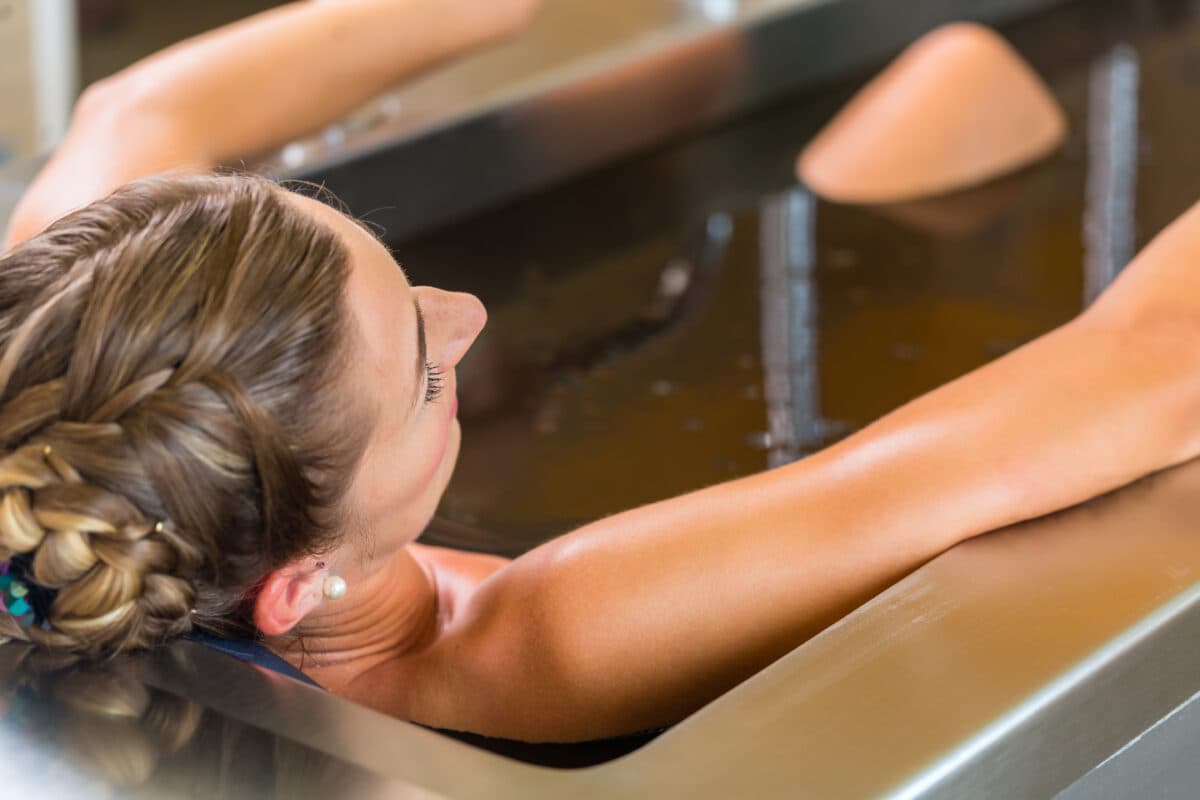
Alkaline bath additives that are said to help with eczema are advertised all over the internet. But does an alkaline bath really bring relief for eczema? In this article, you'll find out what to look out for with bath additives and what role pH plays in eczema.
Key points at a glance (expand)
Key points at a glance:
- Bathing in itself can do your skin good, as can combining it with sunlight, which, at the Dead Sea for example, acts more strongly on the skin because of the water. Balneophototherapy can be recommended for eczema.
- Ask for medical advice on bath additives for the times between flare-ups
- Certain bath additives such as sodium, magnesium and sulphur seem to have a positive effect on eczema. But pay attention to how your own skin tolerates these additives.
- Alkaline baths may also do your skin good. But this isn't because the body needs to be “de-acidified”.
Strongly alkaline products such as soaps can put further strain on the already disrupted pH of the skin in eczema. If possible, use special cleansing products with a neutral or low pH.
When a bath does your skin good
With eczema, the skin tends to be dry. The skin barrier is weakened and loses moisture faster than healthy skin. This often leads to scaling or to hardened skin around the hair follicles (keratosis pilaris). The skin is trying to protect itself from further moisture loss, but this in turn encourages itching and inflammation. Moisturising creams and creams with an exfoliating effect can prevent this kind of scaling. But once the skin has become scaly, baths can also do it good, because bathing can loosen the scales. Leftover ointment, which can build up when you apply cream often, also comes off in the bath. If you moisturise your skin well again after a bath, this can improve how your skin looks and feels.
During a flare-up, or if you have inflamed areas or open wounds, it's better to avoid baths and bath additives. Between flare-ups, a bath can do your skin good if you then care for it again with moisturising, lipid-replenishing creams.
Balneophototherapy is covered by health insurers
Balneotherapy is the healing effect of baths with specific added active ingredients. It is a bath therapy that doesn't use “ordinary” water. Instead, it uses water in which chemical substances with a therapeutic effect are dissolved in a higher concentration. Forms of balneotherapy include:
- Mineral spring baths / baths with bath additives, e.g.:
- Sulphur baths
- Brine baths
- Dead Sea salt baths
- Baths with magnesium solution
- Peat and mud baths
- Medicinal oil baths
- Contrast baths
- Drinking cures with mineral waters
- Inhalations
In eczema, balneotherapy mainly has a therapeutic effect when it is combined with phototherapy. This is then called balneophototherapy. Health retreats at the Dead Sea are quite popular for this reason, as the sun's rays act more strongly on the skin there because of the bathing. Balneophototherapy imitates this effect. For people with moderate to severe atopic dermatitis, balneophototherapy can now be covered by health insurers. Its positive effect on itching or, for example, sleeplessness can even exceed that of phototherapy alone.
Skin pH is raised in eczema
Normally, the pH of the skin is between 4.8 and 5.5, which makes it slightly acidic. This natural acidity protects the skin from drying out and from harmful substances. In eczema, the pH is around 7.4, which is considerably higher. Because the pH in eczema is in the neutral to slightly alkaline range, the skin no longer has an acid mantle.
Conventional soaps and cleansers are strongly alkaline. They temporarily raise the skin's pH many times over. In eczema, this makes it even easier for pathogens to get into the skin and irritate it. That's why there are cleansing and skin care products in the range of pH 5 to 5.5. These are especially recommended for eczema. In principle, cleansing your skin regularly is important with eczema too, and it isn't wrong.
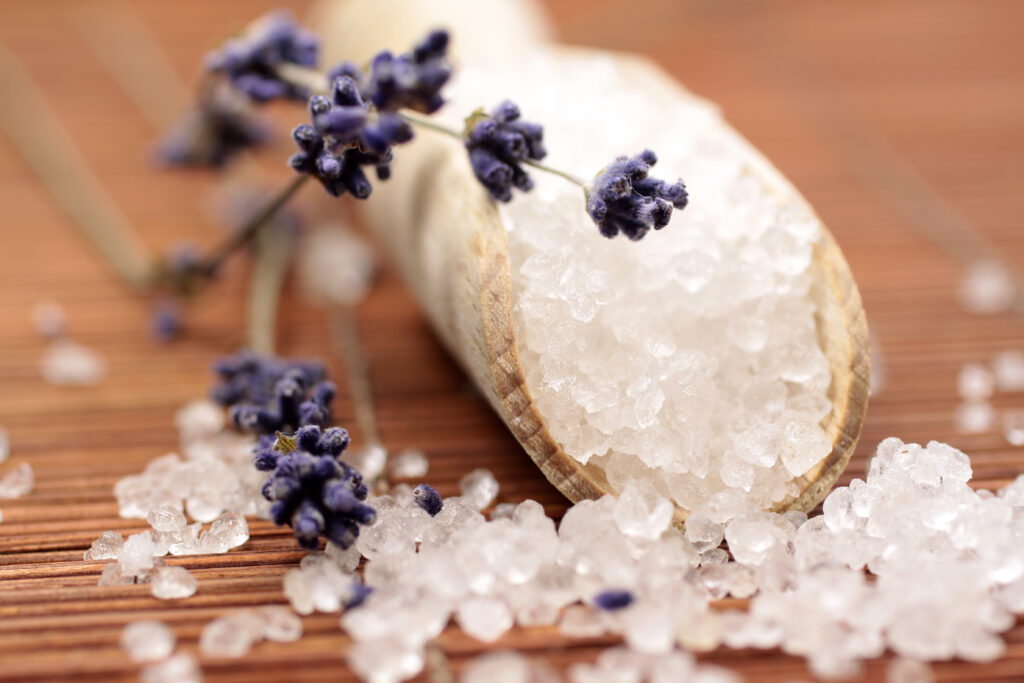
Small wooden scoop with bath salts and lavender
These bath additives are worth considering
Some substances such as sulphur, magnesium or a Dead Sea salt solution could improve the condition of your skin between flare-ups. Scientific findings show that acidic baths can also have a positive effect on the skin in eczema.
On the internet, people often say that the body needs to be “de-acidified” with alkaline baths. Based on current knowledge, however, this doesn't hold up. As described above, our skin even has a natural acid mantle. Even so, an alkaline bath may support your skin. Whether your skin benefits from these substances or from an alkaline bath can't be answered in general terms. Because every person's skin reacts differently to bath additives, it's best to ask for a medical recommendation on bath additives for the times between flare-ups.
If your skin gets worse, you should ask your dermatologist whether a bath is advisable at all. This sometimes depends on the individual condition of your skin. With inflammatory skin changes, take particular care when choosing shower and bath additives. Talking to your treating doctors is especially advisable if you take other medications or are on systemic therapy, as interactions can sometimes occur.
Sources:
- Gittler, J.K., Wang, J.F. & Orlow, S.J. Bathing and Associated Treatments in Atopic Dermatitis. Am J Clin Dermatol 18, 45–57 (2017). https://doi.org/10.1007/s40257-016-0240-2
Danby, S. G. & Cork, M. J. (2018). pH in Atopic Dermatitis. In S. Karger AG (ed.), pH of The Skin: Issues and Challenges (Vol. 54). Current Problems in Dermatology. https://doi.org/10.1159/000489523
Maarouf, M., Hendricks, A. J., & Shi, V. Y. (2019). Bathing Additives for Atopic Dermatitis – A Systematic Review. Dermatitis : contact, atopic, occupational, drug, 30(3), 191–197. https://doi.org/10.1097/DER.0000000000000459
Proksch E, Nissen HP, Bremgartner M, et al. (2005). Bathing in a magnesium-rich Dead Sea salt solution improves skin barrier function, enhances skin hydration, and reduces inflammation in atopic dry skin. Int J Dermatol ;44(2): 151–157.
https://www.aerzteblatt.de/archiv/213399/Neurodermitis-Balneophototherapie-wird-anerkannt, accessed 26.05.2023
https://www.zentrum-der-gesundheit.de/bibliothek/ratgeber/entsaeuerung/basenbad, accessed 26.05.2023