
Eczema on the face – the best protection in times of coronavirus
The current situation brings many challenges – especially now, we want to be there for you and support you as best we can. As COVID-19 is a completely new disease, some things are still unknown. Please check the KNOWLEDGE section of the Nia app regularly. We are trying to answer the most common questions as well as we can.
I have eczema on my face and find it very difficult to avoid touching my face, as is currently recommended. Are there any tips for this?
According to the American eczema association, the National Eczema Association, most people touch their face much more often than they realise. This can be especially true for people with eczema. Distraction techniques can be effective in reducing the habit or compulsion to touch and scratch your face. These can include playing handheld video games, arts and crafts or playing a musical instrument.
Similar to distraction is the idea of “competing responses”, where you replace an unwanted behaviour with another behaviour (habit reversal training). For example, if you (or your child) have the urge to touch your face, you could deliberately try doing something else, e.g. placing your hand firmly on your leg or making a fist. A competing sensory experience can also be effective. For example, a cool shower or an ice pack, which blocks the itchy messages going to the brain with other messages, such as the cool sensation of the ice pack.
But if you do have to touch your face, wash your hands first, avoid touching your nose, eyes and mouth, and perhaps use a clean cloth or a Kleenex.
I have asthma as well as eczema. Are people with asthma more susceptible to coronaviruses?
The German Allergy and Asthma Association (Deutscher Allergie- und Asthmabund, DAAB) provides detailed information on this.
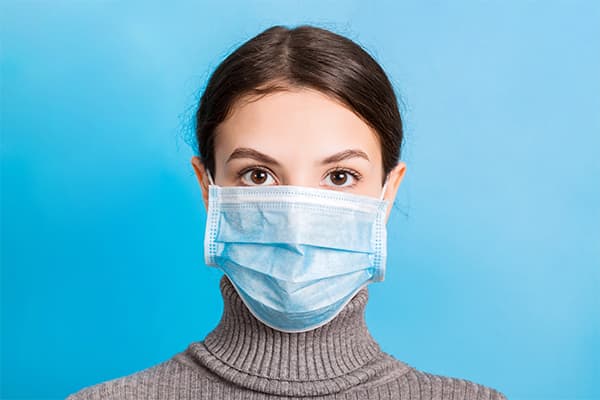
If I am told to wear a face mask, how can I prevent my eczema from getting worse or even triggering a flare-up?
Jeff Yu, paediatric dermatologist at Massachusetts General Hospital, gives the following advice: “If you are advised to wear a mask, you can take precautions to prevent the mask from irritating your eczema. I recommend first cleansing the skin with a gentle facial wash and drying the skin completely and carefully. Then apply a thin layer of a non-comedogenic facial lotion or cream to your whole face. The cream or lotion forms a barrier layer between the mask and your skin to prevent direct contact. Finally, put on the mask.
Allergic reactions to the mask material can also occur. Some masks have an adhesive strip along the nose and cheek area, which can trigger a reaction. Some masks also contain a metal wire so that you can fit the mask better to your face. This wire can be made of nickel, a common contact allergen.
With FFP2 masks in particular, it could be helpful to use a mask holder to which the mask is attached. These mask holders run along the back of the neck, take the strain off the ears and so reduce the likelihood of an eczema flare-up behind the ears. You can also better adjust how tightly the mask fits.