
Pollen allergy and eczema: the role of the immune system

Atopic dermatitis belongs to the group of atopic diseases. These are conditions in which the body shows allergic reactions, i.e. it overreacts to harmless substances. Other atopic diseases include hay fever, contact or pollen allergy and allergic asthma.
In this article, we explain exactly what happens in your body during an allergic reaction and how allergies and eczema are connected.

What happens during an allergy?
An allergic reaction is an overreaction of the immune system to a substance in the environment or in food. Allergens, the substances that trigger an allergy, are very individual. In hay fever (pollen allergy), for example, pollen is the allergen. Pollen allergies are among the most common allergies.
Normally, the reaction of our immune system protects us from infections or inflammation caused by dangerous substances such as germs, bacteria or viruses. In an allergy, however, the immune system reacts to harmless substances with a defensive reaction.
The immune system
Our immune system consists of two components:
- the innate (non-specific) immune defence
- the acquired (specific) immune defence
We explain both components to help you understand them better. For allergies and eczema, however, it is mainly the acquired immune defence that is responsible.
The innate immune defence
The innate immune defence is made up of several components. The skin and the mucous membranes are part of it as an outer mechanical barrier. They are meant to stop foreign bodies from getting inside the body. If germs or harmful substances do get in, the cellular level of the immune defence comes into play. So-called mast cells, killer cells and scavenger cells (macrophages) are activated. They break down the foreign body. Outward signs of such a reaction are often pus or redness.
The innate, i.e. non-specific, immune defence also includes physical reactions such as
- a runny nose,
- sneezing,
- coughing and
- watery eyes, to expel germs.
The acquired immune defence
The acquired immune defence, on the other hand, covers the body's reaction to a harmful substance it has already encountered. It knows it from an earlier infection, for example. Because the immune system remembers, this is also called immunological memory. This memory is also put to use in vaccinations. In a vaccination, the immune system is “shown” a harmful substance. The immune system remembers this substance and can then react faster and more efficiently in an infection. This happens via the antibodies (the B cells), which mark the intruders as dangerous for other cells of the immune defence (leukocytes).
In an allergy, the body forms antibodies against the actually harmless substance (e.g. house dust mites, pollen, animal hair, food). This means that every time you come into contact with the allergen, i.e. the actually harmless substance, the specific immune defence reacts and sets off a whole range of reactions through messenger substances. This is something allergy and eczema have in common, because in eczema, too, the immune system reacts to actually harmless substances that penetrate through the skin.
The role of histamine in an allergic reaction
Various messenger substances play an important role in both the innate and the acquired immune defence. Messenger substances regulate immunological processes and activate further immune cells. To understand what happens in an allergy, histamine is particularly important.
Histamine is a tissue hormone that is found almost everywhere in the body and has many different functions. In the brain, histamine acts as a neurotransmitter. Neurotransmitters pass signals from one nerve cell to the next. But histamine is also found in the skin, in the gastrointestinal tract and in the lungs.
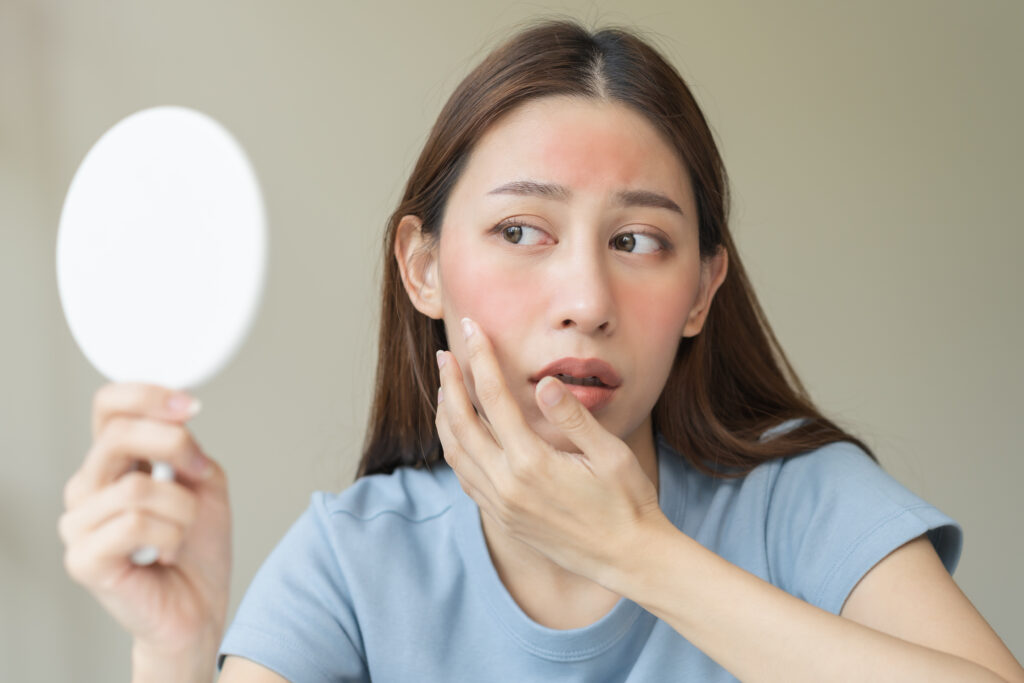
Histamine widens the blood vessels but narrows the airways. It is also stored by mast cells and released during an allergic reaction. As a messenger substance, it brings about an immediate reaction to an allergen (or, normally, to a harmful substance). The typical symptoms of an immediate reaction are redness, swelling and itching. The symptoms can go as far as allergic (anaphylactic) shock.
Antihistamines are often used to relieve the symptoms of allergies. They suppress the reactions caused by histamine.
What is a pollen allergy?
A pollen allergy, also known as hay fever or seasonal allergic rhinitis, is a very common allergy caused by the immune system's reaction to certain types of pollen. Pollen consists of tiny particles released by trees, grasses, shrubs and flowers to spread their seeds. In people with a pollen allergy, the immune system overreacts to this pollen, which can lead to various symptoms.
The causes of a pollen allergy lie in the body's allergic reaction to certain proteins in the pollen. When pollen gets into the air and is breathed in, the immune system mistakenly recognises these proteins as a threat and starts activating defence mechanisms. This leads to the release of chemicals such as histamine, which cause inflammation and typical allergic symptoms.
The symptoms of a pollen allergy can vary from person to person, but typical signs are:
- sneezing
- a runny or blocked nose
- itchy, watery eyes
- a scratchy throat
- coughing
- tiredness
The severity of the symptoms can vary depending on the type of pollen, individual sensitivity and exposure. Some people experience only mild problems, while others can develop more severe symptoms that affect their quality of life.
A pollen allergy is usually diagnosed with an allergy test, in which the doctor tests the patient for reactions to various types of pollen. Based on the test results, a treatment plan can be drawn up, which may include various approaches to relieving the symptoms, such as:
- Avoiding pollen exposure, e.g. by keeping windows closed during the pollen season or wearing a mask outdoors.
- Using over-the-counter or prescription antihistamines to relieve symptoms such as itching and sneezing.
- Immunotherapy (desensitisation), in which the body is slowly accustomed to increasing amounts of the allergy-triggering substance in order to reduce the immune system's reaction.
Overall, a pollen allergy can considerably affect well-being and quality of life, but with the right treatment and management strategies, the symptoms can be controlled and minimised. It is important that people who suspect they have a pollen allergy see a doctor to get an accurate diagnosis and an individually tailored treatment plan.
Pollen allergy and eczema
In eczema, the skin barrier is weakened and the immune system of people with eczema reacts more strongly than appropriate to substances that penetrate from outside. People with an atopic disease such as asthma, hay fever, pollen allergy and eczema therefore have an oversensitive immune system that mounts an immune reaction to substances that are actually harmless. According to statistics from the DHA (Deutscher Allergie- und Asthmabund), around 70% – 80% of people with eczema suffer from environmental allergies, for example to pollen, which can cause an eczema flare-up.
In some cases, desensitisation by an allergist can help, in which the immune system is “accustomed” to the substance. Eczema symptoms triggered by allergens can in this way be partly eased. Here you can read about the most common allergic triggers of eczema.
What always makes sense is to keep a close eye on what triggers or could worsen eczema inflammation for you. Keep a diary and document your potential triggers. You can do this with the Nia app, for example. This information will then help at your next appointment with your dermatologist.
Sources:
https://www.aerzteblatt.de/archiv/80005/Angeborene-Immunabwehr (accessed 15.12.2022)
https://www.allergieinformationsdienst.de/immunsystem-allergie.html (accessed 28.12.2022)
Riiser A. The human microbiome, asthma, and allergy. Allergy Asthma Clin Immunol. 2015 Dec 10;11:35. doi: 10.1186/s13223-015-0102-0. PMID: 26664362; PMCID: PMC4674907