
Tips for eczema in the sun
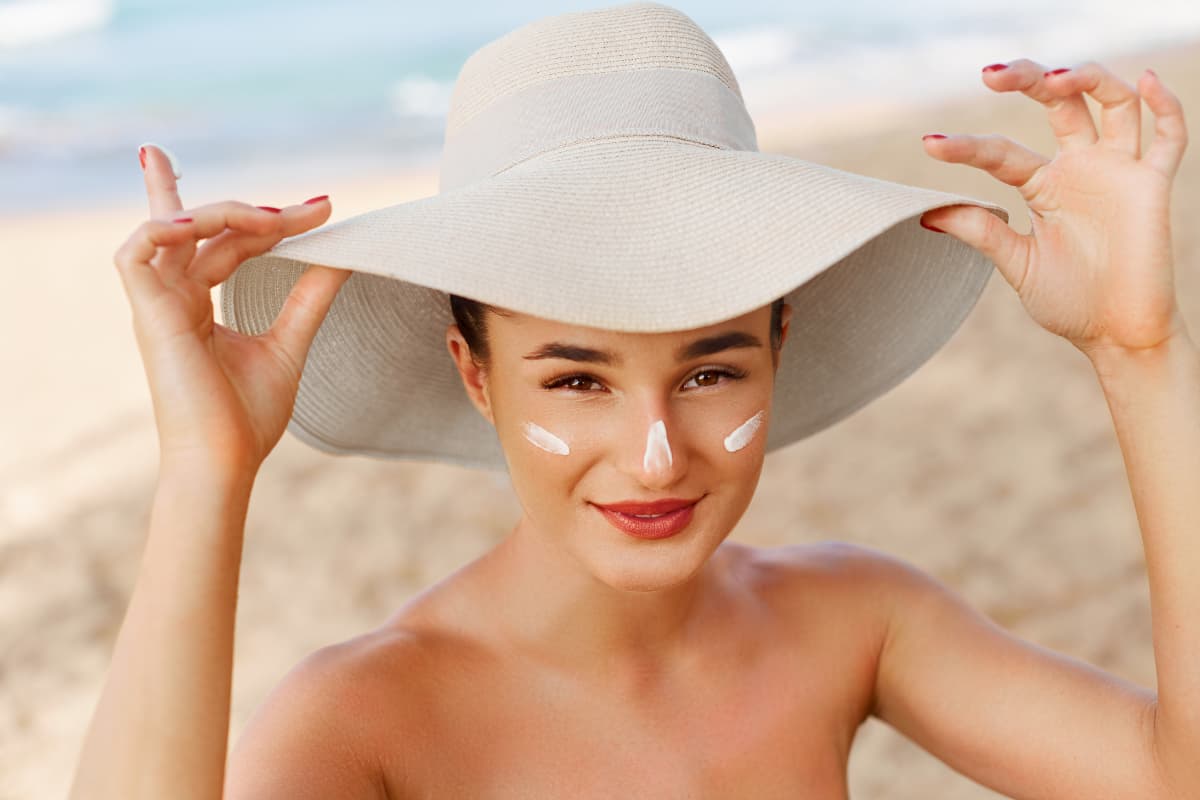
The skin condition eczema is a burden all year round, with symptoms such as dry, itchy skin, often accompanied by eczema patches. But especially in summer, the sun can make the symptoms even worse. In this article, you will learn how eczema and the sun affect each other and what you can do to protect your skin in summer and care for it. We also share valuable tips and support to help you cope better with your eczema in everyday life.
How eczema and the sun are connected
Sun and warmth can have both positive and negative effects on eczema. UV rays have an anti-inflammatory effect and can improve skin symptoms. On the other hand, heat and sweating can irritate the skin and trigger flare-ups. It is important to find a balance and protect your skin properly.
Especially for people with fair skin and eczema, whose skin barrier is already weakened, being careful in the sun is essential. The damaged skin barrier offers less protection against UV rays, which increases the risk of skin damage. UVA rays penetrate deep into the skin and are mainly responsible for skin ageing and wrinkles. They can damage connective tissue and increase the risk of skin cancer. UVB rays, on the other hand, carry more energy and mainly cause sunburn. They also contribute to skin ageing and can cause DNA damage in skin cells, which further increases the risk of skin cancer. For people with eczema, it is therefore especially important to protect themselves from UV rays, because chronic inflammation and the disrupted skin barrier make their skin more prone to damage.
A widespread myth is that people with skin conditions such as eczema should sunbathe regularly to produce enough vitamin D. But you don't need to sunbathe excessively to benefit from the positive effects of sunlight. In fact, short, controlled periods in the sun are enough to cover your vitamin D needs.
What do I need to watch out for in the sun?
To protect your skin in the sun as well as possible and avoid flare-ups, you should keep the following points in mind:
- Avoid direct sunlight: Especially around midday, between 11 am and 3 pm, avoid the sun as much as possible.
- Wear suitable clothing: Light, airy clothing that covers the skin. Avoid scratchy clothing that irritates the skin.
- Drink enough: Hydration is important to keep your skin moisturised. Try to remind yourself often to drink enough.
- Reapply regularly: To ensure continuous protection, reapply sunscreen every two hours and after swimming, sweating or towelling dry. This is especially important for areas such as the back, which are often hard to reach and easy to miss.
- Sun hat and protective clothing: As well as using sunscreen, it is a good idea to use physical barriers too. A wide-brimmed sun hat can protect your face, neck and ears. Light, loose-fitting clothing made of natural materials such as cotton, or special UV-protective material, offers extra protection without irritating the skin.
- Use a suitable sunscreen: Choose a sunscreen for eczema with UVA and UVB filters that suits your skin type. Further down in this article, you will find the requirements a sunscreen should always meet.
- Apply early: Sunscreen should be applied 30 minutes before sunbathing.
- Watch your skin: At the first signs of redness or itching, get out of the sun straight away.
- Seek shade: Especially around midday, when the sun is strongest, avoid staying in direct sun and look for shady spots. This reduces the strain on your skin from UV rays and helps prevent overheating and sunburn.
- Use sun protection mindfully: Be aware that sunscreen alone cannot protect you from UV rays. A comprehensive sun protection plan that combines different measures is most effective. This also includes avoiding sunbathing and being aware of your own skin's needs and reactions.
With these protective measures, you can effectively protect your skin from the harmful effects of the sun without making your eczema symptoms worse. Pay attention to your skin's needs and adjust your sun protection to match, to make sure you are protected as well as possible.
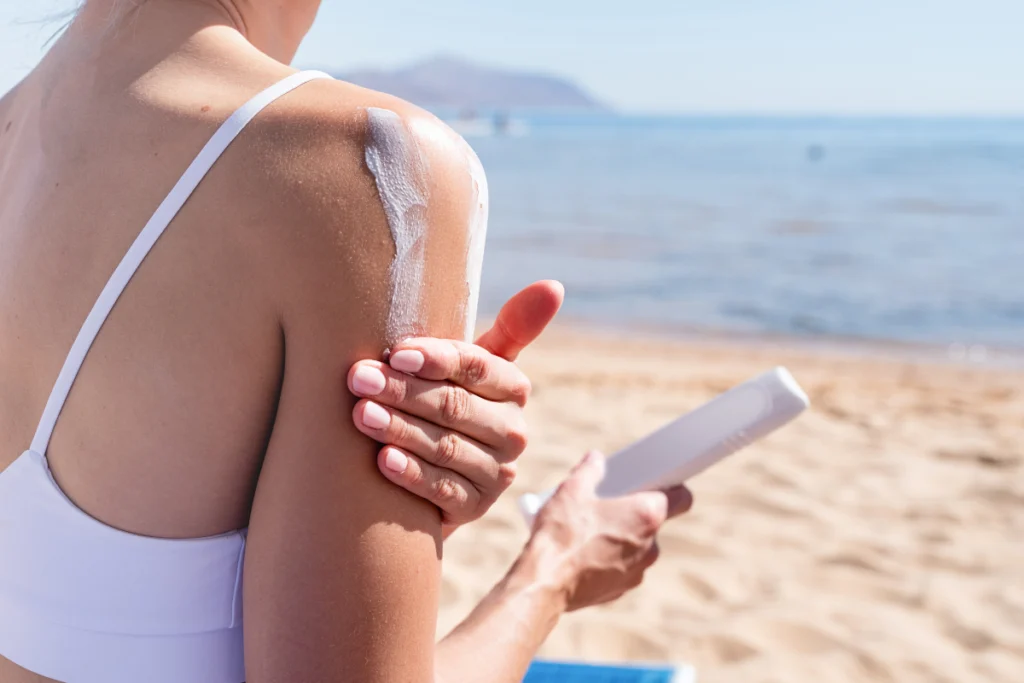
If you have eczema, make sure you protect your skin from the sun.
What do I need to consider when choosing the right sunscreen?
Choosing and using the right sunscreen and sun protection is essential to protect your skin from harmful UV rays. Here are detailed recommendations to help you find the right sun protection and use it effectively:
- Mineral sunscreens: Mineral sunscreens are especially suitable for sensitive skin and eczema. These products contain physical filters such as zinc oxide or titanium dioxide, which stay on the surface of the skin and reflect UV rays. Unlike chemical filters, which penetrate the skin and absorb UV rays there, mineral filters are less irritating and protect immediately after application. Make sure the sunscreen absorbs well and doesn't leave a white residue.
- High sun protection factor (SPF): A high SPF is important to protect your skin adequately. An SPF of at least 30 is recommended; in strong sunlight or when you spend a long time outdoors, use SPF 50 or higher. The SPF tells you how long your skin is protected before it starts to burn. A high SPF extends this time and reduces the risk of sunburn and skin damage.
- Free from fragrances and preservatives: Fragrances and preservatives can further irritate sensitive skin with eczema and trigger allergies. So choose sunscreens that are free from these additives. Hypoallergenic products developed especially for sensitive skin are also a good choice. Read the ingredient list carefully and test the cream on a small patch of skin before using it for the first time, to make sure no reactions occur.
- Moisturising ingredients: Because skin with eczema is often dry and sensitive, it helps to choose a sunscreen with moisturising ingredients such as hyaluronic acid, glycerin or aloe vera. These ingredients help keep the skin hydrated and prevent dryness.
- Water resistance: If you plan to swim or sweat a lot, choose a water-resistant sunscreen. But remember that even water-resistant sunscreens need to be reapplied after swimming or heavy sweating to keep up the protection.
Is there anything special to consider for children?
Children's skin is especially sensitive and needs special protection in the sun. Use special children's sunscreens, which often offer extra protection and are especially gentle on the skin. Make sure children's sunscreen is reapplied regularly and protect them with suitable clothing and sun hats too.
- Babies in their first year: Do not expose them to direct sun.
- Use child-friendly sunscreen: It is specially formulated for sensitive skin and free from ingredients that are unsuitable for children.
- Sun-protective clothing: Long sleeves, trousers and wide-brimmed hats offer extra protection.

Children with eczema have especially sensitive skin and should be protected from direct and strong sunlight.
Things to consider for older adults in the sun
In older adults, the structure of the skin can be thinner and drier, which calls for special care during and after time in the sun:
- Regular moisturising: Moisturisers with urea or glycerin help keep the skin supple, especially as you get older.
- Gentle cleansing and care: Avoid harsh cleansing products, sunscreens or oils in the sun.
Caring for your skin properly after the sun
After sunbathing, your skin needs special care:
- After-sun products: These soothe the skin and provide moisture.
- Cool showers: Cold showers help lower the skin's temperature.
- Moisturising lotions: Products with aloe vera or panthenol help the skin regenerate.
Sunburn with eczema
Sunburn can severely irritate the skin and make eczema symptoms worse. If you do get sunburnt, the following tips can help:
- Cooling compresses: These cool and soothe irritated skin.
- Fragrance-free moisturisers: Especially with sunburn, cooling and moisturising lotions help ease the skin damage.
- Seek shade and avoid direct sunlight: If you notice signs of sunburn while you are still in the sun, go into the shade until your skin has recovered.
More support in everyday life
For more information on eczema, or on how to handle eczema in the sun, we recommend the Nia app. With our app, you can keep a personal eczema diary, track symptoms, find useful tips for everyday life and take your history to your appointment as a health report. Download the app now from the App Store or Google Play and improve your skin health for the long term.
Sources:
- Eichenfield, L. F., Tom, W. L., Chamlin, S. L., Feldman, S. R., Hanifin, J. M., Simpson, E. L., … & Paller, A. S. (2014). Guidelines of care for the management of atopic dermatitis: section 1. Diagnosis and assessment of atopic dermatitis. Journal of the American Academy of Dermatology, 70(2), 338-351.
- https://www.aad.org/public/diseases/eczema/atopic-dermatitis