
The structure of the skin
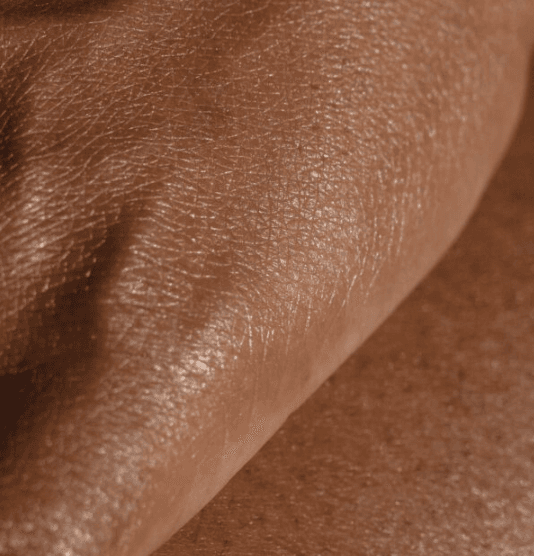
The skin is the barrier between our body and the environment. As such, its job is to protect the body from external irritants. Besides acting as a boundary layer, however, the skin has many other tasks.
As our largest organ, the skin plays an important role in our health and wellbeing. When the condition of the skin gets out of balance, this can affect our physical and mental state. To fulfil its many different functions, the skin is made up of several different layers.
The layers of the skin
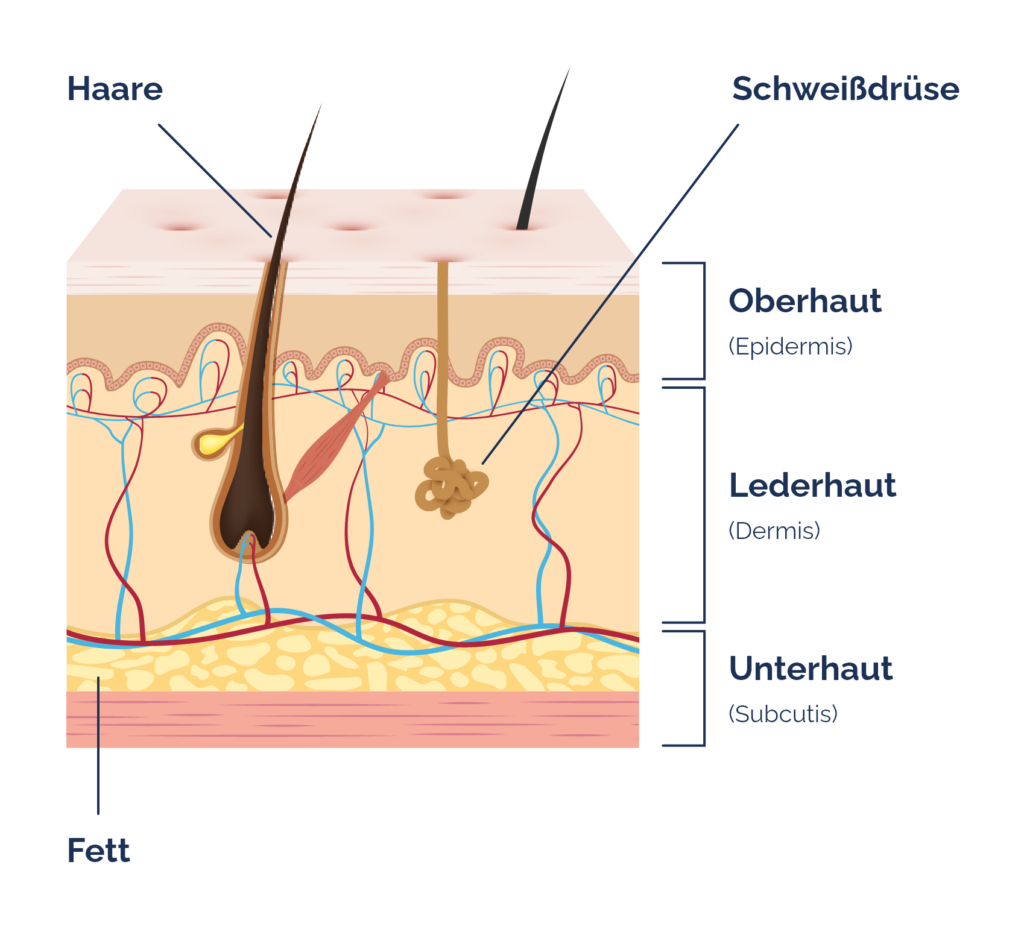
The skin consists of three layers:
- Epidermis
- Dermis
- Subcutis
Each of these three layers is in turn made up of several layers. In addition, there are the so-called skin appendages: sebaceous and sweat glands as well as hair follicles.
- The epidermis (outer skin)
The epidermis is the top layer of the skin and offers protection against environmental influences and pathogens. It consists of several layers of keratinised cells. The horn cells (keratinocytes) are constantly being renewed, so the outer skin renews itself about every four weeks. In the process, the newly formed cells travel from the inside outwards through the layers of the outer skin and become keratinised along the way.
The epidermis contains no blood vessels, but nerve endings run through it. Besides the horn cells, the epidermis also contains pigment cells (melanocytes), which protect the skin from UV light. There are also so-called Merkel cells, which sense mechanical stimuli such as pressure or touch. Last but not least, the top layer of the skin also contains immune cells that can react when invading pathogens pose a threat.
- Dermis
The boundary with the dermis below is formed by a thin membrane, the basement membrane. The dermis contains connective tissue and supply structures such as blood vessels, nerves and sweat glands. Thanks to the elastic fibres it contains, it is stretchy, and it also has touch and stretch sensors.
The nerves in the dermis mean that we can sense not only touch but also pain and differences in temperature. This is also how itching can be perceived, for example. Together, the epidermis and the dermis form the cutis.
- Subcutis
Below the cutis lies the subcutis (subcutaneous tissue), which also contains larger vessels and nerves. It consists mainly of connective and fatty tissue, and its job is to store energy and protect against heat loss.
Two types of skin: ridged skin and hairy skin
Human skin consists of two types of skin, ridged skin (glabrous skin) and hairy skin. They occur in different areas, and both consist of several different layers. Ridged skin and hairy skin can be told apart with the naked eye.
In humans, ridged skin is found on the palms of the hands and the soles of the feet. It forms visible lines (ridges) and contains sweat glands. Hairy skin makes up most of the skin on our body; instead of lines, it forms irregular fields. Besides sweat glands, hairy skin also contains sebaceous glands and hairs.
You can read more about the roles and functions of the skin here.
Sources:
- Arda, O., Göksügür, N., & Tüzün, Y. (2014). Basic histological structure and functions of facial skin. Clinics in dermatology, 32(1), 3–13. https://doi.org/10.1016/j.clindermatol.2013.05.021
- https://journals.lww.com/jdnaonline/fulltext/2011/07000/anatomy_and_physiology_of_the_skin.3.aspx, accessed on 13.03.2022
- https://viamedici.thieme.de/lernmodul/547034/530520/subject/histologie/haut/aufbau+der+haut/aufbau+der+haut, accessed on 14.03.2022
- Yousef, H., Alhajj, M., & Sharma, S. (2021). Anatomy, Skin (Integument), Epidermis. In StatPearls. StatPearls Publishing.