
Eczema and acne: links and help
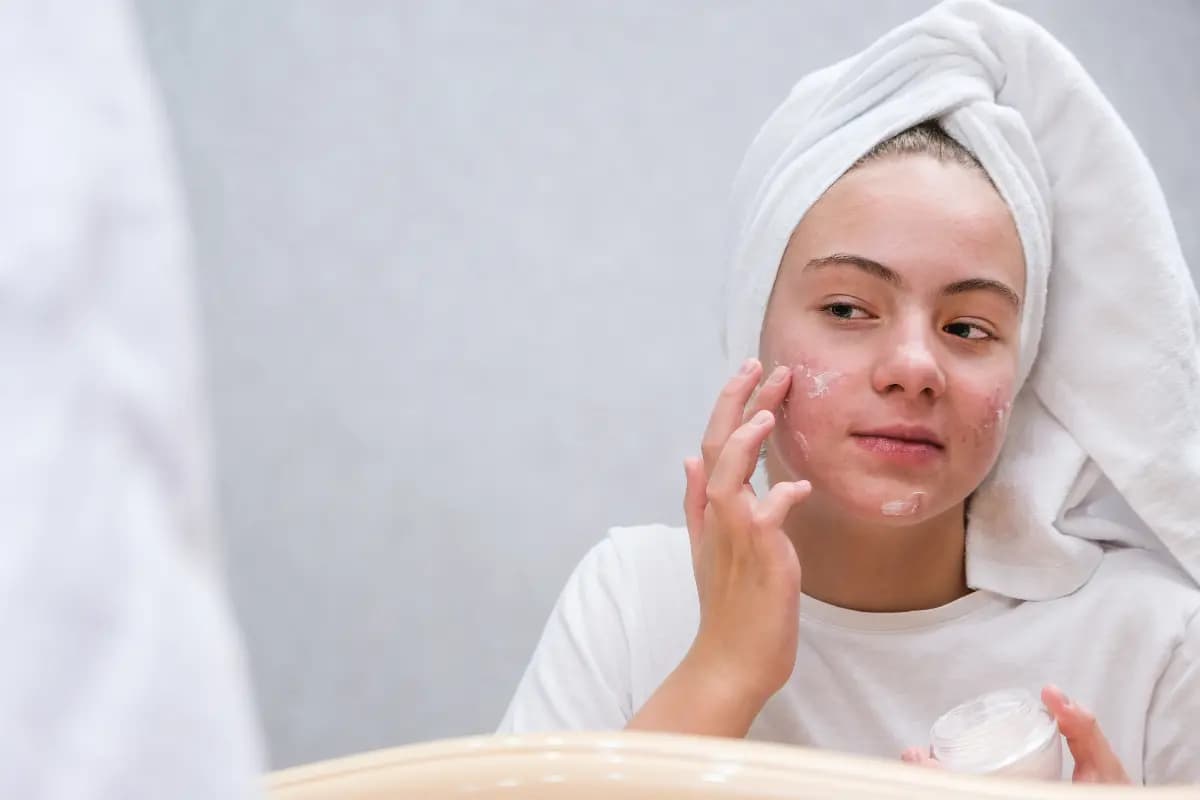
Atopic dermatitis and acne are two common skin conditions that develop through different mechanisms, but both can lead to considerable skin problems. Although they are often treated separately, they can occur at the same time and then call for a special approach. In this article, you will learn more about the links between eczema and acne. You will also find tips on how to recognise and treat both conditions correctly.
Links between eczema and acne
Eczema usually shows itself through dry and itchy skin. Acne, on the other hand, is caused by an overproduction of keratin and sebum and by clogged pores, which lead to spots and inflammation. The symptoms sound like opposites, but they can occur at the same time.
Eczema and acne can also influence each other. The inflamed skin in eczema can be more prone to acne breakouts, while harsh acne treatments can make sensitive skin worse. Balanced skin care that takes both conditions into account is therefore crucial.
Caring for and treating both together
Caring for eczema and acne at the same time can be challenging, because the treatments often contradict each other. Eczema is usually treated with moisturising creams, topical steroids and sometimes systemic medication. Acne, on the other hand, is often treated with topical retinoids, benzoyl peroxide, antibiotics or, in severe cases, systemic retinoids. These can dry out and strain the skin a lot. Basic skin care to prevent flare-ups is therefore even more important than usual for people who have both acne and eczema.
Here are some tips on how to treat both skin problems effectively:
- Use mild cleansers: Avoid harsh soaps that can dry out or irritate your skin.
- Moisturisers: Use non-comedogenic (pore-clogging) moisturisers to keep your skin hydrated.
- Topical treatments: Use products that are both anti-inflammatory and sebum-regulating. Examples are benzoyl peroxide combined with mild corticosteroids. However, corticosteroids should only ever be used for acne after consulting your dermatologist, because in the worst case they can trigger dermatitis on the face or make acne worse.
- Sun protection: Apply a light, non-greasy sunscreen for eczema every day.
By carefully observing and telling apart the specific symptoms of eczema and acne, you can better understand which skin condition you have and choose the right treatment. For acne we are developing the app Milderma, coming soon. Our Nia app helps you record your eczema symptoms and understand them better. However, an accurate diagnosis by a dermatologist is always crucial to achieve the best treatment results and improve skin health.
If you have both eczema and acne, it is important to tailor your skin care individually to your skin's condition.
Triggers for acne and eczema together
Several factors can trigger or worsen both eczema and acne:
- Stress: Can affect the immune system and hormone production, leading to breakouts.
- Diet: Foods high in sugar and dairy products can make both skin conditions worse. However, people affected can usually notice for themselves which foods make their skin worse. Regular documentation with a diary, like the one in the Nia app, can help identify possible triggers.
- Environmental factors: Climatic conditions such as cold, heat or air pollution can be triggers.
- Hormonal changes: Especially during puberty or with hormonal fluctuations.
Correcting the skin microbiome
The skin microbiome can play an important role in skin health. In some cases, an imbalance in the microbiome can trigger a worsening of the skin in eczema and acne. Special therapies can target bacteria and fungi. However, the decision for such a therapy is very individual and should only be made together with your dermatologist.
Beyond that, a balanced diet can help regulate the microbiome and improve skin health.
Eczema spots: how they differ from normal spots
Spots that occur with eczema often differ from normal acne spots. They are often more inflamed and can itch. It is important not to scratch or squeeze these spots, so that they don't get worse.
How do I recognise eczema and acne independently of each other?
Atopic dermatitis and acne are two different skin conditions, each with its own characteristic features and symptoms. To recognise and tell apart the two conditions, it is important to look out for specific signs. Here are detailed descriptions of the typical features of both conditions:
Symptoms of eczema
- Dry, scaly skin: With eczema, the skin is often extremely dry and rough. This dryness can lead to scaling and a rough feeling on the skin.
- Severe itching: One of the most prominent symptoms of eczema is the severe itching, which can be particularly intense at night and after contact with water. The itching can be so severe that it disturbs sleep and leads to scratch injuries.
- Eczema patches: Atopic dermatitis often shows up as inflammatory skin rashes known as eczema. These patches often appear symmetrically and are typically found on the elbows, the backs of the knees, the neck, the face and the hands. The skin can be red, swollen and weeping, especially during an acute flare-up.
- Lichenification: With chronic scratching, the skin can thicken and feel leathery, a condition known as lichenification. These thickened patches are often darker and rougher than the surrounding skin.
- Distribution: Eczema often appears in the skin folds such as the insides of the elbows and the backs of the knees, on the neck and sometimes on the face and hands. In babies and toddlers, the cheeks and the outer sides of the limbs are often affected.
Symptoms of acne
- Oily skin: Acne often affects people with oily skin. The excessive sebum production makes the skin look shiny and feel oily.
- Blackheads and whiteheads (comedones): Acne begins with the formation of comedones. There are open comedones (blackheads) and closed comedones (whiteheads), which develop from clogged hair follicles.
- Pustules and papules: Acne can show up as inflamed pustules (pus-filled spots) and papules (red, inflamed bumps). These can be painful and tend to leave scars if not treated properly.
- Cysts: In more severe cases, painful cysts can form under the skin, which are deeper inflammations and can also leave scars.
- Distribution: Acne mainly appears on the face, chest and back. These areas have a high density of sebaceous glands, which are overactive in acne.
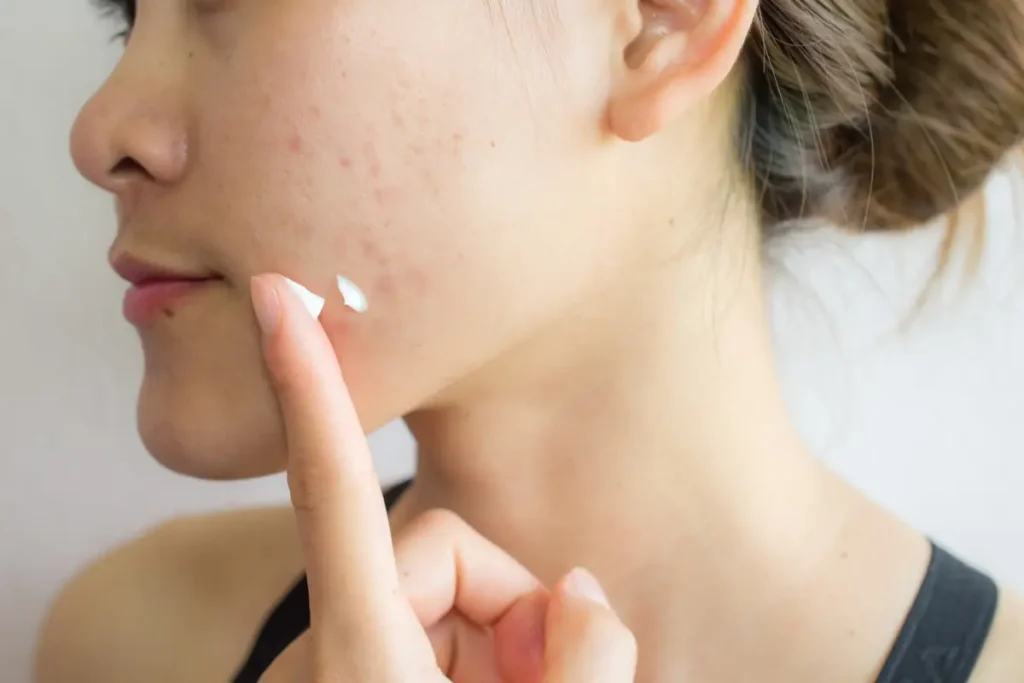
The symptoms of acne differ from those of eczema.
Conclusion and help in everyday life
Eczema and acne together are often a special challenge. With the right care, however, healthy skin can be achieved. You'll find more useful information and support in our Nia app. The app offers you a personal eczema diary, recommendations and articles and videos based on the AGNES eczema training. Download the app now from the App Store or Google Play and start your journey to better control of your eczema.
Sources:
Silverberg, J. I., & Hanifin, J. M. (2013). Adult eczema prevalence and associations with asthma and other health and demographic factors: a US population-based study. Journal of Allergy and Clinical Immunology, 132(5), 1132-1138. https://pubmed.ncbi.nlm.nih.gov/24094544/