
Eczema on the arm: causes and help

Atopic dermatitis (eczema) is an inflammatory skin condition that can appear on different parts of the body and shows itself through itchy skin and recurring eczema patches. The condition can affect any part of the body, but the arms are affected particularly often. Especially in children of (primary) school age, eczema is in many cases located on the arms.
In this article you will learn more about the symptoms, causes and treatment options for eczema on the arms. We also look at particular challenges and give you valuable tips for relieving the symptoms.
Symptoms of eczema on the arm
Eczema on the arms shows itself through various symptoms, which can vary in intensity. Recognising the signs early is crucial for taking suitable steps and preventing the condition from progressing. The most common signs include:
- Dry, flaky skin: The skin loses moisture in the affected areas. This loss of moisture makes the skin prone to cracks and further irritation. The elbows and forearms are often affected, with the skin feeling rough and forming visible scales.
- Severe itching: The itching can be intense and persistent, which leads people to scratch often. This scratching damages the skin further, which leads to a vicious circle of itching and skin injuries. The constant urge to scratch can be very distressing, especially at night, and can disturb sleep.
- Redness and eczema patches: The affected areas of skin are often red and inflamed. This redness often comes with eczema patches that can weep or crust over. Such eczema patches often appear in flare-ups and can vary depending on triggers and skin care. Acute flare-ups show up as severely inflamed, sometimes weeping areas of skin, while chronic eczema tends to look dry and flaky.
- Thickened areas of skin (lichenification): Chronic scratching and rubbing of the affected areas can make the skin thicker and leathery. This thickening, also called lichenification, is the skin’s reaction to constant mechanical strain. Lichenified areas of skin are often darker and rougher than the surrounding skin and can feel hardened.
- Other symptoms: In addition to the classic symptoms, weeping and crusting can also occur. Sometimes fissures (small cracks) also form in the skin, especially in areas that are under a lot of strain or extremely dry.
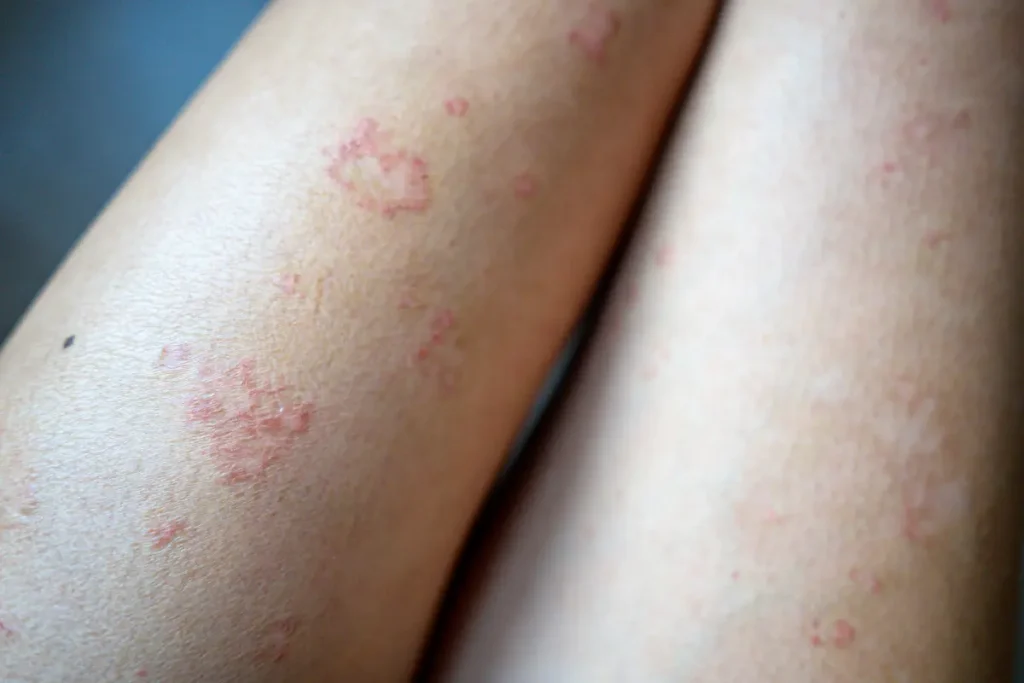
Eczema on the arms can look different from person to person. If you suspect you have it, it is best to see a dermatologist.
Recognising eczema on the arm
It is important to distinguish atopic dermatitis from other skin conditions. Contact dermatitis, psoriasis or fungal infections can show similar symptoms. An accurate diagnosis by a dermatologist is therefore essential. Dermatologists can use a physical examination or biopsies to make sure that it is atopic dermatitis. Blood tests can also sometimes give clues as to which diagnosis is most likely.
Treatment and help for eczema on the arm
Treating eczema on the arms requires a comprehensive and individual approach that both relieves the acute symptoms and includes long-term strategies for prevention and care. Here are the essential steps of treatment in detail:
- Skin care: The foundation of treatment is consistent skin care. Regularly applying moisturising and emollient lotions is crucial to strengthen the skin barrier and prevent dryness. Products with ingredients such as urea, glycerine or ceramides help to supply the skin with moisture and restore the natural protective barrier. It is important to apply cream right after showering or bathing, while the skin is still slightly damp, to lock in the moisture. Avoid hot showers and harsh cleansers that can dry out and irritate the skin.
- Medication: To reduce inflammation and itching, topical corticosteroids or calcineurin inhibitors are often used. Corticosteroids such as hydrocortisone or betamethasone are usually used during acute flare-ups to bring the inflammation under control quickly. Calcineurin inhibitors such as tacrolimus or pimecrolimus are an alternative for long-term treatment and are suitable for sensitive areas of skin, as they have fewer side effects than steroids. In severe atopic dermatitis, systemic therapies such as biologics or JAK inhibitors can also be used. It is important to use these medicines only as instructed by your doctor and to stick to the recommended duration and dose.
- Phototherapy: In cases that do not respond to treatment, UV light treatment (phototherapy) can help. This therapy uses UVB or UVA rays to reduce skin inflammation and relieve symptoms. Phototherapy should be carried out under medical supervision to ensure the right dose and to minimise the risk of side effects such as skin ageing or skin cancer.
- Stress management: Stress is a known trigger for eczema flare-ups. Stress reduction techniques such as meditation, yoga or breathing exercises can help lower stress levels and so reduce the occurrence of flare-ups. Regularly practising stress management techniques can improve general wellbeing and have a positive effect on eczema symptoms.
- Environmental factors: Pay attention to your surroundings and avoid known triggers such as extremely cold or hot weather, dry air and contact with allergens such as pollen, dust mites or pet hair. Using humidifiers can help increase the humidity indoors and keep your skin moisturised.
- Clothing: Wear soft, breathable clothing made from natural materials such as cotton to avoid skin irritation. Tight or scratchy clothing can make the symptoms worse and should be avoided. Wash new clothes before wearing them for the first time to remove chemicals and dyes.
- Psychological support: Chronic conditions such as atopic dermatitis can be a considerable psychological burden. Access to psychological support or to support groups can help in dealing with the emotional challenges. Talking with other people who have eczema offers valuable support and the feeling of not being alone.
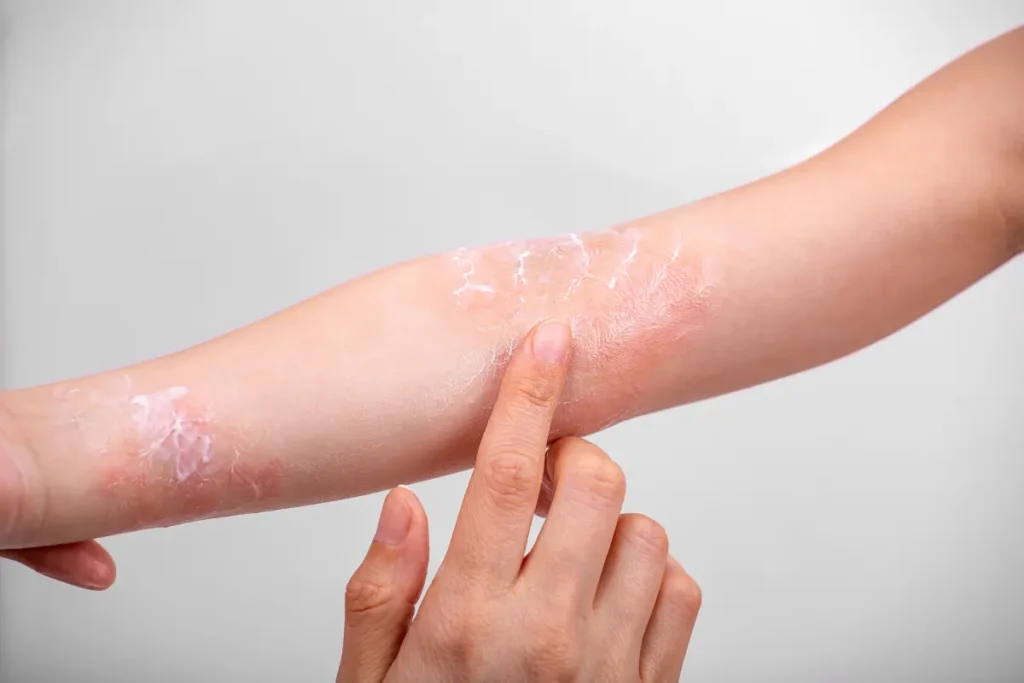
Basic skin care is very important for eczema on the arms.
Eczema on the arms at night
With eczema, the itching is often worst at night, which can disturb sleep considerably. With the arms, or the hands too, there is also the problem at night that people can reach these parts of the body more easily and scratch without noticing. With areas that are harder to reach, such as eczema on the back, this is not so easy. To break this vicious circle, the following tips can help you:
- Moisturising creams: Apply before going to bed to supply the skin on your arms with moisture.
- Cool compresses: Cooling compresses can relieve the itching on the arms or on other parts of the body.
- Cotton gloves: Stop you from scratching your arms without noticing.
Causes of eczema on the arm
Atopic dermatitis can be triggered or made worse by various factors:
- Genetics: A family predisposition plays a significant role. Atopic dermatitis often appears in siblings within a family and is passed on genetically from the parents.
- Environmental factors: Cold, heat, dry air or pollutants can put strain on the skin every day.
- Allergens: Pollen, pet hair, house dust mites or certain foods can irritate the skin.
- Stress: Psychological strain can also trigger or intensify eczema flare-ups.
- Skin irritants: Certain soaps, cleaning products or textiles can be triggers for eczema.
Special features of eczema on the arms in children and babies
Eczema in children and babies often shows up in the creases of the elbows and the backs of the knees. The skin in these areas is particularly sensitive and needs gentle care. With the following tips you can help your child with eczema on the arms:
- Special skin care products: Use mild, hypoallergenic cleansers and creams for children and babies.
- Regular baths: Short, lukewarm baths with emollient additives that are suitable for children.
- Prevent scratching: For children too, the cotton gloves mentioned above in the article or special clothing can help.
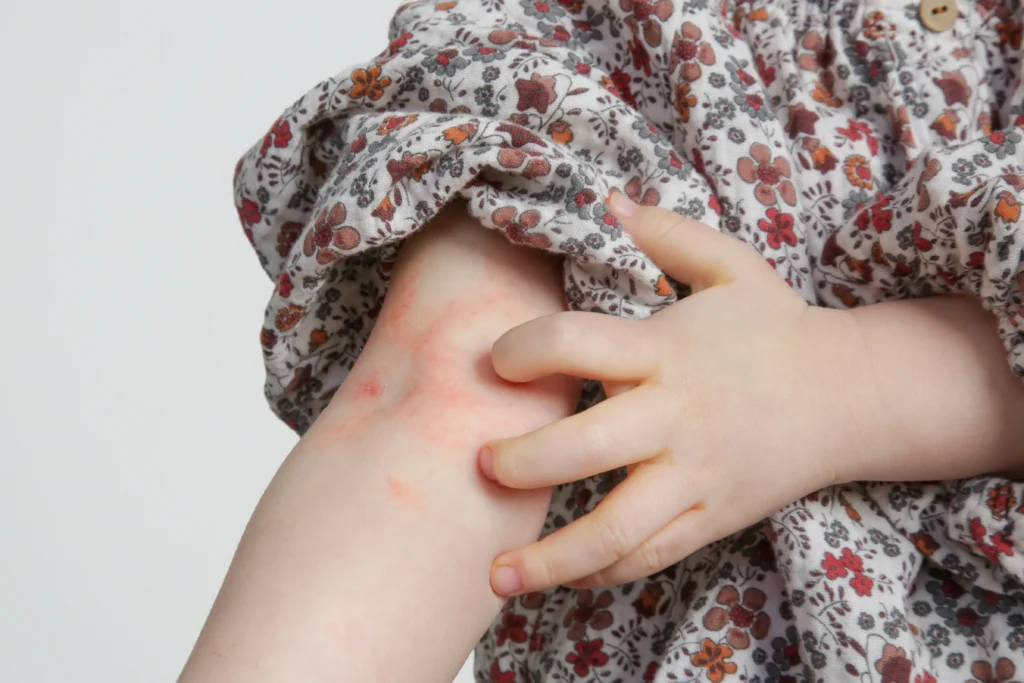
Many babies and toddlers have eczema on their arms.
Special features of eczema on the arms in winter
Because of the dry heated air and the cold, eczema in winter is often a particularly unpleasant time for people who have it. In winter especially, arms and hands are exposed to extreme changes in temperature. To live with the condition in the cold winter months too, the following tips will help you:
- Humidifier: Increases the humidity indoors.
- Lukewarm water: Avoid hot showers or baths.
- Breathable material: Wear clothing made from cotton or silk.
Special features of eczema on the arms when it comes to care
The right care is crucial for relieving eczema symptoms. With the following tips you will care for eczema on your arms properly:
- Regular moisturising: Daily use of moisturising lotions.
- Gentle cleansers: Avoid soaps and cleaning products with harsh ingredients.
- Suitable sun protection: Use sunscreens without perfume and preservatives.
Preventing eczema on the arms
Preventive measures can also help to avoid eczema on the arms or to minimise flare-ups:
- Avoid triggers: Identify and avoid your individual triggers. Work out together with your dermatologist which triggers set off your eczema. You can then avoid them in a targeted way.
- Healthy diet: A balanced diet can reduce inflammation. In our Nia app, or in our blog articles, you can find out more about the role diet can play in eczema.
- Regular skin care: Proactive skin care, even in symptom-free phases. Even in phases when the skin seems healthy, regular skin care is crucial to help prevent the next eczema flare-up.
Similarities and differences with other parts of the body
Atopic dermatitis can appear differently on different parts of the body. While dryness and itching are often the main issues on the arms, other parts of the body such as the face or legs can show other symptoms. Treatment should always be adapted individually.
Conclusion and final summary
For eczema on the arm, or on other parts of the body, a dermatologist can make an accurate diagnosis and recommend tailored treatment. In severe cases or if you are unsure, you should always seek medical advice. For more useful information about eczema and support from specialists, we recommend our Nia app. With the app you can keep a personal eczema diary and receive tailored recommendations for treatment. You will also find the right care and tips for other parts of the body. Download the app now from the App Store or Google Play and start your journey to better control of your eczema.
Sources:
Langan, S. M., Irvine, A. D., & Weidinger, S. (2020). “Atopic dermatitis”. The Lancet, 396(10247), 345-360. https://www.thelancet.com/journals/lancet/article/PIIS0140-6736(20)31286-1/abstract