
Inflammation – what is it?
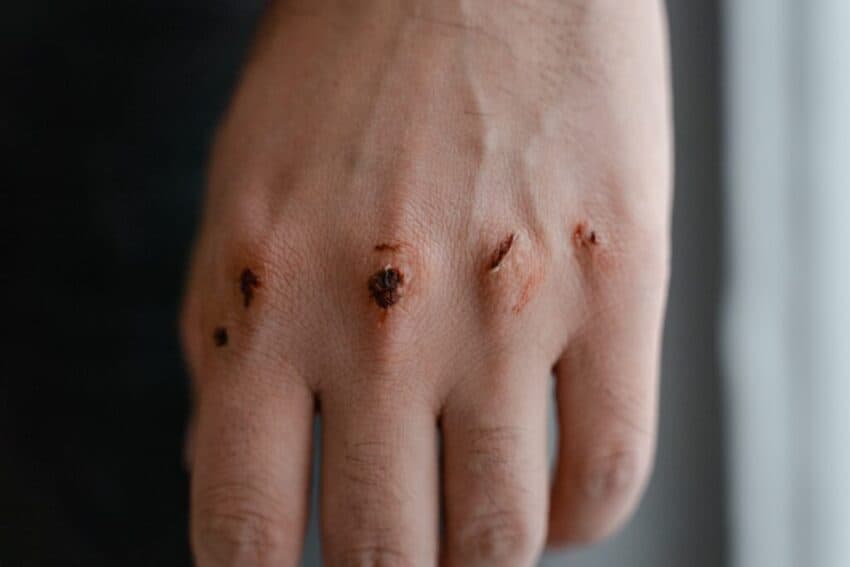
Atopic dermatitis is an inflammatory skin disease. But what exactly does inflammation mean? There is hardly anyone who has never heard the word inflammation. Yet many people don’t know what the term actually stands for.
First of all, inflammation is a reaction of the immune system to a stimulus. This can be infections, internal diseases or allergic reactions. But it can also be skin diseases such as psoriasis, eczema or other types of dermatitis. In this article, you will find out exactly what happens in the body during an inflammatory reaction.
Causes of inflammation
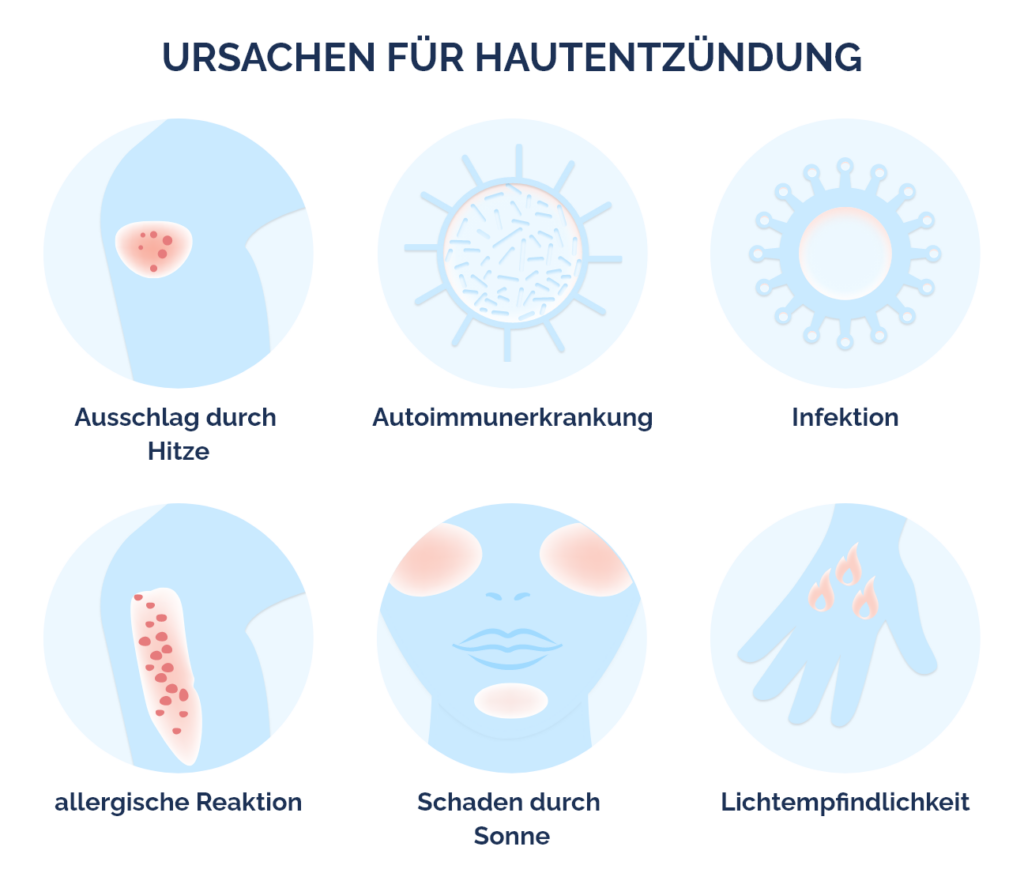
Inflammation develops as a reaction of the immune system to a stimulus or trigger. Possible causes include, for example, the following triggers:
- bacteria, fungi, viruses
- wounds, scratches or foreign bodies (e.g. a thorn in your finger)
- chemical or physical influences (e.g. burns, chemical burns)
- allergens, e.g. pollen or animal hair
- dysregulation of the immune system, e.g. in eczema
- internal causes, e.g. fat deposits in the blood vessels
Signs of inflammation
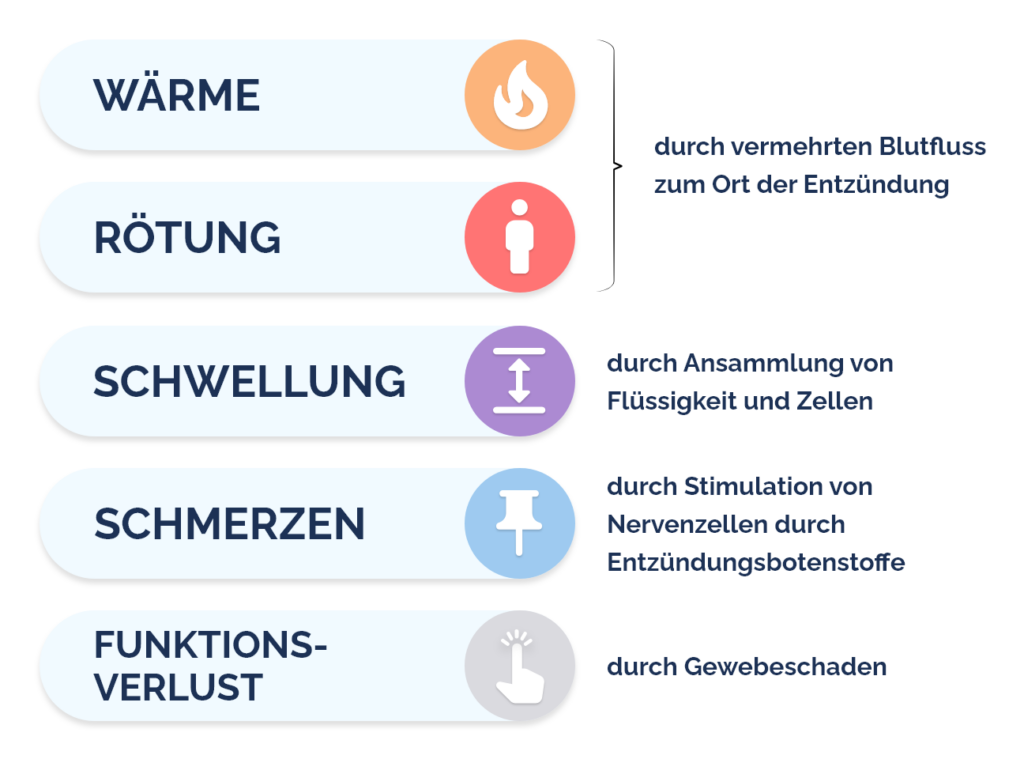
When inflammation occurs, the classic signs of inflammation appear. There are five in total:
- heat
- redness
- swelling
- pain
- impaired function, e.g. impaired mobility of a joint
The purpose of the inflammatory reaction is to limit dangers, fend them off and repair any damage done. Depending on the strength and type of inflammation, these signs can be more or less pronounced and can vary.
What happens during inflammation?
When inflammation occurs, a series of reactions takes place in the body. Depending on the cause and the part of the body affected, there are different forms of inflammation. In principle, however, the inflammatory reaction always follows similar steps:
- release of immune system messengers
- widening of the blood vessels and increased blood flow
- increased permeability of the blood vessels
- migration of white blood cells
Release of inflammatory messengers
At the affected site, the immune system releases certain messengers that control the inflammatory reaction. These messengers include, for example, tissue hormones, histamine and so-called cytokines, which act on various immune cells and organs. They widen the blood vessels so that more blood reaches the site. This causes the redness and heat.
Containing the danger and repair
The walls of the blood vessels also become more permeable, so immune cells can reach the affected tissue more easily. Numerous defence cells and white blood cells migrate to the scene and the tissue swells. The white blood cells work together with so-called scavenger cells (phagocytes) to contain the danger and stop it from spreading.
The messengers of the immune system now make sure that healing begins. The healing process takes place via connective tissue rich in blood vessels (granulation tissue), which over time is replaced bit by bit by the original tissue or by scar tissue.
Acute and chronic inflammation
When the inflammation is limited to one part of the body, it is called a local inflammatory reaction. However, inflammation can also occur in several places or throughout the whole body.
The inflammation stops once the cause has been removed and the affected tissue has been repaired. How quickly this happens also depends on the extent of the inflammation. As a rule, inflammation heals over a longer period of time. In the end, it may heal completely or leave a scar where the inflammation took place.
If the body does not manage to remove the danger and the inflammation does not heal, it can spread and become chronic inflammation. This is also the case in atopic dermatitis, for example.
Sources:
- https://www.healthline.com/health/skin-inflammation, accessed on 17 March 2022
- InformedHealth.org [Internet]. Cologne, Germany: Institute for Quality and Efficiency in Health Care (IQWiG); 2006-. What is an inflammation? 2010 Nov 23 [Updated 2018 Feb 22]. Available from: https://www.ncbi.nlm.nih.gov/books/NBK279298/
- Medzhitov R. (2010). Inflammation 2010: new adventures of an old flame. Cell, 140(6), 771–776. https://doi.org/10.1016/j.cell.2010.03.006
- https://www.gesundheitsinformation.de/was-ist-eine-entzuendung.html, accessed on 17 March 2022
- https://www.medicalnewstoday.com/articles/248423, accessed on 16 March 2022