
Eczema itching at night: causes and tips
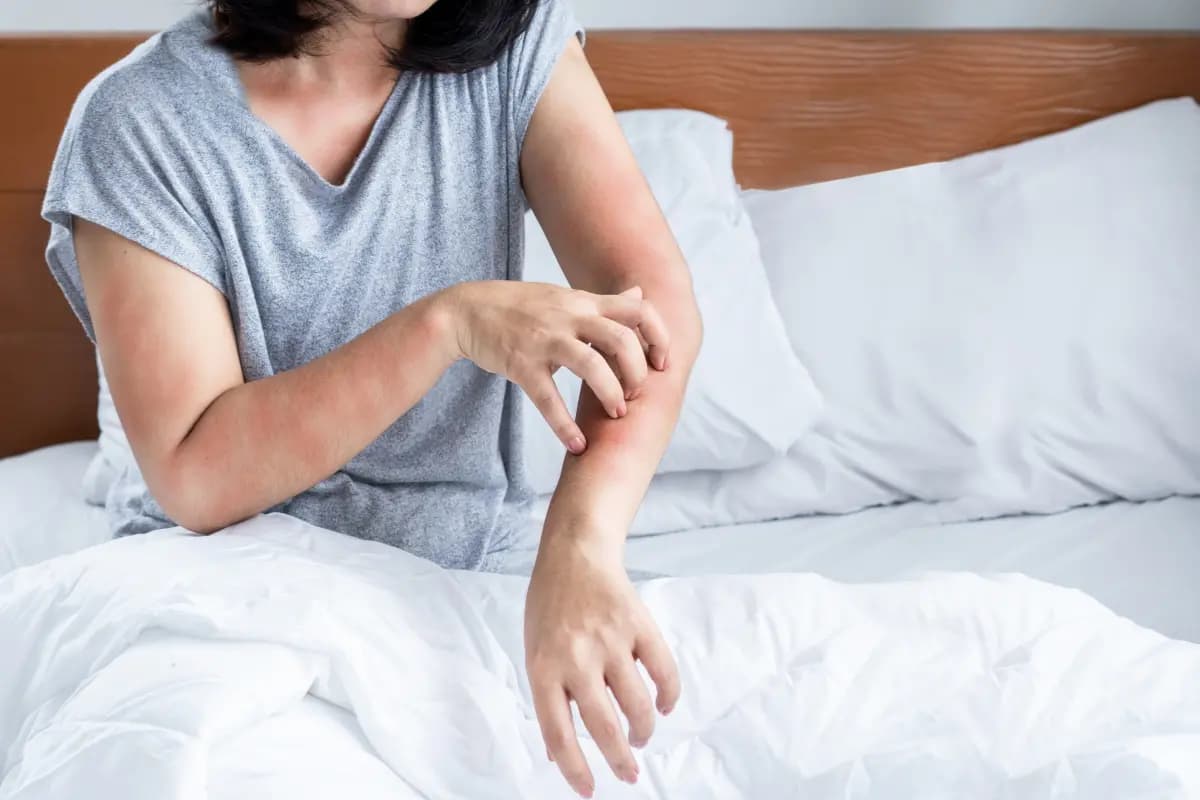
Eczema is a skin condition that shows itself through itchy skin and recurring eczema patches, and it often stays with people for a long part of their lives. A common and particularly distressing symptom is itching at night, which can seriously disturb your sleep. But why does eczema itching often get worse at night? In this article, you will find out more about the causes of night-time itching and get valuable tips on how to relieve it so that you can have a restful night.
Reasons for eczema itching at night
Many people with eczema find that the itch is particularly bad at night. This can have several causes. You will find the most common reasons in the following overview:
- Hormonal changes: The human body follows a natural day-night rhythm, also known as the circadian rhythm. This rhythm influences many physiological processes, including hormone production. At night, levels of the stress hormone cortisol, which has anti-inflammatory properties, fall. A lower cortisol level can make the skin react more sensitively to inflammation, which makes the itch worse.
- Temperature and moisture: Body temperature and skin moisture are also subject to circadian fluctuations. In the early hours of the morning, body temperature reaches its lowest point, which affects skin temperature and blood flow. A lower skin temperature can make the skin drier and the itch worse. In addition, sweat production decreases at night, which can also contribute to dry skin and more itching.
- Lack of movement: During the day, we distract ourselves with activities. At night, on the other hand, this distraction is missing, so the itch is felt more consciously.
- Wrong sleeping position: Your sleeping position and prolonged skin contact with bedding can create mechanical stimuli that make the itch worse. Friction and pressure on certain areas of skin can be irritating, especially if the skin is already damaged by eczema. This often leads people to scratch unconsciously in their sleep, which further drives the vicious circle of itching and scratching.
- Psychological factors: Stress and psychological strain with eczema can make the itch worse. At night, when the body comes to rest, people often have more time to think about their condition, which can increase stress. This stress can in turn make the itch worse, leading to poorer sleep quality. A vicious circle develops in which poor sleep leads to more stress and therefore to more intense itching.
- Allergens and environmental influences: Allergens and environmental influences in the sleeping environment can also play a role. Dust mites, pet hair or certain materials in bedding and nightwear can irritate the skin and trigger allergic reactions that make night-time itching worse. It is important to keep the sleeping environment as free of allergens as possible and to use hypoallergenic materials.
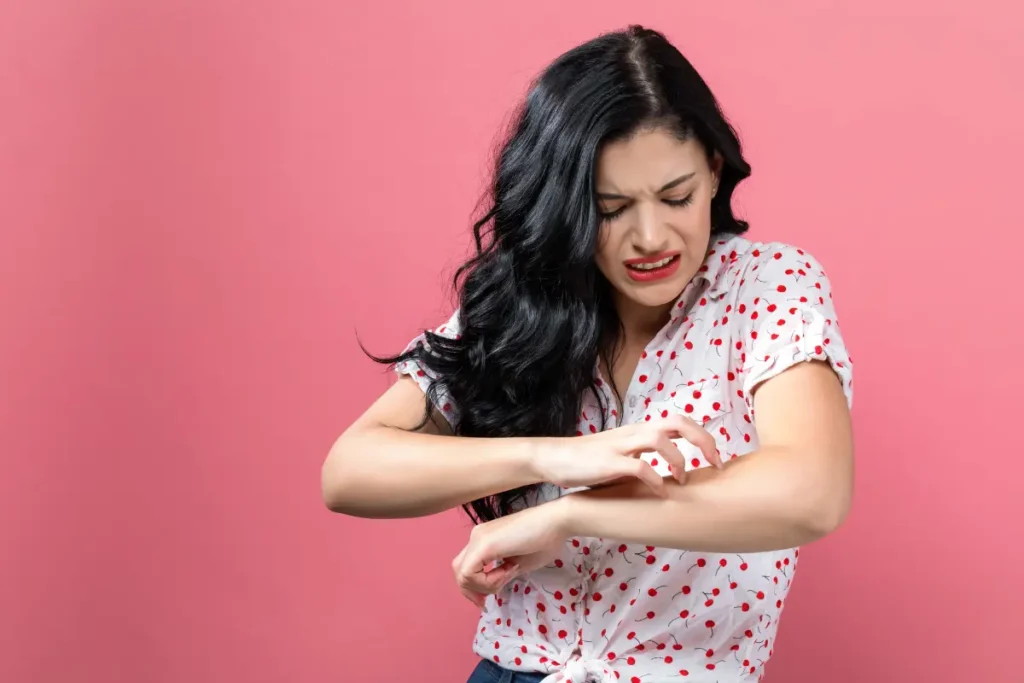
Many people with eczema suffer from severe eczema itching at night.
Relieving eczema itching at night
There are various ways to relieve or even prevent eczema itching at night, and you can easily put them into practice in everyday life. In the following section, you will find useful tips:
More exercise as an aid
Regular exercise or sport with eczema can help reduce itching at night. Physical activity boosts blood flow and relieves stress, which is considered a trigger for eczema flare-ups. Try to build at least 30 minutes of moderate exercise a day into your everyday life, such as walking, swimming or yoga.
Cut down on caffeine and avoid nicotine
Caffeine and nicotine can make night-time itching worse, because they stimulate the body and disturb sleep. Avoid caffeinated drinks such as coffee and cola at least 4 hours before going to bed. Nicotine is also a stimulant and should be avoided to promote a restful night's sleep.
A regular sleep rhythm
A regular sleep rhythm can help reduce the itch. Try to go to bed and get up at the same time every day. A stable sleep rhythm supports the skin's natural regeneration processes and helps reduce inflammation.
Bedtime routine with eczema
A relaxing bedtime routine can relieve night-time itching. Activities such as reading, meditation or listening to calming music help prepare the body for sleep. Avoid intensive screen time and exciting activities right before going to bed.
A bath before bed
A lukewarm bath before going to bed can help relieve the itch and soothe the skin. Make sure the water is not too hot, as this can dry the skin out even more. For the best possible effect, add moisturising, lipid-replenishing additives such as bath oils to the bath water to supply the skin with moisture.
Cotton clothing and bedding
At night, wear clothing made of soft, breathable materials such as cotton. Synthetic fabrics can irritate the skin and make the itch worse. Cotton bedding is also recommended, as it regulates moisture better and lets the skin breathe.
Short fingernails
Keep your fingernails short and smooth to avoid injuries from scratching. Scratching can damage the skin and lead to infections. In particularly difficult phases, wearing cotton gloves at night can help as a last resort to prevent unconscious scratching.
A pleasant room climate
A pleasant room climate helps to relieve night-time itching. Keep the room temperature cool and make sure the air is humid enough. A humidifier can help increase the humidity in your bedroom and keep your skin moist.
Home remedies for eczema itching at night
There are many home remedies for eczema that can help relieve the itch, especially at night, and make a restful night possible. Cool compresses or damp wraps can relieve the itch quickly. They soothe the skin and reduce inflammation. Oats, coconut oil, apple cider vinegar, tea tree oil, chamomile and lavender oil also have anti-inflammatory and soothing properties that can be beneficial with eczema.
Medical advice
If the night-time itch is still severe despite all these measures, you should seek medical advice. A dermatologist can prescribe special eczema creams or medicines that relieve the itch and soothe the skin. In some cases, phototherapy, laughter therapy or systemic treatment may also be necessary.
Exercises to help you fall asleep
For restful sleep with eczema, exercises to help you fall asleep such as progressive muscle relaxation, autogenic training or breathing exercises can also help relax the body and reduce the itch. These techniques promote relaxation and can help improve sleep.
Relieving night-time itching in adults or children
Night-time itching can seriously affect both adults and children with eczema, but the approach to relieving the symptoms differs depending on the age group. Adults often experience more intense and longer-lasting itching at night. Here, the stress management techniques, cooling compresses or fragrance-free moisturisers mentioned above can help. Children, on the other hand, benefit from a calm sleeping environment and a regular bedtime routine to minimise the itch. Gentle skin care products and wearing cotton clothing are also important. Parents can also prevent scratching by putting gloves on their children before bedtime and keeping their fingernails short.

Eczema itching at night in children presents parents with major challenges.
More tips on eczema itching at night
To find out more tips against itching at night or about current treatment approaches, to interpret symptoms correctly and to receive important advice from specialists regularly, we recommend our Nia app. With it, you can keep a personal eczema diary, receive recommendations and find articles and videos based on the AGNES eczema training. Download the app now from the App Store or Google Play and find useful tips for everyday life or for eczema itching at night in particular.
Sources:
- Eichenfield, L. F., Tom, W. L., Chamlin, S. L., et al. (2014). Guidelines of care for the management of atopic dermatitis: Section 1. Diagnosis and assessment of atopic dermatitis. Journal of the American Academy of Dermatology, 70(2), 338-351. DOI: 10.1016/j.jaad.2013.10.010
- Silverberg, J. I., Hanifin, J. M. (2013). Adult eczema prevalence and associations with asthma and other health and demographic factors: A US population-based study. Journal of Allergy and Clinical Immunology, 132(5), 1132-1138. DOI: 10.1016/j.jaci.2013.08.031