
Eczema flare-up: acute help and causes

Atopic dermatitis is a chronic inflammatory skin condition marked by extremely dry skin and severe itching. The condition usually comes in flare-ups, which means there are periods of more intense symptoms and periods of improvement. The acute phases or flare-ups are especially hard, as they can severely affect everyday life for people with eczema. An acute eczema flare-up can quickly become a physical and mental burden. These phases, which often come without warning, are marked by a sudden worsening of symptoms. The skin becomes extremely dry, itches intensely and shows inflamed eczema patches that can spread quickly. Such flare-ups are a big challenge, because they strongly affect your well-being and make everyday life much harder. Between flare-ups, the symptoms may ease, but the skin always stays sensitive and prone to irritation. In this article, you will learn more about the causes, symptoms and treatment options for acute eczema flare-ups and how you can prevent them.
How eczema flare-ups progress: chronic and acute features
An acute eczema flare-up is a phase in which the symptoms of eczema in children and adults suddenly and noticeably increase. These episodes can last from several days to weeks and come with considerable discomfort and symptoms. The course of such a flare-up can be divided into different stages.
Initial phase
The start of a flare-up is often marked by intense itching that quickly gets worse. People notice increasing redness of the skin, which points to inflammation. This phase can range from mild skin irritation to strong redness and is usually the first sign of an upcoming flare-up.
Acute phase
In the acute phase, the symptoms reach their peak. The skin becomes very red and inflamed eczema patches appear. These can spread and, in severe cases, weep or form blisters that burst and leave crusts. The affected areas itch intensely, which makes scratching almost unavoidable. But scratching makes the skin lesions worse and can lead to secondary infections. The acute phase is often associated with severe pain and considerable discomfort. This phase is marked by the following symptoms:
- Intense itching
- Redness and swelling
- Blisters and weeping
Healing phase
After the acute phase, the skin slowly begins to heal. The redness and inflammation subside, and the skin begins to regenerate. A new layer of skin forms, but it is still very sensitive. In this phase, it is especially important to care for your skin intensively and avoid irritation, to support healing and prevent further flare-ups.
Recovery phase
The recovery phase brings the flare-up to an end. The skin returns to the state it was in before the flare-up, but remains prone to new irritation. The skin barrier is often still weakened, which is why continuous care and protection of the skin are necessary. In this phase, you should take care to avoid known triggers and take preventive measures to stop future flare-ups.
Chronic condition
Eczema often makes itself felt in flare-ups. With chronic eczema, however, lasting features can also be a heavy burden:
- Long-lasting symptoms
- Thickened, leathery skin (lichenification)
- Permanent dryness
- Rather mild but persistent itching
However, symptoms such as dry skin and itching do not always point to eczema (atopic dermatitis); they can also point to a tendency towards eczema. A tendency towards eczema (atopic diathesis) can also exist without the person ever having had eczema patches.
Which symptoms are typical of a flare-up?
During a flare-up, the symptoms of eczema become much stronger. Typical symptoms include:
- Severe itching: Often the first sign of a flare-up, leading to intense scratching.
- Redness and inflammation: The skin becomes red and swollen.
- Blisters and weeping: In severe cases, blisters can form that burst and weep.
- Crusting: After weeping, crusts and scales form.
- Pain: Pain can occur because the skin is inflamed and damaged.
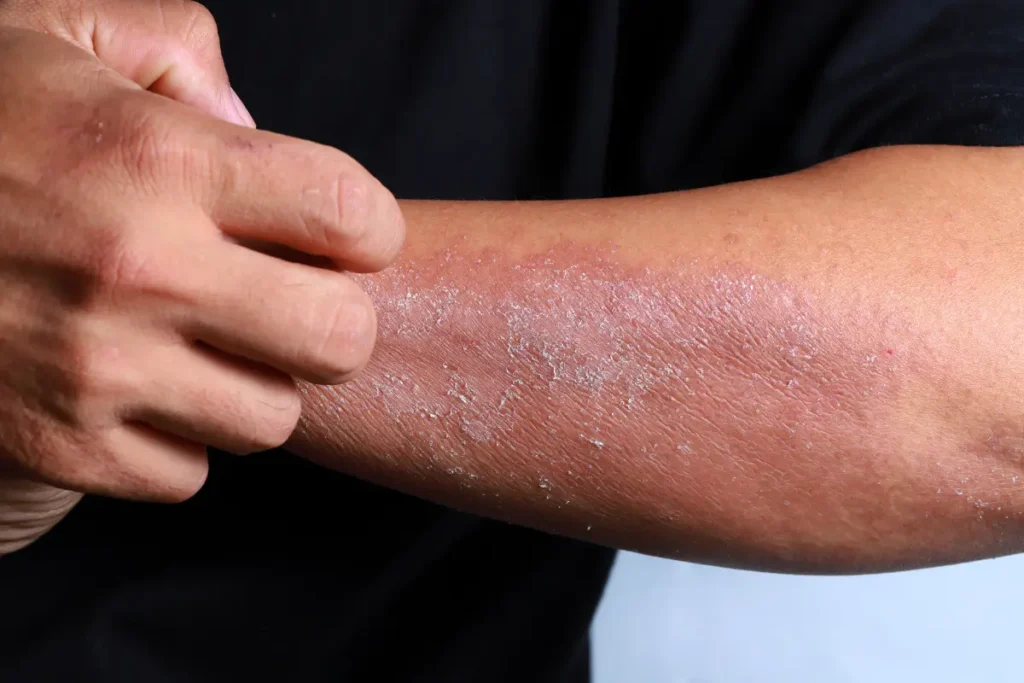
An eczema flare-up is marked, among other things, by inflamed, itchy skin.
The skin barrier during an eczema flare-up
The skin barrier of people with eczema is already impaired in stable phases, but during a flare-up it is damaged even more. An intact skin barrier protects against external influences such as allergens, germs and pollutants. In eczema, this barrier function is disrupted, which leads to increased sensitivity and susceptibility to infection. Caring for the skin barrier is therefore essential to control flare-ups and protect the skin.
Common triggers of acute eczema flare-ups
Various factors can trigger an acute flare-up. The most common triggers include:
- Stress: Emotional strain and stressful situations can make symptoms worse.
- Allergens: Contact with allergens such as pollen, house dust mites or certain foods.
- Environmental influences: Cold, heat or high humidity can provoke flare-ups.
- Irritants: Harsh soaps, cosmetics or certain items of clothing.
- Infections: Bacterial or viral infections can put additional strain on the skin.
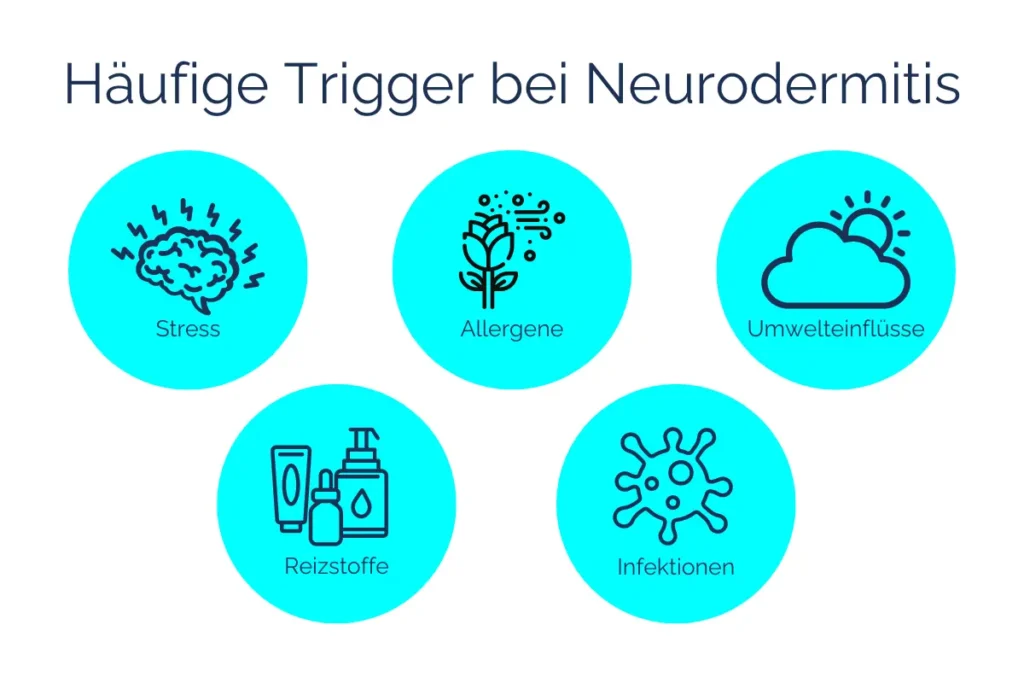
Common triggers that can set off an eczema flare-up.
The triggers of eczema flare-ups can vary depending on the person and their circumstances. An eczema diary can help you recognise and avoid triggers correctly. It is especially easy in everyday life and on the go with the digital eczema diary in our Nia app from the App Store or Google Play.
Treatment: the differences between basic skin care and acute treatment
Eczema treatment differs depending on the state of the skin. In stable phases, and in general, the focus is on basic skin care, which can improve the phases until the next flare-up and also help relieve symptoms in the long term. This regular care aims to strengthen the skin barrier, keep the skin moisturised and minimise irritation. In acute phases, on the other hand, when symptoms appear suddenly and more strongly, more intensive treatment with various therapy options is needed. These reduce the inflammation and relieve the itching. With severe eczema, systemic therapy may also be necessary. This form of treatment is mainly for patients whose symptoms cannot be controlled well enough despite intensive local treatment. Systemic therapies work throughout the whole body and aim to reduce the underlying inflammation and modulate the immune system. One of the main pillars of systemic therapy for eczema is immunosuppressants. These medicines dampen the overactive immune response that leads to inflammation of the skin. All forms of treatment should always go hand in hand with medical advice.

The treatment method for an eczema flare-up depends on how severe the symptoms are.
Basic skin care for eczema
Basic skin care is an important part of eczema treatment. It preserves moisture, strengthens the skin barrier and minimises irritation.
- Moisturising creams and ointments: Apply regularly to keep the skin supple.
- Gentle cleansers: Avoid harsh soaps and fragrances.
- Avoiding triggers: Identify and reduce triggers.
Acute treatment for eczema flare-ups
The aim of acute treatment is to relieve symptoms and reduce inflammation during an eczema flare-up.
- Corticosteroids: Topical steroids for quick relief of inflammation.
- Calcineurin inhibitors: Non-steroidal creams to reduce inflammation.
- Antihistamines: To relieve itching.
- Wet wraps: For intensive care and to soothe the skin.
Eczema flare-ups and the seasons
The seasons have a significant influence on how often and how severely eczema flares up. A particularly difficult time is eczema in winter.
- Winter: Cold, dry air and heated rooms lead to drier skin and frequent flare-ups.
- Summer: Heat and sweating can irritate the skin, but the higher humidity often leads to better skin condition.
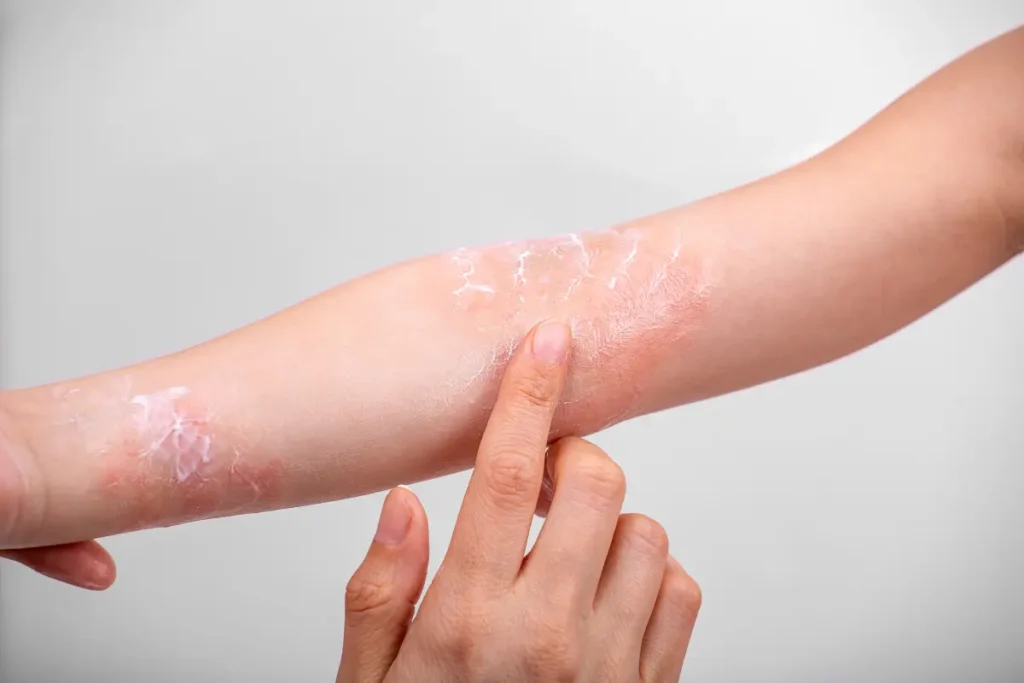
A holistic approach to treating eczema flare-ups is recommended.
What should you do during an acute flare-up?
As soon as an eczema flare-up begins, acting quickly is essential to relieve the symptoms:
- Cooling compresses: To soothe the skin and reduce inflammation.
- Topical corticosteroids or calcineurin inhibitors: Anti-inflammatory medicines prescribed by your doctor.
- Keep up your skin care: Keep applying moisturising creams regularly during the flare-up too.
- Control the itch: Use medicines that relieve general itching and distraction techniques to avoid scratching.
- Reduce stress: Use relaxation techniques such as meditation or breathing exercises.
Preventing acute eczema flare-ups
Preventive measures are essential to reduce how often and how intensely flare-ups occur:
- Regular skin care: Applying moisturisers every day is essential to strengthen the skin barrier in eczema and prevent moisture loss. Applying moisturising creams or ointments every day helps keep the skin supple and minimise irritation.
- Identifying triggers: Keeping an eczema diary to recognise and avoid triggers can help identify your individual flare-up triggers. By recording your diet, environmental conditions, stress levels and the state of your skin, you can spot patterns and respond better to triggers.
- Stress management: Techniques such as yoga, meditation and regular physical activity help reduce stress and support general well-being, which can have a positive effect on skin health.
- Healthy diet: A balanced diet rich in anti-inflammatory foods can support skin health and reduce flare-ups. Foods with omega-3 fatty acids, antioxidants and probiotics can reduce inflammation in the body.
- Adapting your environment: Humidifiers in winter help moisten dry air and prevent dry skin. In summer, wear light, breathable clothing to avoid excessive sweating and skin irritation.
Be prepared for the next eczema flare-up
To prevent your next eczema flare-up as well as possible, to quickly find important tips from experts in acute cases and to recognise symptoms quickly, we recommend our Nia app.

With the Nia app, you can keep a personal eczema diary, get tailored recommendations and have direct access to a large knowledge section with medically validated tips and tricks about eczema for everyday life. Download the app now from the App Store or Google Play and start your journey towards better control of acute eczema flare-ups.
Sources:
- https://www.mayoclinic.org/diseases-conditions/atopic-dermatitis-eczema/symptoms-causes/syc-20353273 (accessed on 14.06.2024)
- https://onlinelibrary.wiley.com/doi/full/10.1111/bjd.18148 (accessed on 14.06.2024)