
Eczema on the back: what helps?

Atopic dermatitis is a chronic skin disease characterised by dry, itchy skin and recurring eczema patches. The back can be a particularly problematic area, because it is hard to reach and often covered by clothing, which can make irritation worse. In this article, you will learn more about the symptoms, causes and treatment options for eczema on the back. We also shed light on special challenges and give you valuable tips for relieving the symptoms.
Recognising eczema on the back
Recognising and understanding the symptoms is the first step towards effective treatment and skin care. Unfortunately, people often cannot recognise the condition on their back as easily as eczema on their arms or hands, because these areas of the body are not so easy to see. That's why it is important to seek dermatological help early so that suitable treatment strategies can be developed and the symptoms relieved. A holistic approach that combines medical treatment, skin care and psychological support can help improve quality of life and minimise the effects of eczema on the back.
Symptoms of eczema on the back
The symptoms of eczema on the back are varied and can range in intensity from mild to severe. Because the back covers a large area of skin and is often hard to reach, the symptoms can be particularly distressing. For many people with eczema, the fact that affected patches on the back are hard to reach and cannot be scratched is especially tormenting. On the other hand, this means fewer or no scratch lesions develop in the affected areas. To interpret the symptoms on your back correctly as well, our Nia app with its built-in photo documentation can help you.
Here are the most common signs of eczema on the back in detail:
- Intense itching: One of the most striking and distressing symptoms is severe itching, which can occur especially after showering or at night. Because the back is hard to reach, it can be difficult to give in to the urge to scratch, which often makes the itching seem even more intense. The constant itching can seriously disturb sleep and affect quality of life.
- Dryness: The skin on the back is often dry and tight, because many people neglect it when applying cream or simply cannot reach it. This dryness can lead to an unpleasant feeling of tightness that gets worse with movement. Dry skin tends to flake and can crack, which increases the risk of infection.
- Redness and inflammation: Large areas of redness and inflammation often appear on the back. These affected areas of skin can be hot and sensitive. In acute phases, the inflammation can be more pronounced and spread to larger areas of skin.
- Lichenification: Chronic scratching and rubbing of the affected skin can cause the skin to thicken and harden, a condition known as lichenification. These thickened patches are often darker and rougher than the surrounding skin and feel leathery. Lichenification often occurs in areas that are under a lot of strain, such as the shoulder blades and the lower back.
- Weeping and crusting: Besides blistering, inflamed patches of skin can also weep in acute eczema. These weeping areas crust over as they dry and can leave a rough, scaly surface. Crusting is often a sign of an acute inflammatory phase and can be very uncomfortable.
- Secondary infections: Constant scratching and the damaged skin barrier increase the risk of secondary bacterial infections. These infections can make the symptoms worse and often require additional medical treatment with antibiotics.
- Hyperpigmentation and hypopigmentation: After an acute flare-up has subsided, changes in skin colour can remain in the affected areas. These changes appear as darker (hyperpigmentation) or lighter (hypopigmentation) patches compared with the surrounding skin. These pigment changes can last from several weeks to months.
- Restricted movement: With extensive and painful inflammation, the back's mobility can be restricted. The skin can feel tight and tear when you move, causing additional pain and discomfort. This can seriously affect everyday life and make daily activities harder.
- Emotional and psychological stress: The constant symptoms and the discomfort that comes with them can lead to considerable emotional and psychological stress. People with eczema often report frustration, sleeplessness and a reduced quality of life. The visibility of the symptoms can also lead to feelings of shame and social withdrawal.
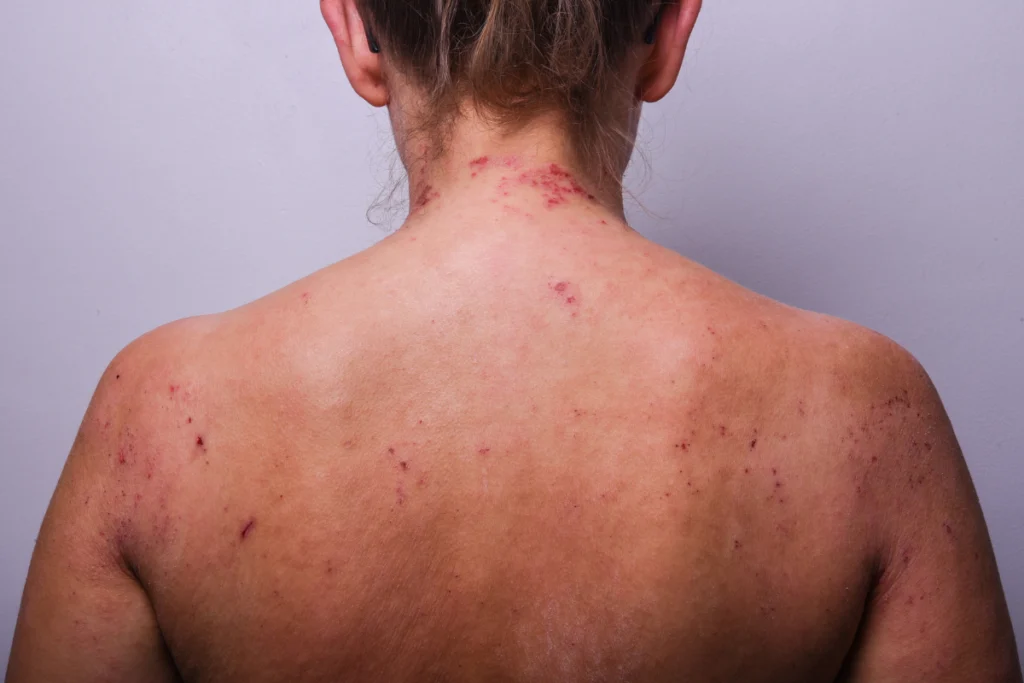
Eczema on the back is sometimes hard for people to recognise themselves.
Eczema and itching on the back at night
At night, the itching is often particularly tormenting, because itching on the back is harder to relieve by scratching. The following measures can help relieve the symptoms:
- Moisturising creams: Apply generously before going to bed.
- Cool compresses: Cool the skin and relieve itching.
- Cotton clothing: Wear loose, breathable cotton clothing to avoid irritation.
- Eczema suits: Overalls specially designed for babies and toddlers, intended to protect them from scratching attacks.
Triggers of eczema on the back
Various factors can trigger or worsen eczema flare-ups:
- Genetic predisposition: A family predisposition to eczema is common.
- Environmental factors: Cold, heat, dry air and pollutants can irritate the skin.
- Allergens: Pollen, animal hair, house dust mites and certain foods can be triggers.
- Stress: Psychological strain and stress can make eczema worse.
- Skin irritants: Harsh soaps, detergents and synthetic clothing.
Find out more here about the most common eczema triggers.
Treatment and therapy of eczema on the back
Treating eczema on the back requires a comprehensive and nuanced approach, because the back is a large area of skin and often hard to reach. Below you'll find the most important steps for effective treatment and care in detail:
- Skin care: Applying cream regularly with moisturising and emollient lotions is crucial to strengthen the skin barrier and prevent dryness. Products containing ingredients such as urea, glycerine or ceramides are particularly effective. It is important to apply cream right after showering or bathing, while the skin is still slightly damp, to lock in moisture.
- Ergonomic aids: Because the back is hard to reach, ergonomic aids such as long-handled applicators or special lotion dispensers can be helpful. These aids make it easier to apply creams and ointments to the back and make sure that hard-to-reach areas are also properly cared for. Alternatively, ask a family member whether they can help you apply cream.
- Medication: Topical corticosteroids or calcineurin inhibitors are used to reduce inflammation and itching. Corticosteroids such as hydrocortisone or betamethasone are particularly effective during acute flare-ups to bring inflammation under control quickly. Calcineurin inhibitors such as tacrolimus or pimecrolimus are a good alternative for long-term treatment and are suitable for sensitive areas of skin. When applied to large areas of the back, the dose and duration of use should always be agreed with a dermatologist. For severe atopic dermatitis, systemic therapy with biologics and JAK inhibitors may also be considered.
- Stress management: Since stress is a known trigger of eczema flare-ups, stress reduction techniques such as meditation for eczema, yoga or breathing exercises can help lower stress levels and reduce flare-ups. Regular relaxation techniques can also improve general well-being and have a positive effect on eczema symptoms.
- Phototherapy: In severe cases, UV light treatment (phototherapy) on the back can help. This therapy uses UVB or UVA rays to reduce skin inflammation and relieve the symptoms. Because it is applied to a large area, it is important to have phototherapy under medical supervision to ensure the right dose and minimise the risk of side effects.
- Clothing: Wear natural cotton materials to avoid skin irritation. Avoid scratchy clothing and wash new clothes before wearing them for the first time to remove chemicals.
- Baths and wet wraps: Regular lukewarm baths with oat-based products or special medicinal bath additives can soothe and moisturise the skin on your back. After bathing, gently pat the skin dry and apply cream immediately. Wet wraps can provide additional relief for acute inflammation and severe itching.
- Diet and hydration: A balanced diet rich in omega-3 fatty acids, vitamins and antioxidants can support skin health. Drinking enough water helps hydrate the skin from the inside. Some people with eczema report improvements when they avoid certain foods such as dairy products, gluten or highly processed foods.
- Regular medical check-ups: Because eczema on the back is often hard to monitor and treat, regular visits to a dermatologist are important. They can monitor the course of the disease, adjust treatment and respond early to changes.

For many people, the itching of eczema on the back is very unpleasant.
By combining these treatment strategies, the symptoms of eczema on the back can be effectively reduced. A holistic approach that includes both medical and lifestyle measures is the key to successful treatment. Regular conversations with your dermatologist are important to adjust treatment and achieve the best possible results.
Eczema on the backs of children and babies
In children and babies, eczema usually appears on the arms and knees, but the back can also be affected. Special care measures are needed here as well:
- Gentle care products for babies: Use mild, hypoallergenic cleansers and creams.
- Avoid scratching: Cotton gloves or special clothing can help reduce scratching.
- Regular baths: Short, lukewarm baths with emollient additives are recommended to protect the skin on the backs of children and babies.
Eczema on the back in older adults
The skin of older people naturally tends to be dry and sensitive, which makes it more prone to inflammation and irritation. With eczema on the back, additional factors often come into play, such as reduced skin turgor (the skin's tension) and slower cell regeneration. As a result, the skin barrier on the back weakens more quickly and protects less effectively against external influences. In addition, age-related comorbidities and taking various medicines can make the symptoms worse. Limited mobility also makes it even harder to scratch the back. So in older age, eczema on the back in particular can become a challenge and should be monitored regularly by a dermatologist.
Eczema on the back in winter
Eczema often gets worse in winter because of dry heated air and cold on all parts of the body – including the back. Below you'll find suitable measures that can help:
- Humidifier: Increases the humidity indoors.
- Lukewarm water: Avoid hot showers or baths.
- Warm, breathable material: Wear clothing made of cotton or silk to minimise irritation.
Caring for eczema on the back
Careful skin care for eczema is crucial to relieve the symptoms on the back:
- Apply cream regularly: Use moisturising lotions every day.
- Gentle cleansers: Avoid harsh soaps and detergents.
- Sun protection: Use suitable sunscreens for eczema without perfume and preservatives.
Preventive measures against eczema on the back
Preventive measures can help delay, ease or at least minimise flare-ups on the back:
- Avoid triggers: Identify and avoid your individual triggers.
- Healthy diet: A balanced diet can reduce inflammation.
- Regular skin care: Proactive skin care is important even in symptom-free phases.
Similarities and differences with other parts of the body
Eczema can appear differently on different parts of the body. While dryness and itching often dominate on the back, other parts of the body such as the face or legs can show other symptoms. Individual treatment is therefore crucial.
Conclusion and summary
In severe cases or if you are unsure, you should always seek medical advice. A dermatologist can make an accurate diagnosis and recommend tailored treatment. To learn more about current treatment approaches, interpret symptoms correctly and regularly receive important tips from experts, we recommend our Nia app. With it, you can keep a personal eczema diary, receive recommendations and find articles and videos based on the AGNES eczema training. Download the app now from the App Store or Google Play and start your journey to better control of your eczema.
Sources:
- Wiley Online Library. Atopic Dermatitis: Current Insights and Future Treatments: https://onlinelibrary.wiley.com/doi/abs/10.1111/all.14159
- U.S. National Library of Medicine, National Institutes of Health (2019). Atopic Dermatitis in Older Adults: https://www.ncbi.nlm.nih.gov/pmc/articles/PMC6656014/