
Eczema in older age: causes and help
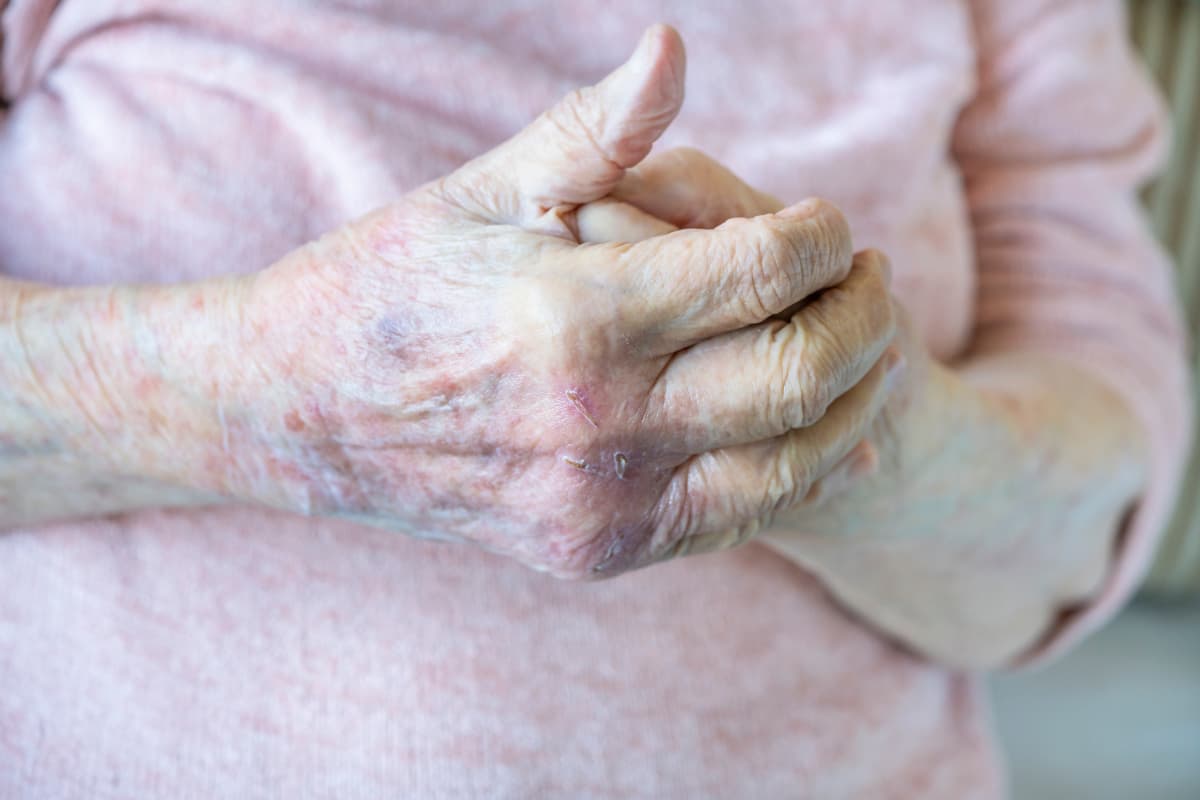
Atopic dermatitis is a chronic inflammatory skin disease characterised by dry, itchy skin and recurring eczema patches. Although it is often associated with children, eczema in older age is also a common skin condition, and its course and symptoms can change as you get older. In this article, you will learn more about the links between eczema and age, especially in later life. We look at the frequency, symptoms, triggers and treatment options for young and older adults with eczema.
Eczema as you get older
It is a common misconception that eczema is mainly a childhood disease. In fact, adults can also be affected, and in some cases the symptoms appear for the first time in adulthood. With increasing age, the symptoms can change and vary in intensity, location and frequency. In later adulthood, specific challenges and needs often arise that call for an adapted approach.
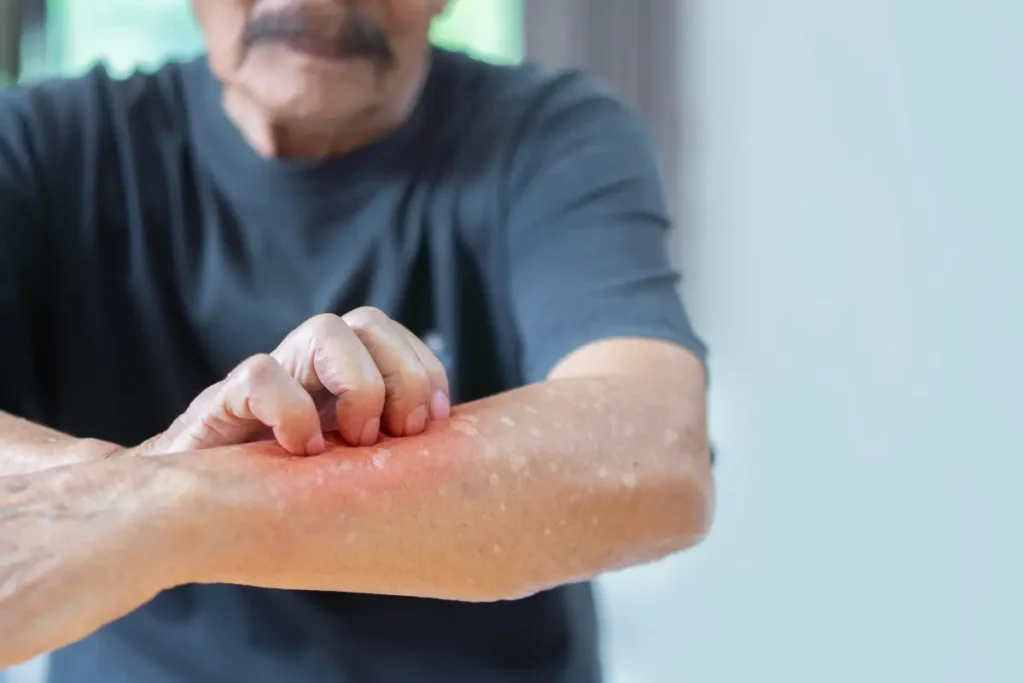
Eczema is not a condition that only affects children; adults also suffer from eczema in older age.
How common is eczema in adults?
The prevalence (the proportion of people with the disease in the total population) of atopic dermatitis in adulthood varies depending on the region and study. It is estimated that around 1-3% of adults are affected. It is particularly striking that older adults are increasingly a group that is often overlooked, because symptoms such as dry, itchy skin and eczema patches can easily be confused with other age-related skin conditions. In addition, older adults seek dermatological help less often, because skin problems are often dismissed as normal signs of ageing. The lack of awareness that eczema can also occur in later life also often leads to misdiagnoses. However, studies show that up to 20% of children with eczema continue to have symptoms in adulthood, and around 2-8% of adults only develop their first symptoms later in life.
Dormant eczema
Many adults who had eczema as children experience a phase of remission – that is, the symptoms subside or disappear. However, this phase, known as “dormant eczema”, can be reactivated by various triggers. This means that older adults who have been symptom-free for a long time can suddenly be affected by eczema again.
Trigger factors for dormant eczema
Dormant eczema can be reactivated by various trigger factors:
- Stress and psychological strain
- Environmental factors such as cold, heat or air pollution
- Allergens in food or the environment
- Skin irritants such as harsh soaps or certain textiles
- Hormonal changes
Eczema in older adults: new or persistent symptoms
Older adults can either develop eczema suddenly or experience a continuation of the condition they have had since childhood. New cases in older adults are often triggered by environmental factors, skin ageing or other chronic diseases. Persistent symptoms, on the other hand, can be influenced by the long-term strain and the chronic nature of the disease.

In older age, too, there are many factors that can trigger eczema.
Symptoms of eczema in different age groups
All symptoms of eczema can occur in different age groups and with different intensity. Nevertheless, the disease can be divided into different age groups in which the symptoms and the course of the disease are similar:
- Babies (up to 2 years): Dry, scaly skin and eczema patches, usually on the face and the outer sides of the limbs.
- Children (2-12 years): Eczema patches mainly in the elbow creases, the backs of the knees and on the neck.
- Teenagers and young adults (13-25 years): Frequent eczema patches on the hands, feet and face.
- Adults (over 25 years): Eczema patches can appear anywhere on the body, but often on the hands, feet and face.
- Older adults (over 65 years): Dry skin and eczema patches, often also in unusual places such as the back and scalp.
Symptoms compared: adults and children
In general, the symptoms of eczema in adults often differ from those of eczema in children. While in children the eczema patches usually appear in the elbow creases, the backs of the knees and on the face, adults often show the following symptoms:
- Chronic, itchy skin rashes
- Dry, scaly skin
- Thickened, leathery patches of skin (lichenification)
- Eczema patches on the hands, feet, face and neck
Eczema symptoms at a younger age (20-40 years)
Younger adults between 20 and 40 can experience a mix of chronic and acute symptoms. Common symptoms are:
- Eczema patches on the hands and feet
- Itching and dry skin, especially after showering or when the weather changes
Eczema symptoms in older age (65 and over)
In older adults aged 65 and over, some specific features of eczema can also appear:
- Pronounced dryness of the skin
- Eczema patches in unusual places such as the back and scalp
- Reduced skin regeneration and slower healing of eczema patches
Therapy and treatment in older age (65 and over)
Guideline-based treatment options for severe atopic dermatitis in older age include:
- Anti-inflammatory medication: To treat eczema with inflammation and itching (topical corticosteroids)
- Moisturising creams and ointments: To combat dry skin
- Itch treatment: Medication such as creams, tablets or injections to reduce itching
- Phototherapy: UV light treatment to relieve eczema
- Systemic therapies: To suppress the immune system or influence individual inflammatory pathways.
The link between eczema, age and lifestyle
In older age, lifestyle factors play a crucial role in managing eczema. A healthy diet, enough fluids and regular exercise can have a positive effect on skin health. They can also strengthen the immune system. Stress reduction techniques such as yoga and meditation for eczema have also proven helpful, as stress is often a trigger for eczema flare-ups. Skin care products should be chosen carefully to protect and care for sensitive skin. By proactively adapting their lifestyle, older adults can help reduce the severity and frequency of eczema symptoms.
Recommended measures:
- Diet: A balanced, anti-inflammatory diet can reduce skin inflammation.
- Hydration: Drink enough water to counteract water loss from the skin and support the immune system.
- Exercise: Regular moderate physical activity to improve general health.
- Stress management: Build in techniques such as meditation, breathing exercises and yoga.
- Skin care: Use mild, moisturising products that are free of irritating substances.
- Documentation: Regularly document the condition of your skin with the Nia app to gain control over your eczema. The eczema app Nia can also help you identify the triggers of your eczema.
Dealing consciously with these factors can help minimise the risk of eczema flare-ups in older age and improve quality of life.

Lifestyle influences eczema in older age.
Therapy and treatment for severe eczema
Fortunately, the treatment options for severe atopic dermatitis in adults keep developing. Some newer treatment approaches include:
- Biologics: Targeted therapies that modulate specific components of the immune system.
- JAK inhibitors: Medicines that inhibit the Janus kinase enzymes, which play a role in the inflammatory response.
- Probiotic treatments: Research suggests that modulating the microbiome can have positive effects. You can find out more about the link between probiotics and eczema here. Probiotic treatments include, among other things, antiseptic measures against bacteria and antifungal creams against fungi. However, it is important to point out that this is not a systemic therapy in the classic sense. Furthermore, there is so far no approved therapy that acts directly on the microbiome.
In addition to medical treatments, people with eczema can also generally benefit from lifestyle changes, preventive measures or even home remedies for eczema to control symptoms and improve their quality of life.
Help with eczema in older age
To learn more about current treatment approaches, interpret symptoms correctly and regularly receive important tips from experts, we recommend our Nia app. With it, you can keep a personal eczema diary and receive tailored recommendations. Download the app now from the App Store or Google Play and start your journey to better control of your eczema.

The eczema app Nia can support you in dealing with eczema in everyday life.
Sources:
- Silverberg, J. I., & Hanifin, J. M. (2013). Adult eczema prevalence and associations with asthma and other health and demographic factors: a US population-based study. Journal of Allergy and Clinical Immunology, 132(5), 1132-1138. https://pubmed.ncbi.nlm.nih.gov/24094544/
- Paller, A. S., Kabashima, K., & Bieber, T. (2017). Therapeutic pipeline for atopic dermatitis: End of the drought? Journal of Allergy and Clinical Immunology, 140(3), 633-643. https://pubmed.ncbi.nlm.nih.gov/28887947/
- Weidinger, S., & Novak, N. (2016). Atopic dermatitis. The Lancet, 387(10023), 1109-1122. https://pubmed.ncbi.nlm.nih.gov/26377142/