
Important forms of eczema – extrinsic or intrinsic atopic dermatitis?
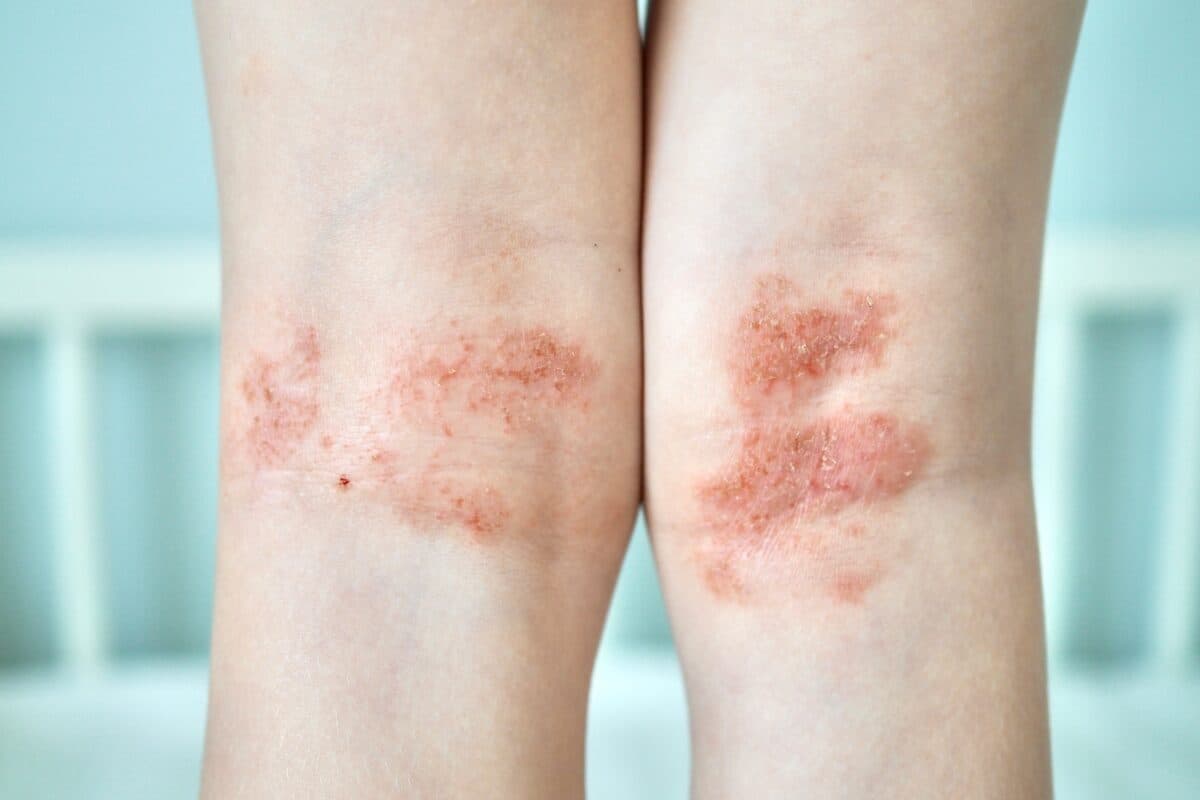
Did you know that there are different forms of eczema? The skin condition can occur in an extrinsic or an intrinsic form. From the outside, they are hard to tell apart. But there are some factors that differ between the two forms of eczema. You can find out which ones here.
What is atopic dermatitis anyway?
Before we turn to the different forms of eczema, let's take a quick look at the basics. Atopic dermatitis, also known as eczema, is a chronic skin condition characterised by itching, redness and dry skin. It often appears in childhood and frequently stays with people for their whole lives.
Extrinsic forms of eczema
Extrinsic forms of eczema are also known as atopic or allergic eczema. Here, external factors play a decisive role. If you have an extrinsic form of eczema, allergic reactions to certain substances or environmental conditions can make symptoms worse or trigger them.
People with extrinsic eczema (IgE-associated atopic dermatitis) are often allergic to certain foods, house dust mites or pollen. On contact, their immune system reacts by producing IgE antibodies, and an eczema flare-up often follows.
What exactly are allergens?
Allergens are substances that can trigger allergic reactions. These can be, for example, house dust mites, pollen, animal hair or certain foods. Your immune system overreacts to these substances, which can lead to the typical skin symptoms of eczema.

Allergies can be identified with what is known as a skin prick test
Intrinsic forms of eczema
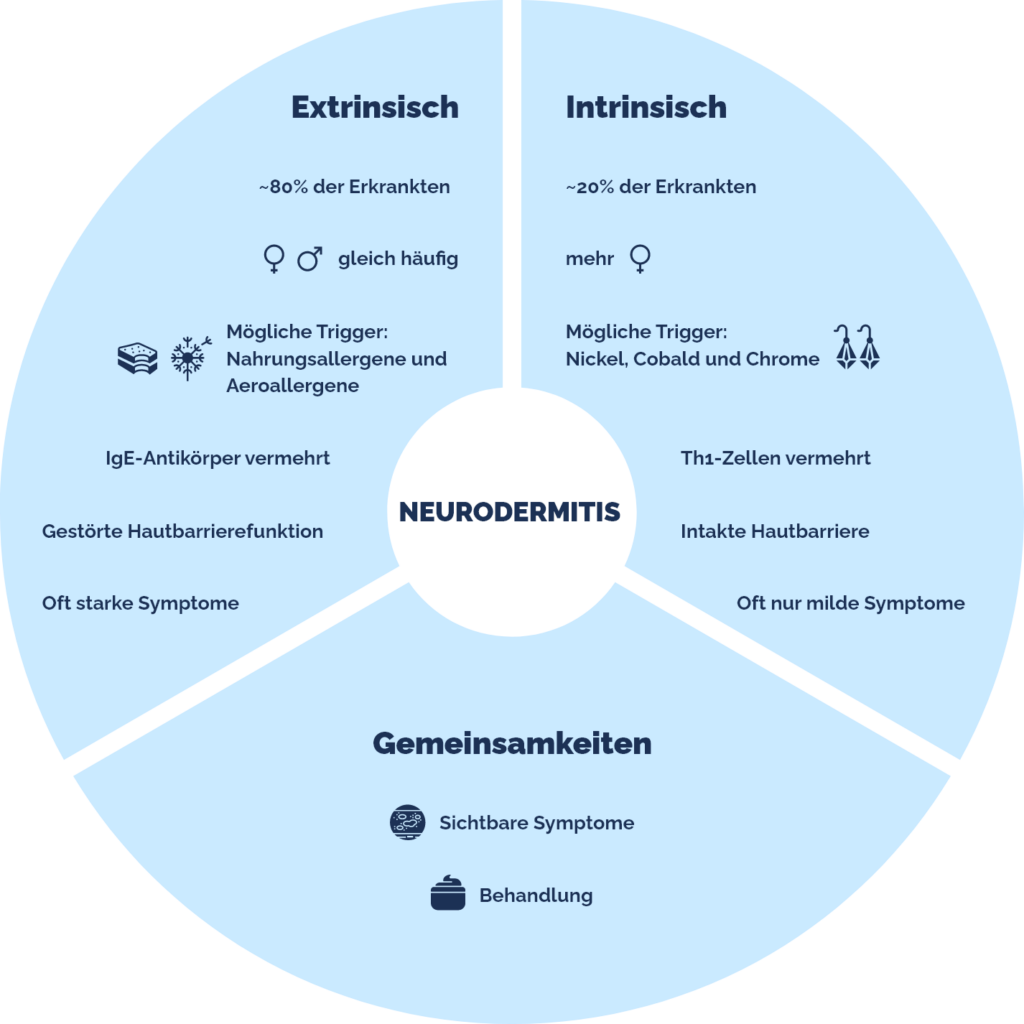
Intrinsic atopic dermatitis (non-IgE-associated atopic dermatitis) accounts for only 20% of cases. People with this form are usually not allergic to certain foods, house dust mites or pollen, which is why no raised levels of IgE antibodies can be detected in their blood.
Similarities and differences between the two forms of eczema
The extrinsic form often appears in the first months of life. The intrinsic form, by contrast, usually appears a little later in childhood – and then somewhat more often in girls than in boys.
The two forms look very similar. However, the symptoms are somewhat milder in patients with intrinsic atopic dermatitis. This is mainly because they have a normal skin barrier function, which is disrupted in patients with extrinsic atopic dermatitis. Their skin loses moisture and becomes dry. In addition, it is easier for bacteria and allergens to penetrate the skin and drive inflammation.
People with the intrinsic form are also not allergic to aeroallergens. Aeroallergens are airborne allergens such as pollen and house dust mites. That is why they have no increased risk of developing asthma later on – quite unlike people with the extrinsic form.
What triggers flare-ups in intrinsic atopic dermatitis?
What triggers flare-ups in intrinsic atopic dermatitis is not yet fully understood. One study, for example, showed a link to certain metals:
In this study, the immune system of people with intrinsic atopic dermatitis was strongly activated after contact with nickel, cobalt or chromium (Yamaguchi, 2013). More Th1 cells were produced. These are specific cells of the immune system.
This differs from patients with extrinsic atopic dermatitis: their immune system produces IgE antibodies after contact with allergens from food or the air.
So in the different forms of eczema, the immune system is strongly activated in different ways. The consequences, however, are similar – inflamed, itchy patches of skin.
Why does the skin come into contact with metals?
With extrinsic eczema, it is obvious how people are exposed to the allergens: they take them in through food or breathe them in.
With metals, it is similar. Many foods contain small amounts of the metals nickel, cobalt and/or chromium. The body partly releases these metals through sweat when you sweat. That way they end up directly on the skin. Nickel is also often found in jewellery. People with eczema should therefore be especially careful when wearing jewellery. If eczema develops, it is best to stop wearing the jewellery from then on.
How do I know whether I have intrinsic or extrinsic atopic dermatitis?
Your doctor can use tests to assess which form it is:
- IgE antibodies in the blood: if these are raised, it is a sign of the extrinsic form.
- Prick and patch tests: the doctor brings the skin into contact with metals, food allergens or aeroallergens. They then check whether the skin reacts with eczema-like changes. Itching and redness after contact with food allergens or pollen point to the extrinsic form. Changes after contact with certain metals point to the intrinsic form.
How are the two forms of eczema treated?
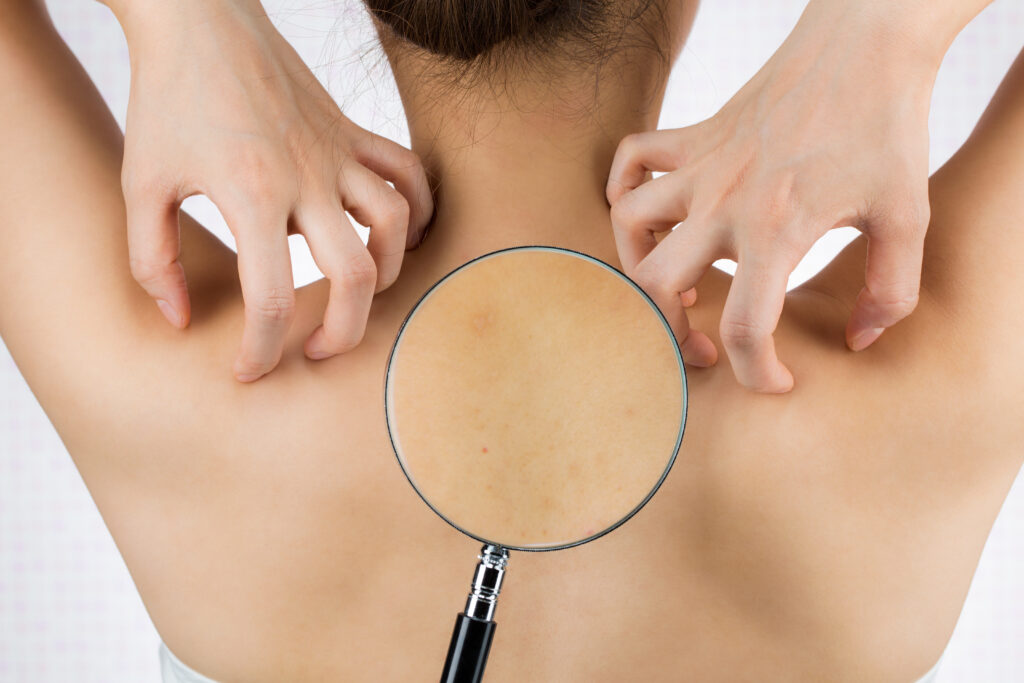
Whether extrinsic or intrinsic, both forms of eczema have some things in common. The itching, the dry skin and the redness are present in both. It is important to stress, however, that every person is unique, and the way eczema shows itself can vary from case to case.
At present, intrinsic and extrinsic atopic dermatitis are treated in the same way. But eczema research is moving forward. One aim is to treat symptoms in a more targeted way, adapted to each form. As soon as more is known about this, you can read about it in the Nia app.
If you suspect that you have eczema, it is important to see a dermatologist. The diagnosis and management of atopic dermatitis require an individual approach. In many cases, identifying and avoiding triggers and careful skin care can help to relieve symptoms.
Conclusion: understanding is the first step towards relief
In summary, there are extrinsic and intrinsic forms of eczema. Extrinsic eczema is influenced by external factors such as allergens and environmental influences, while in the intrinsic form, genetic and internal factors play a bigger role. Understanding which form applies to you can be the first step towards effective treatment.
Remember that you are not alone when it comes to the forms of eczema. Many people around the world share this experience, and there is support and there are resources that can help you cope with this challenge more easily. Stay informed, seek professional help and take loving care of your skin – after all, it is the largest organ of your body!
Sources
Extrinsic and intrinsic types of atopic dermatitis – PubMed (nih.gov)
Allergic and nonallergic forms of atopic diseases – ScienceDirect