
Can sweat also be good for eczema?
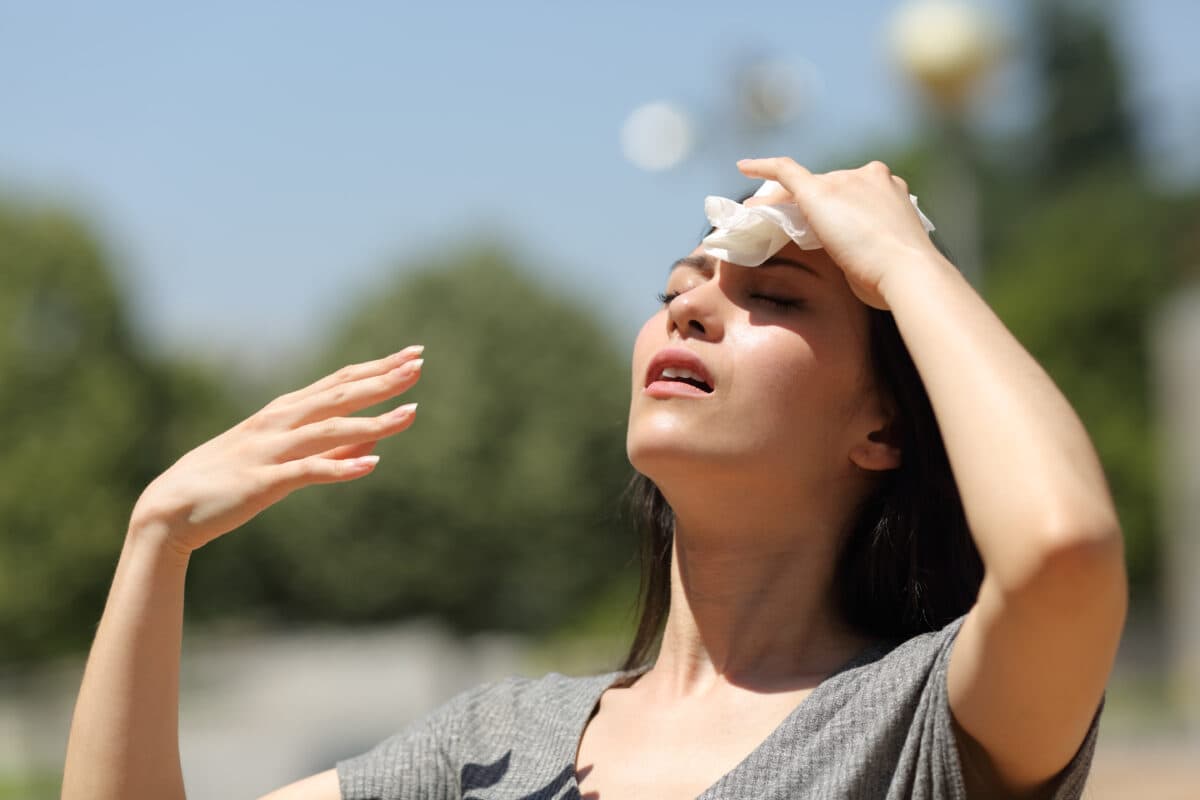
Most people with eczema know that sweat can trigger eczema. But only a few know that sweat can also protect against eczema. This paradox is currently being studied scientifically. In this article, you will find out how sweat production is disturbed in eczema and what this may have to do with saunas and summer heat.
Sweat protects the skin
When it is hot or we get excited, our body produces sweat. The resulting smell can be very unpleasant. Nevertheless, sweat is important for:
- regulating body heat
- the balance of important minerals (electrolytes)
- immune defence
- regulating the skin’s pH value
Sweat also provides natural skin protection. It helps to moisturise the skin surface, as it supplies moisturising substances such as lactate, urea and minerals.
Heat regulation through sweat is disturbed in eczema
Previous studies have produced partly contradictory results on whether sweat production in atopic dermatitis is reduced, normal or increased. This could be because sweat can be measured in different ways. In recent years, however, a lot of evidence has emerged that sweat production is disturbed in atopic dermatitis. People with eczema can often sweat only a little and only on limited areas of the body. As a result, too little sweat may reach the skin and protect it. This seems to be the case especially on dry patches of skin compared with normal-looking skin.
Some people with eczema show normal sweat reactions to high ambient temperatures. But an estimated half of people with eczema sweat less than they actually should. The reduced sweat production can occur both on skin affected by eczema and on unaffected skin. It has consequences for normal skin function. And in hot weather, the body cannot cool down as well.
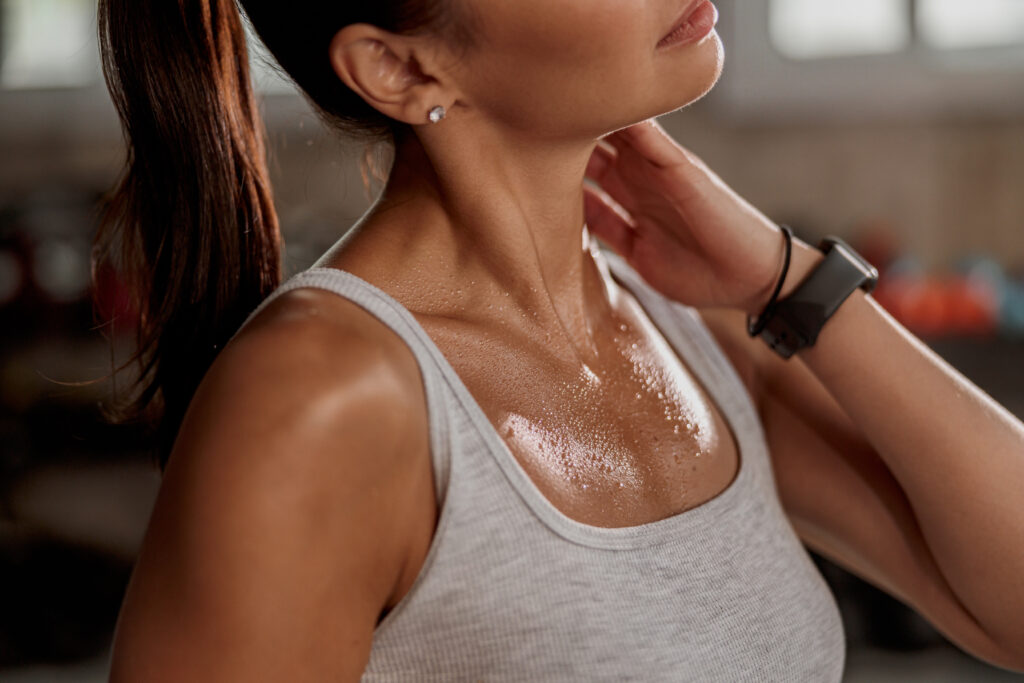
Sweat is important for regulating body temperature in hot weather
One study observed that in atopic dermatitis, sweat is transported through the body differently. There also appears to be a later-onset, stronger sweat production in certain areas of the skin. So it may be that sweat is held back in certain parts of the skin tissue and in this way contributes to inflammation. However, these circumstances still need further research.
Ready for the heat – how to cool down despite eczema
Because of climate change, extreme heatwaves are becoming more and more frequent here too. The heat can become very dangerous. Some patients with eczema report how summer heatwaves put additional strain on their skin. When the skin cannot release heat as well, the heat becomes unbearable and the whole body is under great strain. The following tips help you cool down nonetheless:
- Make sure you get the right amount of salt (not too much and not too little).
- Drink more water: experts recommend 2.5–3 litres on hot days.
- Protect yourself from UV radiation: use enough sunscreen and wear absorbent clothing made of cotton or linen. Clothing should be light-coloured, lightweight and airy.
- Spray bottle with water (thermal spray): spray it preferably onto the back of your neck when you are out and about; it imitates sweating and cools you down. Alternatively (especially suitable for children): place a cool flannel on the back of the neck.
- Wear a hat or head covering.
- Hold your elbows or arms under cool water.
- Go to cool places such as churches or air-conditioned shops
- Avoid alcohol and other drugs.
- Avoid heavy physical exertion such as sport.

“With a conscious focus on individual skin care and adapted lifestyle strategies, we can positively influence the effects of heat on atopic dermatitis. Together, we can take steps to preserve the health of our skin and at the same time contribute to the health of our planet. This also includes a determined commitment to environmental and climate protection.”
— Professor Dr. med. Claudia Traidl-Hoffmann, author of the book „Überhitzt. Die Folgen des Klimawandels für unsere Gesundheit. Was wir tun können.“ (Overheated: the consequences of climate change for our health and what we can do)
Going to the sauna with eczema
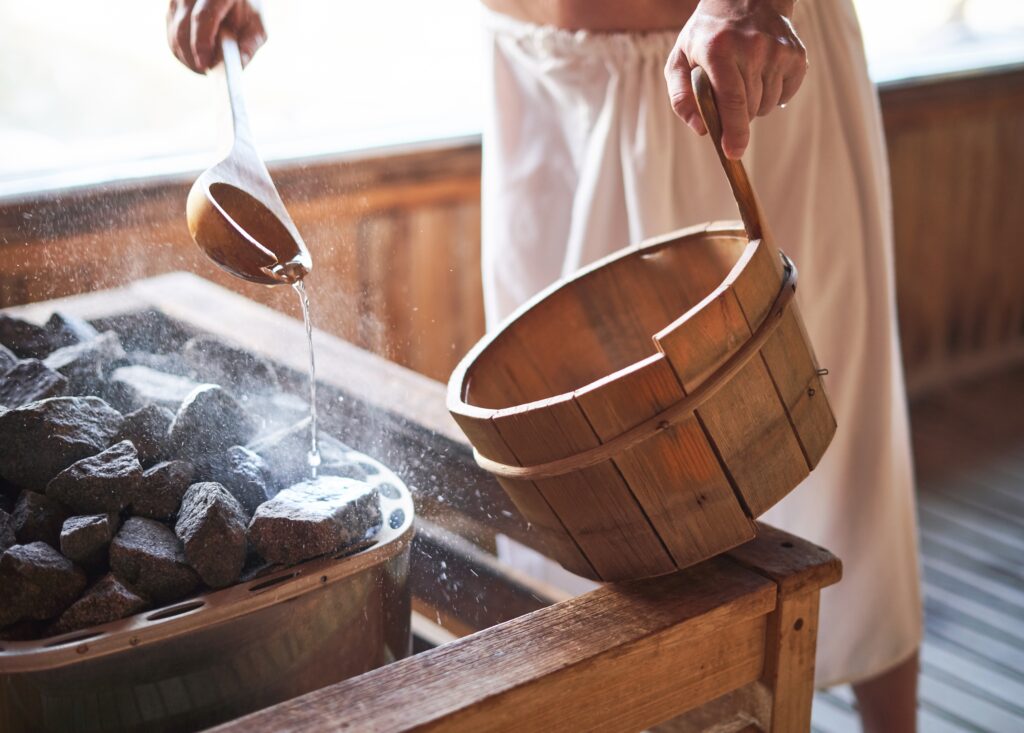
Some people with eczema like to go to the sauna (especially in winter). Sauna sessions also support the immune system. For example, they protect against cardiovascular diseases. There are also indications that regular sauna use strengthens the skin barrier in healthy skin.
Are sauna sessions also advisable if you have eczema? There is no blanket answer. People with eczema react very differently when they are in the sauna. Some report benefits, others tend to experience disadvantages. During an acute flare-up, however, it is better to skip the sauna. Instead of protecting the skin, the sweat could then sting in the wounds and make the symptoms worse.
If you don’t have an acute flare-up but do have dry skin, you can try steam baths or saunas with high humidity. The humidity helps soften the scales on dry skin. Afterwards, they come off more easily and the skin may improve.
When you go to the sauna, remember to get used to the heat slowly. For example, you can start by sitting on the lower benches, as it is cooler there. Keep an eye on the time you spend in the sauna and listen to your body’s signals. Take your moisturisers with you so that you can care for your skin again straight after the sauna.
Sources:
- Liikkanen LA. Mindful Sauna Practice Alleviates Allergic Symptoms. Asian Journal of Complementary and Alternative Medicine, Vol 10(2), 40-42:2022.
- Hannuksela M, Väänänen A. The sauna, skin and skin diseases. Annals of Clinical Research. 1988 ;20(4):276-278. PMID: 3218900.
- Kowatzki D, Macholdt C, Krull K et al (2008) Effect of regular sauna on epidermal barrier function and stratum corneum water-holding capacity in vivo in humans: a controlled study. Dermatology 217:173–180
- Hendricks, A. J., Vaughn, A. R., Clark, A. K., Yosipovitch, G., & Shi, V. Y. (2018). Sweat mechanisms and dysfunctions in atopic dermatitis. Journal of dermatological science, 89(2), 105–111. https://doi.org/10.1016/j.jdermsci.2017.11.005 (external)
- Tetsuo Shiohara, Takaaki Doi, Jun Hayakawa (2011). Defective Sweating Responses in Atopic Dermatitis, Pathogenesis and Management of Atopic Dermatitis. Current Problems in Dermatology.
- Hussain, J., & Cohen, M. (2018). Clinical Effects of Regular Dry Sauna Bathing: A Systematic Review. Evidence-based complementary and alternative medicine : eCAM, 2018, 1857413. https://doi.org/10.1155/2018/1857413 (external)