
The link between asthma and eczema: the atopic picture

Asthma and eczema are two conditions you might not connect at first, but there are some medical parallels. Asthma and atopic dermatitis are among the most common atopic conditions.
In this article you will learn more about the link between asthma and eczema and what atopic conditions actually are.
What is atopic dermatitis?
Atopic dermatitis (eczema) is a chronic, meaning long-lasting, skin condition. It is one of the most common inflammatory skin conditions. Atopic dermatitis with its typical symptoms usually appears in childhood.
Typically, eczema comes in flare-ups. This means there are usually phases when the skin is in better condition and phases when it is particularly red, dry or itchy. Flare-ups are caused by eczema triggers, which differ from person to person and are therefore hard to identify. Allergens are among the most common triggers.
What is asthma?
Bronchial asthma is a chronic inflammation of the lower airways. With more than 339 million people affected worldwide (according to the Global Asthma Report 2018), asthma is one of the most common chronic diseases. The number of people affected has risen sharply over the last 40 years. Boys are affected more often than girls. In adulthood the ratio reverses, and women are affected more often. Why more and more people are developing asthma is not entirely clear. Current studies are trying to uncover the underlying mechanisms.
Symptoms of asthma
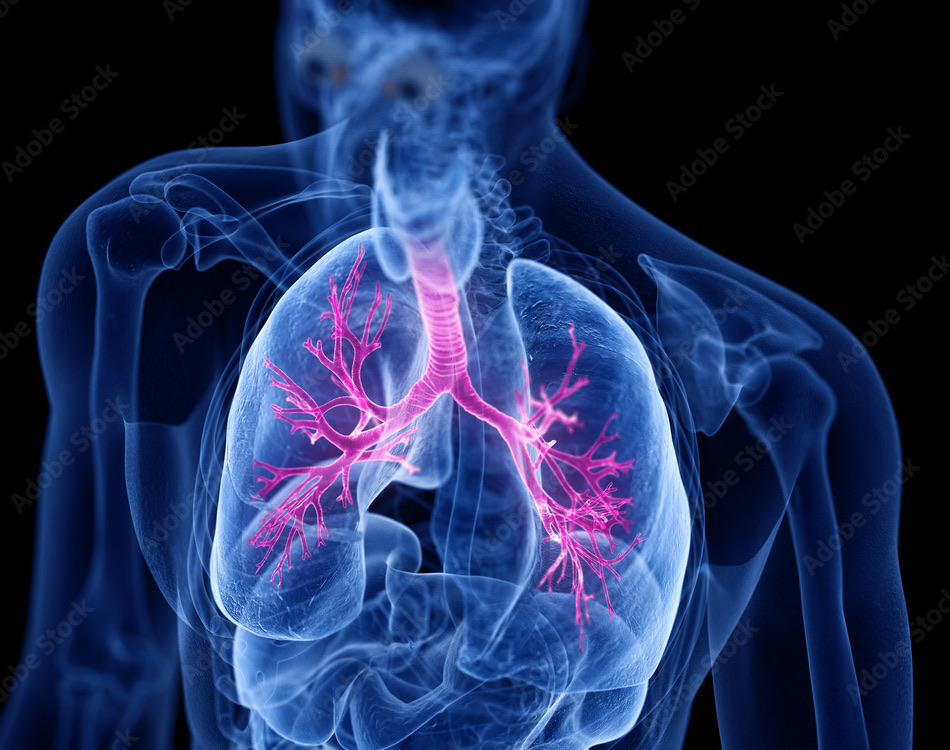
Asthma means that the bronchi are hyperreactive and that narrowing of the airways can occur (in attacks). The lower airways are chronically inflamed. In general, the clinical picture is rather varied, with symptoms of differing severity:
- recurring attacks of wheezing,
- coughing,
- a whistling sound when breathing out,
- breathlessness,
- a feeling of tightness in the chest
- shortness of breath.
As a result, asthma has a big impact on the quality of life of those affected and also causes high costs in the healthcare system.
Triggers and causes of asthma
The triggers of the attacks are just as varied as the causes of the disease.
Various studies have now shown that several genetic factors make asthma more likely. Even so, it is not called a hereditary disease, because the genes identified increase the risk of developing asthma but are not solely responsible for it. How asthma develops is complex and always seems to be an interplay of several factors.
Allergic and non-allergic asthma:
In allergic asthma, pollen, pet hair, house dust mites or foods can trigger the attacks.

In non-allergic asthma, there is also a wide range of factors that can trigger attacks or intensify the general symptoms. These include:
- Cold and flu viruses play a role in the attacks: this became clear during the coronavirus pandemic. During lockdown a decrease in attacks was recorded, which researchers were able to attribute to people being exposed to fewer cold and flu viruses.
- Environmental pollutants, for example from car exhaust and air pollution: this emerged when the frequency of asthma in children who grew up in the city was compared with that of children who grew up in the countryside. The children in the countryside developed asthma much less often, because they were exposed to less air pollution.
- Cold
- Tobacco smoke
- Exertion
- Being overweight
- Stress
- Medicines such as aspirin or beta blockers and
- Sulphides, ingredients found in wine or dried fruit, for example
Treatment of asthma
Asthma usually cannot be cured, but in most people it is easy to treat. Treatment consists of anti-inflammatory sprays and medicines that reduce the narrowing of the bronchi. Further active substances are being intensively researched. These are also meant to regulate the messenger substances of inflammation better.
As with other chronic diseases, patients should keep a good record of their attacks and the course of the disease, so they can identify and then reduce their individual triggers.
What are atopic conditions?
Atopy describes the body’s tendency to react oversensitively to substances that are actually harmless (e.g. pollen). This oversensitivity shows up as an allergic reaction.
Asthma and atopic dermatitis are typical examples of atopy, but allergic hay fever is one too. Perhaps you have already heard the term atopic eczema for atopic dermatitis?
In asthma and atopic dermatitis, the body reacts oversensitively to substances that are actually harmless. The body’s reaction shows up as an allergic reaction.
The atopic march – the connection between asthma and eczema
The “atopic march” describes the typical sequence of atopic conditions. One example is that children with atopic dermatitis go on to develop an allergy and later allergic asthma.
However, this picture of the atopic march is not quite right. The order in which the atopic conditions appear follows no pattern and is individual. In addition, not everyone with one atopic condition develops further atopic conditions. So it is becoming increasingly clear that the order cannot be predicted. Only 5% of patients go through the complete atopic march.
Even though the theory of the atopic march is not entirely correct, there is still a link between the atopic conditions.
The link between asthma and eczema
If you have an atopic condition, for example atopic dermatitis, your risk of developing further atopic conditions such as asthma is increased. In contrast to the atopic march, the risk that you have both asthma and eczema is quite high. According to studies, 20–30% of all children and adolescents are affected by asthma and atopic dermatitis. Usually the atopic dermatitis appears first.
The exact link between asthma and eczema has not yet been clarified. It is thought that genetic factors, environmental influences and also lifestyle play a part. Asthma and atopic dermatitis are complex diseases that still need further research.
Conclusion: asthma and eczema
Asthma and atopic dermatitis are both chronic conditions that belong to the atopic conditions. This means that allergic asthma and atopic dermatitis are triggered by allergens. This then shows up as an allergic reaction.
Asthma and atopic dermatitis have increased sharply over recent decades. Here you can read about why allergic diseases and allergies seem to be increasing more and more. That is why both conditions are being intensively researched, to find better active substances and to optimise treatment.
If you have a condition such as asthma or eczema that is triggered by allergens, it is very important to know your allergens and personal triggers so you can avoid them. If you do not know your allergens yet, talk to your doctor.
Sources:
- Toskala E, Kennedy DW. Asthma risk factors. Int Forum Allergy Rhinol. 2015 Sep;5 Suppl 1(Suppl 1):S11-6. doi: 10.1002/alr.21557. PMID: 26335830; PMCID: PMC7159773. https://pubmed.ncbi.nlm.nih.gov/26335830/
- https://flexikon.doccheck.com/de/Neurodermitis?utm\_source=www.doccheck.com&utm\_medium=DC%2520Search&utm\_campaign=DC%2520Search%2520content\_type%253Aall&utm\_content=DC%2520Search%2520neurodermitis (accessed 24.04.24)
- https://www.msdmanuals.com/de-de/profi/immunologie,-allergien/allergien,-autoimmunerkrankungen-und-andere-%C3%BCberempfindlichkeitsst%C3%B6rungen/%C3%BCbersicht-der-allergischen-und-atopischen-erkrankungen (accessed 24.04.24)
- https://www.arztcme.de/elearning/fakten-zur-allergie-epidemie/#!page=lernmodul/der-atopische-marsch (accessed 24.04.24)
- http://globalasthmareport.org/2018/index.html (accessed 24.04.24)