
Scalp eczema: treatment tips, causes and symptoms
Does your scalp feel tight, or is the skin on your head dry, red and itchy? Then eczema on the scalp is often the cause. If you have atopic dermatitis (atopic eczema) and also have these symptoms on your scalp, it is likely that your scalp is affected by eczema too. But because other causes can also be behind it, the diagnosis should be made by a doctor.
The skin of people with eczema is sensitive anyway and needs careful care. Because hair makes it harder to apply ointments and creams to the scalp, it is a particular challenge for people with eczema. In this article you will learn why eczema can occur on the scalp and what can cause the symptoms.
Why does eczema occur on the head?
Just like on the rest of the body, eczema can also appear on the scalp. After all, your head is exposed to all kinds of environmental influences every day. Cold air, wet weather, contact with irritating fabrics or UV radiation can irritate the sensitive skin of people with eczema and cause symptoms. The wrong hair care, styling products, washing your hair too often or hot blow-drying can also encourage eczema on the scalp.
Scalp eczema: common symptoms
The symptoms are similar to those on the rest of the body: the skin is dry, red and can be very itchy. Weeping patches and crusts can also appear with acute inflammation. Dryness and scratching can also lead to more dandruff.
In some cases, hair loss can also occur, which can be very distressing. However, the hair loss is usually only temporary. Once the symptoms have improved, the hair grows back.
Scalp eczema
Scalp eczema symptoms: other causes
Besides atopic dermatitis, there can also be other causes behind skin inflammation on the head. Another common trigger of symptoms on the head is allergic contact eczema. Especially if only the head or scalp is affected, this can be a sign of an allergic reaction. Allergy testing can also make sense if the symptoms suddenly get worse.
In an allergic reaction, the skin reacts with redness and itching after contact with a particular substance. An allergy on the head can be triggered, for example, by:
- Shampoo or conditioner
- Hair dye
- Styling products such as hairspray or styling mousse
- Hairbrushes and combs
Often, simply avoiding the triggering factor already improves the symptoms. If it is an ingredient of a cosmetic product, however, it may also be contained in other products, which can then trigger an allergy too.
A doctor specialising in allergology can help identify the substance causing the allergy (allergen). Targeted questions and specific allergy tests (patch tests) can identify the underlying trigger.
What are patch tests? Patch tests (also known as epicutaneous tests) are used to detect contact allergies. This form of allergy testing assesses the delayed reaction to potential allergy-causing substances (allergens). The test substances are applied to the skin on the back in the form of solutions or ointments. The skin reaction is then checked after a few days (usually after 48 and 72 hours). The result is subsequently evaluated by a doctor within the overall clinical picture.
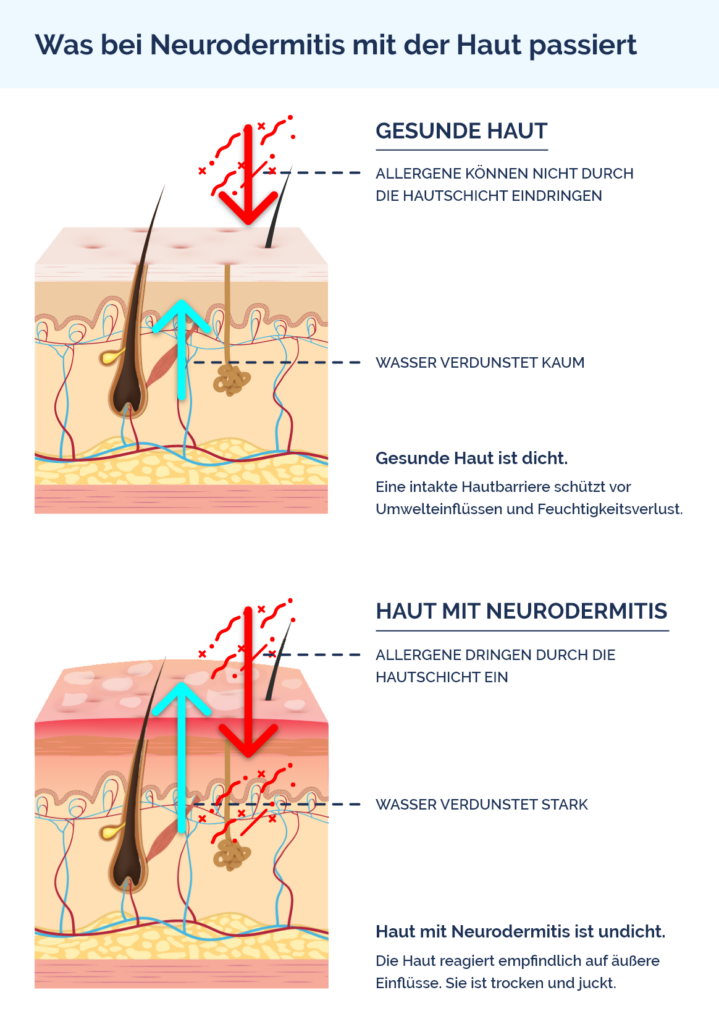
An infection can also be behind the symptoms. In atopic dermatitis, the skin barrier function is disturbed, and pathogens such as bacteria and fungi can get into the already damaged skin more easily. An infection that further increases the inflammation is called a superinfection. If a fungal infection is causing the symptoms, a doctor can diagnose it and treat it with antifungal medicines in the form of creams or tablets.
Treating scalp eczema
When treating scalp eczema, you should take care not to make the condition worse. You should also soothe your scalp with suitable care products to relieve the symptoms. You can follow both treatment strategies at the same time and easily build them into your daily routine.
Below we have put together useful tips for both treatment approaches:
- Choose the right shampoo without harmful additives (for example certain fragrances or silicone). You can quickly find suitable products at your nearest drugstore, pharmacy or online.
- Avoid too much contact with water – so showering is better than bathing. In the shower or bath, you should also avoid oil baths and use pH-neutral washing lotions.
- When drying your hair, it is better to let it air-dry or use a low hairdryer temperature. The aim is not to irritate your scalp and hair too much. If you want to dry your hair with a towel, be gentle and make sure you don't put extra strain on your hair by rubbing too hard.
You can also find more tips on the right treatment and care for scalp eczema here.
Sources:
https://eczema.org/information-and-advice/types-of-eczema/scalp-eczema/#:~:text=Atopic%20eczema%20is%20another%20common,when%20there%20is%20broken%20skin., accessed on 12.1.2022
https://www.fondationeczema.org/en/understanding/areas-affected-by-eczema/scalp, accessed on 12.1.2022
Wilsmann-Theis D, Bieber T. Psoriasis und Ekzeme am Capillitium [Psoriasis and eczema on the scalp]. Hautarzt. 2014 Dec;65(12):1043-9. German. doi: 10.1007/s00105-014-3542-4. PMID: 25394522.
Tennstedt D, Herman A, Lachapelle JM. Effets indésirables des soins capillaires chez les utilisateurs [Adverse effects of hair care in users]. Ann Dermatol Venereol. 2018 Aug-Sep;145(8-9):521-531. French. doi: 10.1016/j.annder.2018.05.002. Epub 2018 Jun 27. PMID: 29958696.