
Hand eczema – not always (just) atopic dermatitis
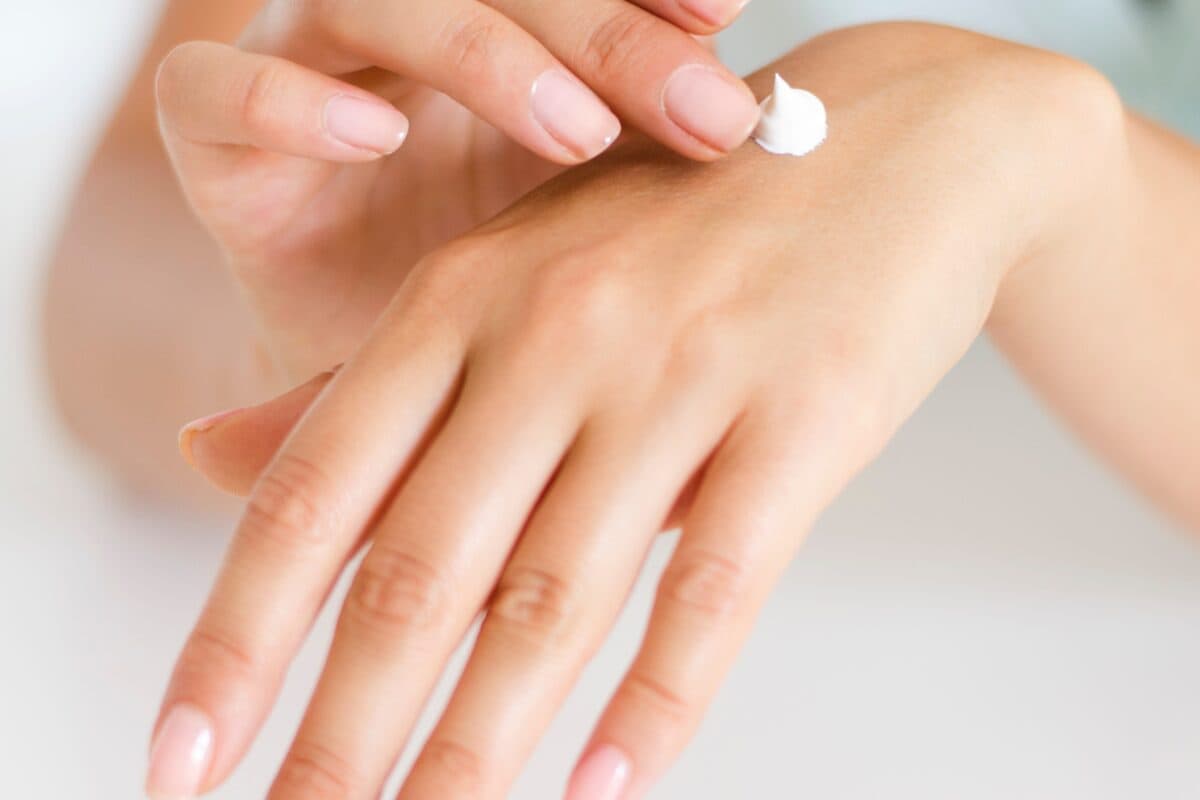
Eczema on the wrist: hand eczema can occur as part of atopic dermatitis when the condition also affects the hands. But there can also be other causes behind it that occur as accompanying conditions of atopic dermatitis.
These include irritant and allergic contact eczema. Both can appear on the wrist either on their own or in addition to atopic dermatitis. It is not always possible to trace the symptoms clearly back to one of these causes.
Irritant contact eczema (irritant contact dermatitis)
Similar to atopic dermatitis on the wrist, irritant contact eczema develops through irritation and strain on the skin, for example from
- contact with water or soap
- moisture (saliva, sweat)
- mechanical irritation (textiles, sand, dust)
- UV radiation
- chemicals
Irritant contact eczema can also appear on other parts of the body, but the hands are most often affected. That is because they come into contact with environmental irritants the most. The skin changes can be acute or chronic, depending on the type of contact and the substances that trigger the eczema.
Acute eczema often develops in response to strong irritants such as acids or alkalis. In the chronic form of irritant contact eczema, the symptoms develop over a longer period. This can happen when the skin repeatedly comes into contact with mildly irritating substances, e.g. water, soap or other cleaning products.
Allergic contact dermatitis
The allergic form of contact dermatitis can be hard to tell apart from irritant contact dermatitis. A number of allergens frequently trigger allergic contact dermatitis. However, there are also many allergens that are only rarely the trigger. These rare triggers can sometimes be difficult to identify. Well-known triggers include:
- nickel, chromium
- latex
- fragrances
- substances in hair dyes
There are many other eczema triggers. Clothing, food and medication, but also hormonal changes, can trigger hand eczema. Here you can find out more about triggers and get useful tips that can help you.
If the hand eczema only appears from time to time, or shortly after contact with certain substances, this may point to allergic contact dermatitis. A pattern in which only part of the hand is affected, or is more severely affected, is also common when the cause is allergic.
Hand eczema is often linked to exposure at work. At work in particular, the hands often come into contact with possible triggers of hand eczema. Jobs such as baker or hairdresser, or work in nursing and care, can be especially hard on the skin and encourage hand eczema.

If you have a contact allergy to cleaning products, gloves may offer protection.
Treating hand eczema
Acute symptoms are usually treated with corticosteroid creams and ointments. These are applied to the affected areas of skin for a short time and usually bring quick relief. Because of their side effects, corticosteroid preparations are not suitable for long-term use.
With contact eczema in particular, however, the condition can drag on. The triggering substances cannot always be strictly avoided, and the symptoms can flare up again. As an alternative to corticosteroid creams, calcineurin inhibitors or phototherapy can then be used.
Alongside the medicated eczema creams and ointments, careful basic skin care with moisturising and emollient products is recommended. To support the healing process, it can help to wash your hands as gently as possible, avoiding harsh soaps and hot water.
The skin barrier needs some time to recover and regain its protective function. So to avoid a relapse, it is important to keep caring for your skin consistently even after the symptoms have subsided.
Sources:
- de León FJ, Berbegal L, Silvestre JF. Management of Chronic Hand Eczema. Actas Dermosifiliogr. 2015 Sep;106(7):533-44. English, Spanish. doi: 10.1016/j.ad.2015.04.005. Epub 2015 May 23. PMID: 26005193.
- Halling-Overgaard AS, Zachariae C, Thyssen JP. Management of Atopic Hand Dermatitis. Dermatol Clin. 2017 Jul;35(3):365-372. doi: 10.1016/j.det.2017.02.010. PMID: 28577805.
- Ruff SMD, Engebretsen KA, Zachariae C, Johansen JD, Silverberg JI, Egeberg A, Thyssen JP. The association between atopic dermatitis and hand eczema: a systematic review and meta-analysis. Br J Dermatol. 2018 Apr;178(4):879-888. doi: 10.1111/bjd.16147. Epub 2018 Feb 15. PMID: 29172235.
- Chan CX, Zug KA. Diagnosis and Management of Dermatitis, Including Atopic, Contact, and Hand Eczemas. Med Clin North Am. 2021 Jul;105(4):611-626. doi: 10.1016/j.mcna.2021.04.003. PMID: 34059241.
- 7 Types of Eczema: Symptoms, Causes, and Pictures (healthline.com), accessed 27.1.22
- Hand Eczema | National Eczema Association, accessed 27.1.22
- Elsner P, Agner T. Hand eczema: treatment. J Eur Acad Dermatol Venereol. 2020 Jan;34 Suppl 1:13-21. doi: 10.1111/jdv.16062. PMID: 31860736.