
Itchy eyelids: causes, accompanying symptoms & tips for relief
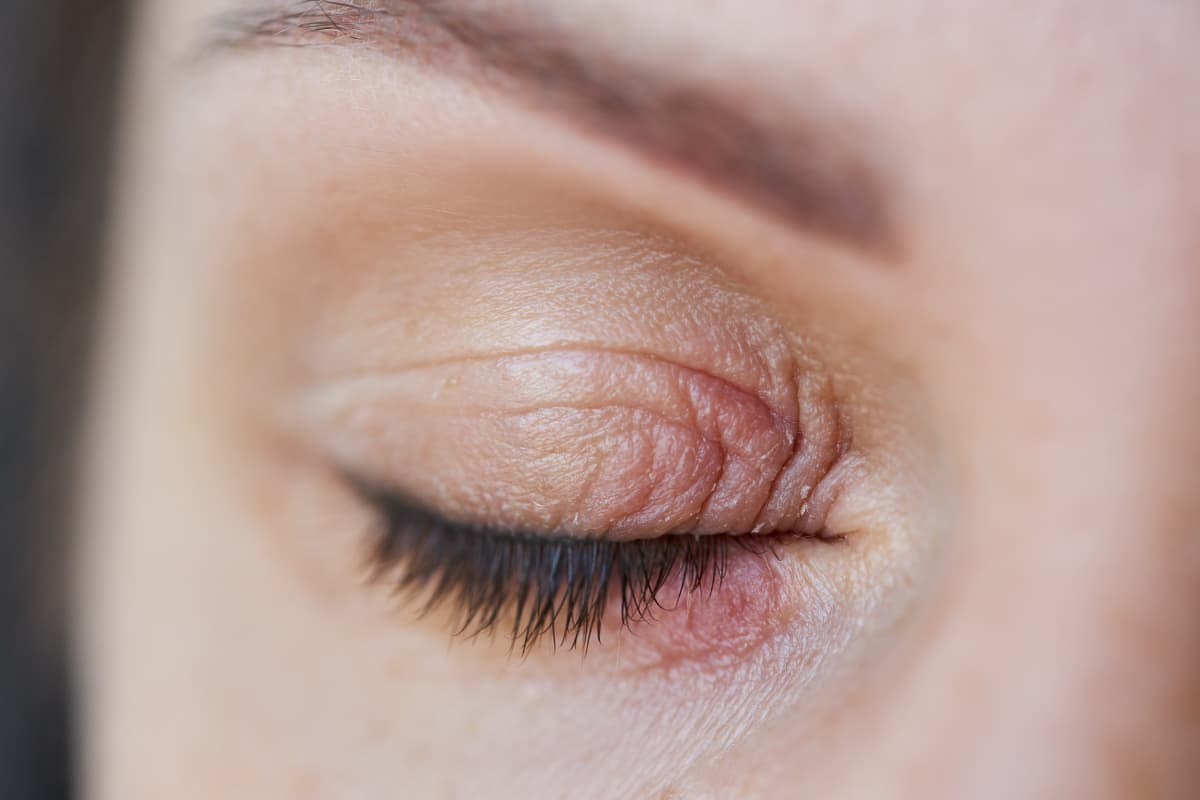
If you have itchy eyelids, there can be many very different causes. The unpleasant itching often comes together with other symptoms, such as redness or swelling – reason enough to take a closer look at these accompanying symptoms in an article. You will also find practical tips and tricks for relief and prevention here.
Possible causes of itchy eyelids
Itching on the eyelid can be caused by a wide range of factors. Possible causes of itchy eyelids include allergies, dry air or skin conditions such as eczema. Here we have listed the most common reasons for you:
- Allergies are one of the most common causes of itchy eyelids and can be triggered by pollen, dust, pet hair, cosmetics or certain foods. Allergic reactions often lead to swelling, redness and severe itching.
- Eye infections such as conjunctivitis (inflammation of the conjunctiva) or blepharitis (inflammation of the eyelid margin) are also possible causes of itchy eyelids. These infections are usually caused by bacteria or viruses and often need medical treatment.
- Skin conditions such as psoriasis or seborrhoeic dermatitis can also affect the eyelids and cause the itching. These conditions lead to inflamed, scaly skin that can be very itchy.
- Environmental factors such as dry air, smoke or pollutants can cause itching and irritate the sensitive skin of the eyelids. This is a common problem especially in the winter months or in areas with high levels of fine particulate matter.
- Fungal infections of the eyelids are rare, but they can also result in itching and other symptoms such as redness, scaling, blisters and an unpleasant smell. Treatment requires specific antifungals, i.e. medicines that work against fungi.
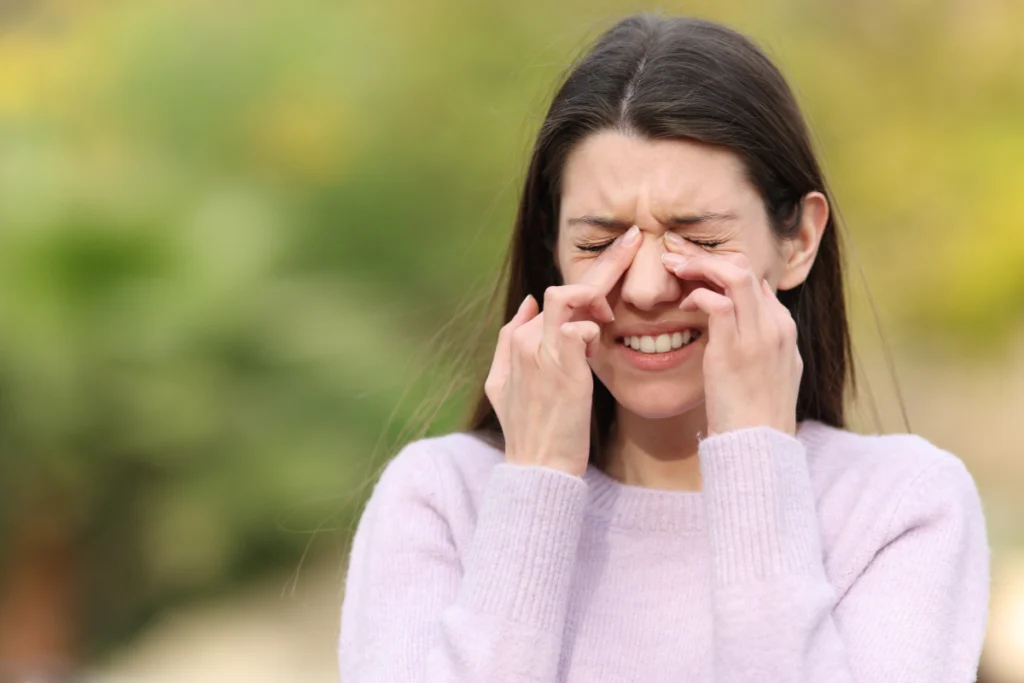
Itchy eyelids can have many different causes.
Eczema as a possible cause of itchy eyelids
Eczema, also known as atopic dermatitis, is a chronic skin condition that often leads to itchy and inflamed patches of skin. The eyelids are often affected, because the skin here is especially thin and sensitive.
Eczema can cause severe itching, redness and scaling of the eyelids. In severe cases, the skin can also crack and bleed. Whether eczema is the cause of your itchy eyelids can and should only be answered by a doctor. If you have eczema and the condition also shows around your eyes, we recommend our detailed article on “eczema around the eyes”.
With the eczema app Nia you can document your skin condition, identify triggers and access a wide range of medically validated articles on eczema. You can download the app free of charge from the App Store or Google Play and get lots of helpful tips for everyday life with eczema.
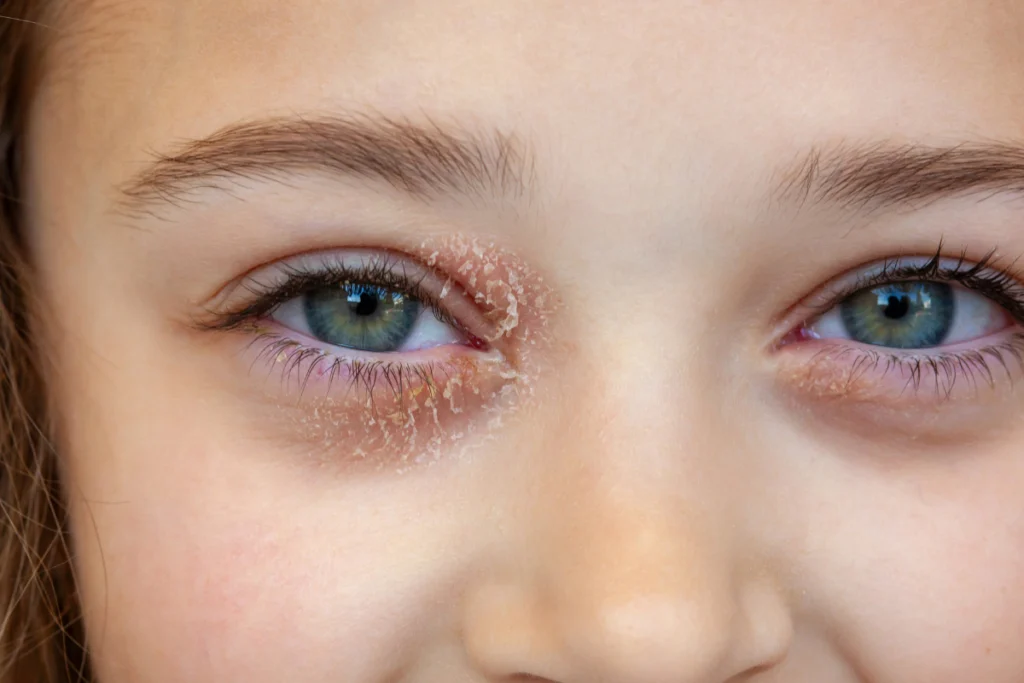
Itchy eyelids could be caused by eczema.
Accompanying signs and symptoms
Itchy eyelids are often just one part of a wider range of symptoms and frequently occur together with other symptoms. These additional symptoms can give important clues about the cause. For example, allergies may play a role. When you talk to your doctor, these accompanying symptoms can often be very helpful for the right diagnosis and treatment. Here are some common symptoms that can occur together with itchy eyelids:
- Red eyes can point to inflammation or irritation. This often happens with allergic reactions, eye infections or as an accompanying symptom of eczema. Red eyes can also come with an unpleasant feeling that something is in your eye.
- Burning eyes often occur together with itching and can be caused by dry air, too much screen time or allergic reactions. Burning eyes often feel irritated or inflamed and can make you blink more.
- Dry eyes develop when the eyes do not produce enough tears or the composition of the tear fluid is disturbed. This leads to a feeling of dryness, itching and sometimes a gritty feeling in the eye. Dry eyes are often a sign of environmental factors, allergies or chronic conditions such as Sjögren's syndrome.
- An itchy eyelid on one side only can point to local irritation or infection. Possible causes include a foreign body in the eye, a local allergic reaction or an eye inflammation on one side. Itching on one side should be watched closely, as it can point to specific problems.
- Swollen eyelids are a common accompanying symptom of itching. The swelling can be caused by fluid retention, inflammation or allergic reactions. Swollen eyelids can affect your vision and often come with an unpleasant feeling of tightness.

If your eyes itch all the time, you should see a doctor.
What helps with itchy eyelids?
Irritated eyelids are unpleasant and can have a big impact on everyday life. An important note first: here we give you initial information and suggestions – diagnosis and treatment belong in the hands of a doctor. There are, however, various things you can do yourself to find relief:
- Identify and avoid triggers – for example known allergens or irritants. This can mean no longer using certain cosmetics or reducing contact with animals. To identify triggers, document your symptoms regularly, for example with the Nia app.
- Cool compresses can help relieve swelling and itching. Simply place a clean, cool cloth on your closed eyelids.
- Moisturising care, for example moisturising creams or gels developed specially for the eye area, can help soothe the skin and keep it hydrated.
- Medicines such as antihistamines or anti-inflammatory ointments can also help. However, you should only use them after talking to your doctor.

Special moisturising creams for the eye area can be used for itchy eyelids.
Home remedies for itchy eyes
Besides the tips above, there are also some tried-and-tested home remedies that can bring relief from itchy eyes:
- Cucumber slices have a cooling and soothing effect. You can relieve the itching in your eye by placing a slice on each closed eyelid and leaving it on for about 10–15 minutes.
- Chamomile tea has anti-inflammatory properties if you let it cool, dip a cotton pad in it and place it on your eyelids.
- Aloe vera gel can be applied directly to the eyelids to reduce itching and inflammation.
Eye care tips for prevention
Prevention is better than cure: here are some tips to keep your eyelids healthy:
Hygiene: Keep your eyelids clean by washing them regularly with a mild cleanser or make-up remover. Also avoid touching your eyes with unwashed hands.
Cosmetics: Use hypoallergenic and non-comedogenic cosmetic products to avoid irritation, and if you use them, make sure you clean your make-up brushes regularly.
Humidity: Make sure the humidity in your home is high enough – especially in the winter months. A humidifier or simply a bowl of water on the radiator can help here.
Protection: Protect your eyes as well as you can from wind, dust and harmful UV rays – for example by wearing sunglasses.